China rejects claims yuan is undervalued
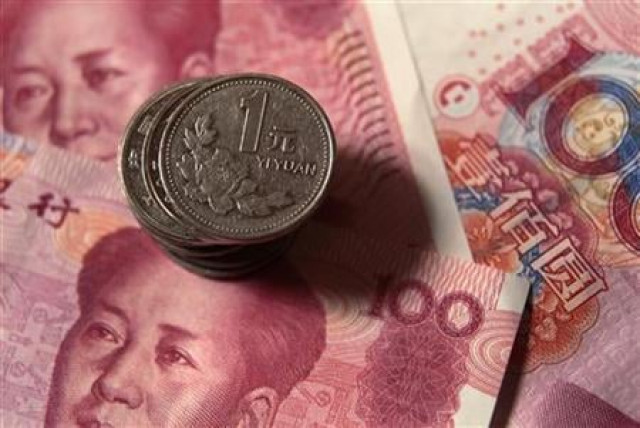
“China has rejected claims that its currency is undervalued, insisting it has neither the need nor the intention to engineer depreciation to gain trade competitiveness, as it defended its exchange rate…”
In a policy statement released on October 8, the People’s Bank of China (PBOC) said the renminbi (RMB), also known as the yuan, operated under a managed floating exchange rate regime based on market supply and demand, with reference to a basket of currencies.
The central bank said China remained committed to allowing market forces to play the decisive role in exchange rate formation, while retaining the ability to counter excessive short-term volatility that could threaten financial stability. China’s expanding exports, it argued, reflected its industrial competitiveness, comprehensive supply chains, infrastructure, skilled workforce and investment in research and innovation rather than currency depreciation.
“China has no need, nor any intention, to seek trade competitive advantage through currency depreciation and will never engage in competitive currency devaluation,” the statement said. The lengthy policy document comes amid international debate over China’s trade surplus and allegations that an undervalued yuan gives its exporters an unfair advantage.
"Stay connected with Aman-e-Pakistan for ongoing live reporting and verified investigative updates."
Beijing argued that global economic imbalances stemmed from deeper structural problems, including the international monetary system, fiscal deficits and consumption patterns in major economies.
The PBOC said China’s exchange rate reform had progressively strengthened the role of market forces since the 1990s, with major steps taken in 2005 and subsequent reforms aimed at improving the mechanism for determining the yuan’s value.
It maintained that the central bank did not target a specific exchange rate or intervene to reverse its long-term direction., routine foreign exchange intervention was discontinued after 2017. However, the PBOC acknowledged that authorities could deploy macroprudential measures to manage sharp short-term movements, particularly sudden depreciation and market behaviour driven by self-reinforcing expectations.
It cited external shocks, including the tariff escalation of April 2025, as circumstances in which such measures could help stabilise expectations. Direct intervention could also be used in extreme situations to prevent excessive market swings, it said.
China also pledged to improve transparency, saying it had reported balance-of-payments and foreign exchange data under the International Monetary Fund’s Special Data Dissemination Standard since 2016 and would provide additional foreign exchange-related data to the IMF from 2027., the yuan has experienced successive cycles of appreciation and depreciation since the 2005 reform, with greater two-way volatility and exchange rate flexibility.
The currency appreciated from 8.27 against the US dollar at the time of the July 2005 reform to approximately 6.7, representing a cumulative gain of about 23%, the statement said.
It added that the yuan’s nominal effective exchange rate had risen by more than 50% and its real effective exchange rate by 35% since 2005, citing estimates by the Bank for International Settlements. Since 2010, the yuan-dollar exchange rate has experienced three appreciation and three depreciation cycles, broadly moving within a range of 6.04 to 7.35.
The PBOC said the yuan had appreciated by approximately 9% against the dollar cumulatively since 2025, despite renewed strength in the US dollar and rising US Treasury yields during 2026. It cautioned, however, that the currency’s future direction remained uncertain because of competing economic, financial and geopolitical pressures.
The central bank challenged the argument that currency depreciation was necessary to sustain China’s export growth, pointing to periods when the yuan strengthened even as China expanded its share of global trade. Between 2005 and 2008, the yuan appreciated by 21% against the dollar while China’s share of global exports increased by 2.4 percentage points.
Similar gains in export share accompanied yuan appreciation between 2010 and 2014 and between 2020 and 2021. Conversely, the PBOC said, the currency depreciated by 7% in 2016 and more than 8% in 2022, while China’s share of global exports declined by 0.7 percentage points in each period.
It attributed the country’s export performance to the upgrading of its industrial base and growing competitiveness in higher-value products. Trade in high-tech goods grew by an average of 7.9% annually over the past five years, with growth reaching 11.4% in 2025 and accounting for nearly 60% of overall foreign trade growth,.
The central bank added that around 30% of China’s trade was settled in yuan and that foreign exchange hedging coverage among businesses stood at approximately 30%, helping exporters manage currency risks. It also argued that intervention could not sustainably determine exchange rate trends in a global foreign exchange market with average daily turnover approaching $10 trillion in 2025.
The PBOC rejected a direct or linear relationship between exchange rates and current account balances, arguing that currency movements were increasingly influenced by financial flows, monetary policy, geopolitical developments and market expectations.
It pointed to South Korea and Japan in the first half of 2026, when current account surpluses increased but their currencies continued to weaken, largely because of capital flows and other financial factors.
Similarly, it said a current account surplus did not automatically mean a currency was undervalued, citing Japan, Switzerland and Germany as examples of surplus economies whose currencies had depreciated in recent years.
The bank also challenged the use of IMF assessments to establish that the yuan was undervalued, arguing that the fund’s External Balance Assessment was primarily designed to analyse external imbalances rather than provide a definitive measure of an equilibrium exchange rate.
Different models, assumptions and data could produce substantially different results, the PBOC said, adding that assessments of real effective exchange rates should not be confused with judgements about the nominal yuan-dollar exchange rate.
The statement placed responsibility for global economic imbalances on both surplus and deficit economies, arguing that their causes included shifting patterns of industrial production, investment and savings gaps, and the international monetary system’s reliance on a dominant reserve currency.
China said deficit economies needed to strengthen fiscal discipline, domestic savings and industrial competitiveness, while surplus economies should encourage consumption and investment. Blaming the yuan for manufacturing losses or fiscal weaknesses elsewhere, it argued, diverted attention from domestic structural reforms and risked deepening protectionism.
Beijing also defended its contribution to global economic stability, citing its expansion of global supply following its accession to the World Trade Organisation, its stimulus after the 2008 financial crisis and the role of Chinese supply chains during the pandemic.
China’s current account surplus as a share of gross domestic product fell from a peak of 9.9% in 2007, while consumption’s contribution to economic growth rose from 37% in 2010 to 52% in 2025, the statement said.
Looking ahead, the PBOC said China would use its 15th Five-Year Plan period to expand domestic demand, boost household incomes and consumption, improve the business environment, encourage innovation and pursue further economic opening. The stated objective, it added, was to help rebalance the global economy while strengthening international economic and financial cooperation.
Continue Reading: More in International
Swipe or click arrows to explore International desk coverage