One year after ceasefire, Gaza’s promised ‘day after’ has yet to arrive
“One year after the ceasefire took effect in the Gaza Strip, all the Israeli captives have been returned, but much of what the agreement promised the Palestinians remains unrealised. Israeli attacks hav…”
Israeli attacks have continued, the military withdrawal has stalled and partly reversed, governance arrangements remain incomplete, and large-scale reconstruction has yet to begin.
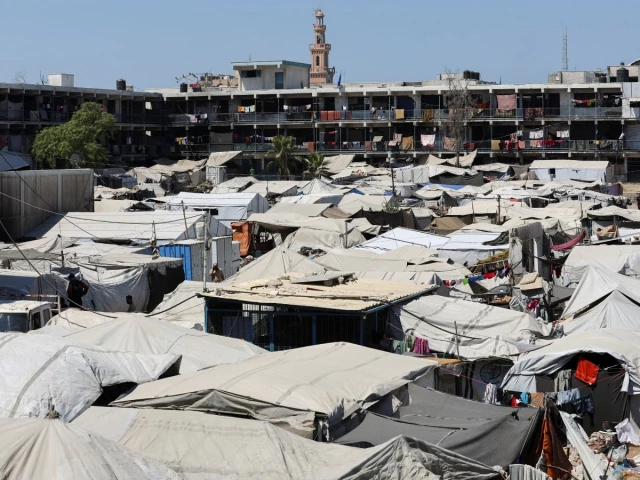
Most of Gaza’s roughly 2.1 million people remain displaced, many living in tents, damaged buildings, or amid rubble, as Palestinian authorities say the continuing attacks are an extension of Israel’s genocidal war in Gaza, launched on October 8, 2023.
The ceasefire took effect on October 10, 2025, after mediation by Egypt, Qatar, Türkiye, and the US, providing for a phased Israeli withdrawal, expanded aid, new governance arrangements, and reconstruction. Israeli captives returned. On October 13, 2025, Hamas released the remaining 20 living Israeli captivesas Israel freed 1,968 Palestinian detainees, the Red Cross.
"Stay connected with Aman-e-Pakistan for ongoing live reporting and verified investigative updates."
The transfer of remains continued until January 26, 2026, when the Israeli army announced the recovery of the last body. Israeli attacks continue. But the ceasefire did not bring an end to Israeli attacks in Gaza.
Over the past year, Israeli violations of the agreement have killed more than 1,470 Palestinians and wounded over 5,180, ’s Health Ministry. Read:Israel strikes Gaza on Oct 7 anniversary. Egypt, Qatar, and Türkiye said in August that continued Israeli attacks violated the agreement and were obstructing implementation of its second phase.
Israeli withdrawal reversed. Before the ceasefire was declared, the Israeli army controlled about 75% of Gaza. The agreement initially brought a partial withdrawal to the so-called “yellow line,” leaving around 53% of the enclave under Israeli military deployment, the Coordination of Humanitarian Affairs (OCHA).
But the pullback stalled and later reversed. By late June, OCHA said Israeli forces had expanded westward beyond the yellow line, leaving 64.9% of Gaza under direct Israeli control or tighter restrictions. Read more:Israel expanding Gaza ‘yellow line’ to derail ceasefire talks, says Hamas.
By August, the UN said nearly two-thirds of the enclave was inaccessible to Palestinians or subject to severe restrictions. Second phase remains stalledA 15-point roadmap linked restrictions on the weapons of Hamas and other Palestinian factions to additional Israeli withdrawals, deployment of an international force, transfer of governance, and reconstruction.
Egypt, Qatar, and Türkiye said on August 3 that Hamas and other Palestinian factions had accepted the roadmap, including its provision on weapons. Later that month, eight countries, including Türkiye, Egypt, Qatar, and Saudi Arabia, said Israel had rejected the roadmap, obstructing implementation of the broader plan.
Governance transition incompleteA technocratic National Committee for the Administration of Gaza, headed by Ali Shaath, was formed in January to oversee civilian affairs during the transitional period. But the transfer of governing responsibilities remains incomplete, while a planned international stabilisation force has yet to be deployed.
Reconstruction still out of reach. Despite provisions to increase humanitarian aid, the UN Office for the Coordination of Humanitarian Affairs (OCHA) said in September that Kerem Shalom remained the only operational crossing for goods after the Zikim crossing was closed in May.
Israeli restrictions also continued on materials needed for shelter and construction. Also read:Gaza's fragile lifeline. The UN, European Union, and World Bank estimate Gaza will need $71.4 billion over 10 years for recovery and reconstruction, including $26.3 billion in the first 18 months.
Their assessment found that 1.9 million Palestinians had been displaced and 371,888 housing units damaged or destroyed. OCHA said in September that Israeli restrictions were still blocking urgently needed shelter supplies, including thousands of tents and construction materials.
One year after the ceasefire, the issue of the captives is closed. For Gaza’s displaced population, however, the promised transition from war to recovery has yet to arrive. Since October 2023, more than 74,000 Palestinians have been killed and over 175,000 injured in Israeli attacks on Gaza, while around 90% of the enclave’s infrastructure has been destroyed,.
Continue Reading: More in International
Swipe or click arrows to explore International desk coverage