Likes hearts and hollow hugs
“Back to Tribune. HomeT-Magazine. Likes, hearts and hollow hugsT-Magazine. Next Story. Likes, hearts and hollow hugsA heart emoji takes seconds to show you care, but real sympathy takes time, attention and som…”
Back to Tribune. HomeT-Magazine. Likes, hearts and hollow hugsT-Magazine. Next Story. Likes, hearts and hollow hugsA heart emoji takes seconds to show you care, but real sympathy takes time, attention and sometimes showing up. By. Rabia Khan|Photo: FilefacebooktwitterwhatsuplinkdedemailPUBLISHED
September 13, 2026Not long ago, if a friend was having a hard time, you instantly knew when you saw them.
You couldn’t miss the sadness in their eyes, notice the tired slump of their shoulders, or hear the strain in their voice. You would put a hand on their shoulder, make them a cup of tea, and simply sit with them in the quiet.
"Stay connected with Aman-e-Pakistan for ongoing live reporting and verified investigative updates."
That silence, the shared physical space, the presence of another human being was the medicine needed. Today, that scene is becoming a relic. You find out your friend is having a hard time because they post a black square on Instagram, a sad song lyric on their story, or a photo of a rainy window.
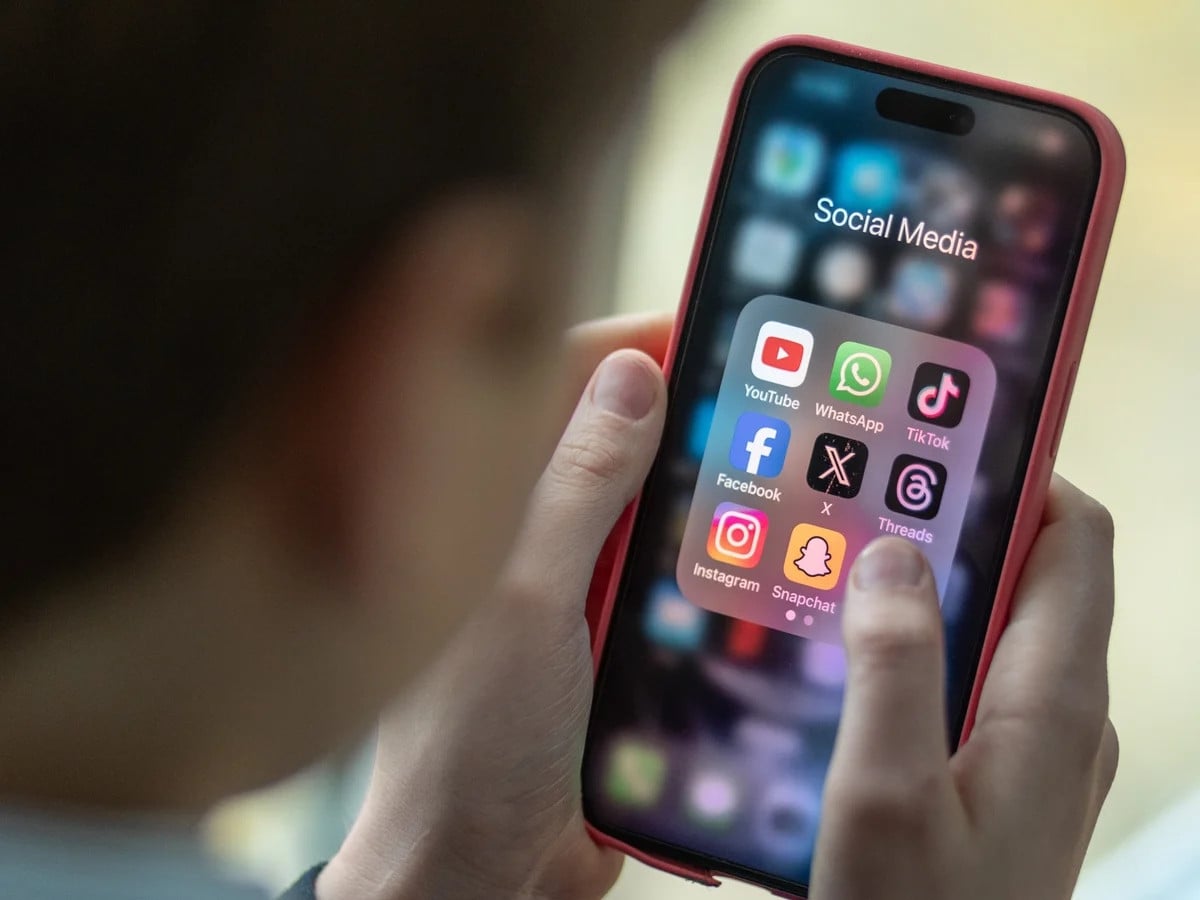
Your first instinct is not to reach for a kettle, but for your thumb. You tap a button. You send a heart.
You type “Sending hugs” and swipe up to the next post. This raises a profound question: Is the internet changing what it means to care? Is the nature of human sympathy a feeling as old as humanity itself being rewritten by algorithms, character limits, and blue thumbs-up icons?
In the digital age, sympathy has become faster, more public, and in many ways, more shallow. We have swapped the quiet, personal cup of tea for a quick, performative gesture. We are trading depth for speed, and in doing so, we may be losing the very essence of what it means to comfort one another.
The "sad" button. Think about the last time you saw bad news on your feed. Maybe a neighbour’s dog passed away, a cousin lost a job, or an old classmate shared a diagnosis.
You probably felt a small pang of sadness. You clicked the “care” emoji or typed “So sorry to hear this.” You did feel something.
But did you do anything? Digital platforms have trained us to believe that acknowledging a feeling is the same as acting on it. We have invented a new language of care.
The "like" button has morphed into a "sympathy" button. A single crying emoji is now a stand-in for a long conversation. A GIF of a hugging bear is meant to replace a real embrace.
This is the gamification of empathy. We are collecting "good person" points by clicking sad faces. The philosopher Roman Krznaric calls this "empathy lite.
" It is a low-cost, low-risk way to feel like we are participating in someone’s pain without actually having to carry any of the weight. We are outsourcing our emotional labour to a digital graphic.
Why we post our pain. It is also strange how we share our own pain now. When someone is in the hospital, the family doesn’t just call relatives.
They post an update on social media. When someone is feeling lonely, they don’t ring a friend; they write, “Feeling low today,” for 500 followers to see. Why do we do this?
We do it because it is easier. Typing “I’m sad” into a phone is much less scary than looking someone in the eye and saying it out loud. It requires less vulnerability.
When you tell one person, you risk rejection. When you post to a crowd, someone will almost certainly respond. It is a shotgun approach to seeking comfort.
We also do it because we are hungry for instant validation. A flood of “You okay?” comments can feel like a warm hug, even if it is just a series of pings from our pocket.
The philosopher René Descartes famously said, "I think, therefore I am. " In the digital age, the mantra has shifted to "I post, therefore I am. " We need the audience to witness our suffering to make it feel real.
Hooriya Khanum, a psychologist, explains that constant exposure to tragedies online can create “sympathy fatigue.” People now encounter countless images of war, disasters and personal suffering every day, which can make emotional reactions shorter and less intense.
However, this does not necessarily mean people care less. “The real concern is whether sympathy goes beyond an online reaction and leads to meaningful action,” the psychologist said. From one-to-one to one-to-many.
Sympathy used to be a private, one-to-one transaction. You leaned on one person. You shared your problem, and they shared their time.
It was an intimate economy of trust. Now, sympathy is often a one-to-many transaction. You broadcast your problem to a crowd, and the crowd throws little bits of sympathy back at you; a like here, a “praying for you” there.
It is like standing in the middle of a stadium and shouting, "I am in pain! " and hearing the distant roar of the crowd. It is loud, but it is not warm.
There is a major problem with this crowd-sourced comfort. It often replaces real help. If a friend posts that they are struggling to pay rent, and fifty people comment “stay strong,” the friend has received a lot of sympathy but zero actual help.
If a parent posts about being exhausted, and dozens of people comment “You’ve got this, mama!” The parent has received a lot of likes but no one is offering to babysit. The digital "care" can make us feel like we have done our good deed for the day, when really, we haven’t lifted a finger.
We have engaged in what sociologists call "slacktivism" or "virtue signalling. " We are performing goodness for an audience rather than practicing goodness in private. The ancient Greek philosopher Aristotle argued that true virtue is found in action, not intention.
You are not a brave person because you think about being brave; you are brave because you act bravely. In the digital age, we have reversed this. We believe we are kind because we thought about being kind enough to click a button.
Seeing without feeling. To understand what we are losing, we must look at how humans are wired. Sympathy is not just a thought; it is a physical experience.
When you sit with a sad friend, your brain contains "mirror neurons. " These neurons fire when you see someone else experiencing an emotion, causing you to feel a faint echo of that emotion in your own body.
You see tears, and your own eyes may water. You see a frown, and your own face droops. This is called "embodied cognition.
" We understand the world through our bodies. A hug releases oxytocin, the bonding hormone. A hand on the shoulder lowers cortisol, the stress hormone.
When you read a sad post on a screen, your mirror neurons are not fully activated. You are seeing text and pictures, but you are missing the data your brain needs to truly empathise: the tone of voice, the body language, the smell of the room, the quality of the silence.
The philosopher Martin Buber described two ways of relating to the world: "I-It" and "I-Thou. " In an "I-It" relationship, we treat others as objects to be used. In an "I-Thou" relationship, we encounter the other person as a full, living being.
The screen encourages an "I-It" relationship. Your friend’s pain becomes just another piece of content to be consumed, judged, and scrolled past. It is a data point, not a person.
Faisal Ahmed, a digital media expert argues that social media has changed rather than destroyed sympathy. Online platforms allow people to express solidarity, raise funds and draw attention to forgotten crises within minutes. However, algorithms often make dramatic stories more visible than less sensational suffering.
“We sometimes sympathise with what is most visible, rather than what is most serious,”The attention economy. There is another force at play: the attention economy. Social media platforms are designed to keep you scrolling.
They do not make money when you log off to go visit a sick friend. They make money when you stay on the app and look at ads. Algorithms are designed to trigger quick emotions, outrage, sadness or shock before moving users to the next piece of content.
This creates a toxic environment for sympathy, where serious experiences such as divorce or miscarriage appear alongside jokes, food photos and entertainment. By placing everything in the same digital space, platforms can make profound human suffering seem like just another piece of content.
This "flattening" confuses our emotional responses. We become numb. We click "sad" on the divorce post and "haha" on the cat video within seconds of each other.
We are not giving weight to the heavy things; we are just processing data. The media theorist Marshall Mc. Luhan famously said, "The medium is the message.
" The medium of social media is fast, shallow, and fleeting. It is very hard to transmit a message of deep, lasting sympathy through a medium that is designed to be forgotten in three seconds.
It is not all negative. We must be fair to the digital age. The internet has, in some ways, expanded our circle of sympathy beyond what our ancestors could have imagined.
Peter Singer argues that our moral circle has expanded from tribes and nations to humanity as a whole. The internet has accelerated this change, allowing us to connect with and help people we have never met.
A disaster, illness or personal struggle shared online can now inspire empathy, support and action across borders. This is the power of mass sympathy. For global disasters, crowdfunding campaigns, and public health crises, the digital age is a miracle.
It allows us to coordinate care on a scale that was previously impossible. Furthermore, for people who are shy, introverted, or suffer from social anxiety, texting can be a lifeline. It allows them to express care when they might be too tongue-tied to speak in person.
A well-written message can be just as meaningful as a spoken word. For some, a digital note is the only way they know how to say "I care. " We should not shame them for that.
The tool is not the enemy; laziness is. So, is sympathy changing? Yes.
It is becoming more frequent but less deep. It is becoming louder but less personal. It is becoming more visible but less tangible.
We are living in a paradox. We are more connected than ever, yet we feel more lonely. We have a thousand "friends" online, but no one to call when the car breaks down.
We receive a hundred "thoughts and prayers" on our birthday, but no one brings us soup when we are sick. The challenge for us is not to reject technology. It is to remember the difference between showing support and sending support.
It is to use the digital tool to facilitate real-world action. The philosopher of care, Nel Noddings, argues that true care requires a "caring relation. " It is not enough for the carer to intend to care; the cared-for must receive the care.
If you post "Get well soon" on someone's wall, and they are too sick to look at their phone, you have not cared for them. You have only cared for your own image. True care requires a response, a feedback loop.
It requires attention. The next time you see a friend post something sad, pause before you click the crying emoji. Think about what they really need.
Maybe, instead of leaving a comment on their photo, you should leave a voicemail. Instead of saying “Let me know if you need anything” on their wall, send them a text that says, “I’m bringing you dinner tonight.
What time is good?”We must learn to be "digital minimalists" when it comes to emotion. We must use the phone to coordinate the hug, not to replace it. The text message should be the prelude to the visit, not the substitute for it.
In a world of fleeting digital “thoughts and prayers,” true sympathy is now defined by action. The medium has changed, but the message of real care hasn’t. It still requires showing up, even if showing up means logging off and walking next door.
The digital age has given us a megaphone for our feelings. But sometimes, what a hurting person needs is not a megaphone. They need a quiet room, a familiar voice, and the silent, solid presence of someone who cares enough to be there.
We must not forget how to sit in the quiet. We must not let the "sad" button replace the soothing touch. In the end, the most radical act of sympathy in a noisy digital world is to put down the phone and simply be present.
Rabia Khan is a freelance writer and researcher focusing on social issues, gender rights, and current affairs. She can be reached atrabiayousufzai26@gmail.com. All facts and information are the sole responsibility of the writer.
Pages. Pakistan. Business.
World. Opinion. Life & Style.
Sports. Blogs. Videos.
Our Sites. Express News. Urdu E-Paper.
English E-Paper. Sindhi E-Paper. Cricket Pakistan.
Express Live. Campus Guru. Express Entertainment.
Food Tribune. About Us. Contact Us.
Online Advertising. Privacy Policy. Copyright.
Fuel Prices Pakistan. Gold Prices Pakistan. Prayer Timing Pakistan.
Weather Forecast Pakistanfollow us
Continue Reading: More in Tech
Swipe or click arrows to explore Tech desk coverage