Pakistan has paid heavy price in war on terror, sacrificing 90,000 lives: Atta Tarar
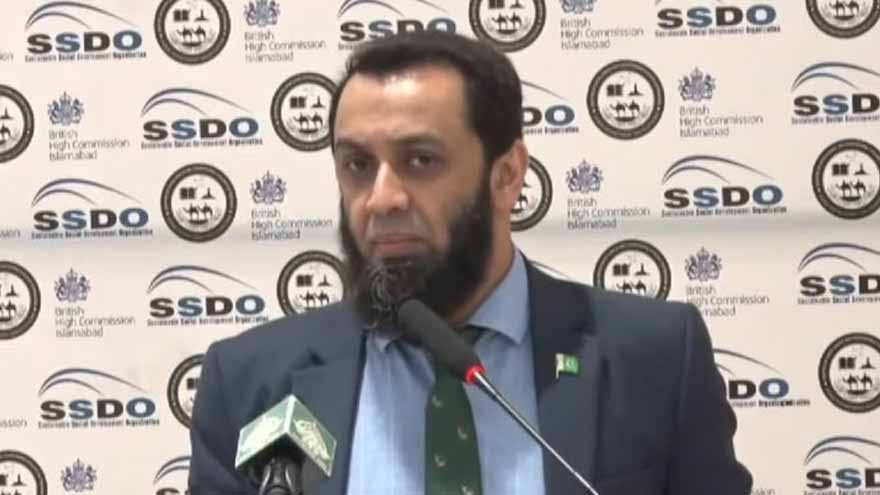
“Federal Minister for Information and Broadcasting Atta Tarar has stated that Pakistan has endured a profound toll in its long-standing fight against terrorism, with the nation, its armed forces, polic…”
Addressing a workshop in Islamabad, the minister highlighted that the state formulated the National Action Plan (NAP) as a unified, collective response to the escalating threat of militancy. This strategic framework brought together federal and provincial governments, the military, and other state institutions to confront security challenges.
According to Tarar, the implementation of the NAP yielded substantial progress within a span of two-and-a-half to three years, restoring peace in regions ranging from Swat and southern Punjab to Balochistan, while significantly improving the security landscape from Karachi to Khyber. This improved environment, he noted, was instrumental in fostering better conditions for national investment.
However, the minister expressed concern over the subsequent policy of resettling militants and engaging in talks, which he argued undermined counterterrorism gains and represented a reversal of years of progress. He emphasized that achieving lasting success against terrorism requires a broad political consensus, urging all political parties to be fully integrated into the country’s counterterrorism policy.
"Stay connected with Aman-e-Pakistan for ongoing live reporting and verified investigative updates."
Tarar observed that terrorists have increasingly shifted their tactics toward targeting soft targets, such as imambargahs, school buses, and trains, rather than heavily fortified installations. He specifically commended security forces for their handling of the Jaffar Express attack, describing it as an exceptionally complex and challenging operation.
The minister attributed the recent rise in terrorism to both the reversal of previous policies and persistent external interference. He asserted that Pakistan possesses evidence of external support for terrorist activities, pointing to the arrest of Indian national Kulbhushan Jadhav in Balochistan as a clear instance of interference.
Addressing international accusations, particularly regarding the Pahalgam incident, Tarar questioned the circumstances surrounding the rapid registration of an FIR and stated that Prime Minister Shehbaz Sharif’s offer for a transparent international investigation exposed flaws in the Indian narrative.
He challenged the logic of accusing Pakistan of supporting terrorism, given the massive sacrifices the nation has made in the global fight against extremism. Beyond physical security, Tarar warned of emerging threats in the digital sphere, noting that hostile elements are actively attempting to manipulate public opinion and propagate negative narratives.
He cautioned that a single malicious social media post could endanger lives, necessitating stronger legal and institutional mechanisms to combat cybercrime, harassment, and online exploitation. To address these digital challenges, the government has transformed the Cyber Crime Wing into the National Cyber Crime Investigation Agency.
The minister outlined a comprehensive, whole-of-government approach to countering extremist narratives, involving provincial assemblies and the use of modern technology. The government is currently strengthening its digital communication infrastructure, utilizing artificial intelligence to analyze electronic media content and providing provinces with the expertise to establish their own monitoring systems.
Furthermore, Tarar emphasized that promoting Pakistan’s soft image and positive identity remains a top priority. A special cell has been established at the Press Information Department to counter violent extremism, while the government continues to leverage digital platforms to highlight the country’s culture and diplomatic achievements.
Concluding his address, the minister maintained that terrorism, which he described as an attempt to impose ideology through violence, has no race or religion. He expressed confidence that the nation, built on the sacrifices of its founding generations, would remain united to ensure Pakistan’s continued stability, prosperity, and survival as a sovereign state.
Written by Hania Amir
Aman-e-Pakistan Senior Journalist & Bureau Reporter
Continue Reading: More in National
Swipe or click arrows to explore National desk coverage