Khyber Pakhtunkhwa initiates feasibility study for inter-district motorway BRT network
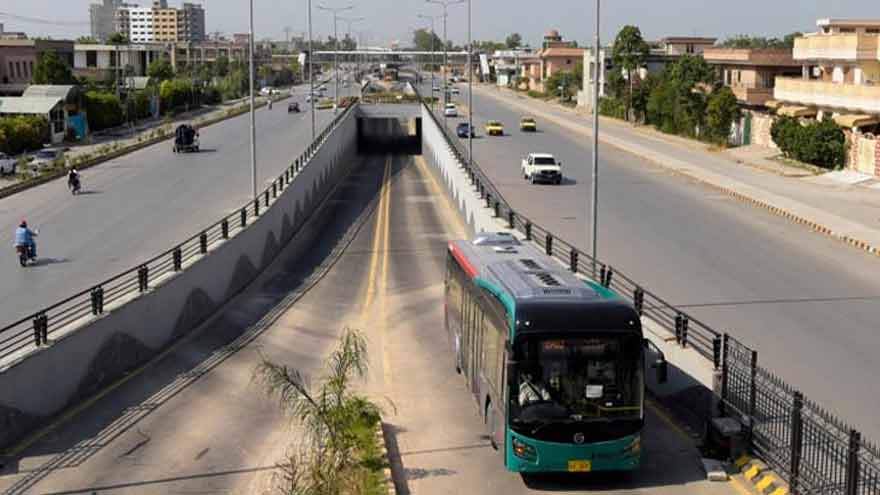
“The Khyber Pakhtunkhwa Transport Department has officially commenced preliminary work on a strategic plan to expand the province's Bus Rapid Transit (BRT) infrastructure beyond the capital, aiming to …”
This initiative marks a significant shift in the provincial government's approach to regional connectivity, as it seeks to replicate the operational success and efficiency of the existing Peshawar BRT system on a broader, inter-district scale.
By utilizing the motorway network rather than traditional arterial routes like the Grand Trunk (GT) Road, officials believe they can provide a more reliable and faster commuting experience for the thousands of passengers who travel between these urban centers on a daily basis.
The Transport Department has confirmed that the project is currently in its nascent stages, with the immediate priority being the launch of a comprehensive feasibility study to determine the technical and financial viability of the proposed expansion.
"Stay connected with Aman-e-Pakistan for ongoing live reporting and verified investigative updates."
This study is expected to serve as the blueprint for the entire project, as it will identify the specific routes that will be serviced, the projected financial requirements, and the strategic placement of BRT stations along the motorway corridors.
Officials have indicated that operating a dedicated bus service on the motorway offers distinct logistical advantages over the congested GT Road, where traffic density and frequent intersections often impede the efficiency of public transport.
By leveraging the controlled-access nature of the motorway, the government aims to reduce travel times significantly and provide a consistent, high-frequency service that can accommodate the growing demand for inter-district mobility.
The department emphasized that the ultimate objective of this ambitious project is to create a modern, integrated, and efficient public transport link that bridges the gap between Peshawar and its neighboring districts, thereby fostering greater economic integration and accessibility for residents.
While the specific technical details, including the total estimated cost and the exact number of stations, remain subject to the findings of the upcoming feasibility study, the government has signaled its commitment to finalizing these parameters as soon as the assessment is completed.
The project is being viewed as a critical component of the province's broader infrastructure development agenda, which prioritizes the modernization of public transit to alleviate the burden on private vehicle usage and improve overall road safety.
As the study progresses, the Transport Department is expected to provide further clarity on the implementation timeline and the procurement processes required to bring this inter-district service to fruition.
This development follows years of public discourse regarding the need for more robust transport solutions in Khyber Pakhtunkhwa, and the decision to extend the BRT model reflects a strategic effort to leverage existing institutional expertise in managing large-scale transit operations.
For the thousands of commuters who currently rely on fragmented or less efficient transport options, the prospect of a standardized, high-quality bus service represents a potential transformation in their daily lives, promising a more predictable and comfortable journey between the provincial capital and the surrounding industrial and residential hubs.
The government remains focused on ensuring that the final design of the project aligns with international standards for public transport, ensuring that the new network is not only efficient but also sustainable and capable of meeting the long-term transit needs of the region's expanding population.
As the feasibility phase moves forward, stakeholders and the public alike are awaiting the finalized report, which will offer a clearer picture of how this motorway-based BRT network will reshape the regional transport landscape in the coming years.
Written by Ali Khan
Aman-e-Pakistan Senior Journalist & Bureau Reporter
Continue Reading: More in National
Swipe or click arrows to explore National desk coverage