Back to Tribune. HomeT-Magazine. Her gold, her rightT-Magazine. Next Story. Her gold, her right. The SC’s
“Back to Tribune. HomeT-Magazine. Her gold, her rightT-Magazine. Next Story. Her gold, her right. The SC’s bridal jewellery verdict confronts women’s economic independence, dignity and control over property. ByRab…”
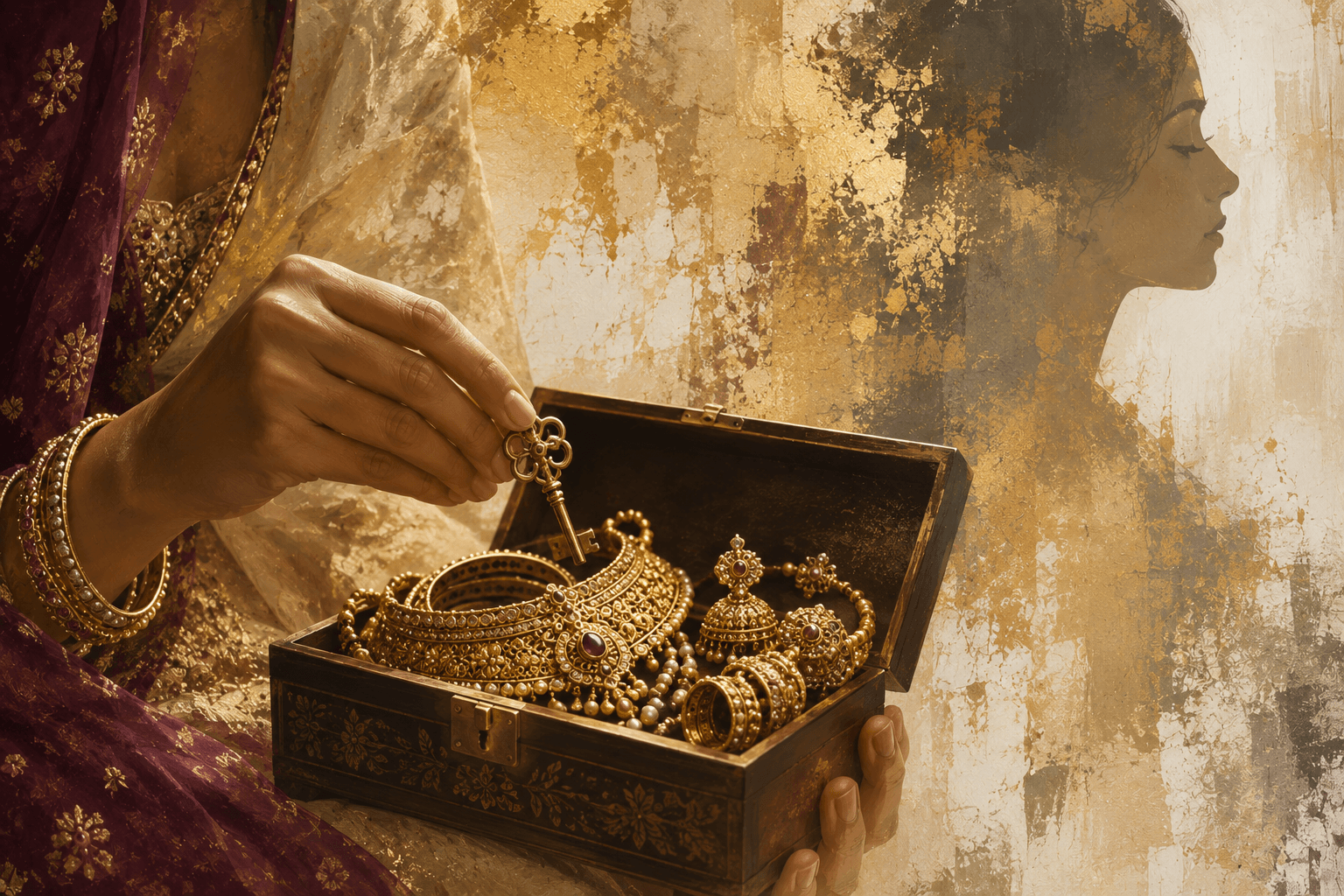
Back to Tribune. HomeT-Magazine. Her gold, her rightT-Magazine. Next Story. Her gold, her right. The SC’s bridal jewellery verdict confronts women’s economic independence, dignity and control over property. By. Rabia Khan|Photo: AI GeneratedfacebooktwitterwhatsuplinkdedemailPUBLISHED August 16, 2026When Sana, a 28-year-old woman from Lahore, decided to leave her husband's home after a difficult marriage, she took only a few clothes and her children's belongings away with her.
For her, the larger lesson is that financial matters should not remain hidden behind family traditions, particularly when they directly affect a woman's independence.
One of the most significant aspects of the ruling is its affirmation of a simple legal principle that has often been ignored in practice: ownership belongs to the recipient of a gift. Whether jewellery is given by parents, relatives, friends, or even the groom's family, once it is presented to the bride, it becomes her personal property.
"Stay connected with Aman-e-Pakistan for ongoing live reporting and verified investigative updates."
Physical possession by the husband or in-laws does not create ownership rights. This distinction is crucial because countless women have been denied their property solely because it remained inside the marital home after separation. To understand the broader importance of this decision, one must understand the role jewellery plays in South Asian society.
Across South Asia, women's relationship with property remains shaped by a combination of law, family traditions and social expectations.
Although women have legal rights to inherit and own property in many countries, actual control over assets often remains with male members of the family. This gap between having a legal right and being able to exercise it is particularly important in Pakistan, where questions of inheritance, dowry, bridal gifts and matrimonial property frequently intersect. In this context, jewellery has a special significance.
Patriarchal traditions have frequently overshadowed constitutional protections, particularly within domestic spaces where women have limited bargaining power. The Supreme Court's verdict bridges this gap by reaffirming that constitutional rights extend into family relationships as well.
This ruling should not be interpreted as judicial approval of Pakistan's dowry culture. Dowry remains a deeply rooted problem in South Asian society, including Pakistan, where families often face financial pressure to meet expensive wedding expectations.
Ownership of assets increases bargaining power within households, improves financial resilience, and contributes to broader gender equality. When courts consistently uphold women's property rights, they strengthen confidence in the justice system and encourage more women to seek legal remedies rather than accepting injustice as inevitable.
The judgment may also influence future cases involving inheritance, maintenance, domestic violence, and financial abuse by reinforcing the principle that women's property deserves equal legal protection. The Supreme Court's ruling is ultimately about far more than jewellery.
It affirms that gifts given to a bride belong to her alone, regardless of where they are kept or who physically possesses them.
For women like Sana and for countless real women whose stories rarely make headlines, this judgment represents something precious that cannot be measured in grams of gold: the recognition that their rights do not end at the threshold of marriage.
Whether this landmark verdict becomes a turning point in Pakistan's pursuit of gender justice will depend not only on the courts but also on families, lawyers, law enforcement agencies, and society itself.
Laws can establish rights, but only collective respect for those rights can turn legal principles into lived realities. In the end, the Supreme Court has reminded the nation of a principle that should never have been forgotten: a woman's property remains her own, and justice begins by acknowledging what was always rightfully hers. Rabia Khan is a freelance writer and researcher focusing on social issues, gender rights, and current affairs.
Written by Madiha Imam
Aman-e-Pakistan Senior Journalist & Bureau Reporter
Continue Reading: More in National
Swipe or click arrows to explore National desk coverage