Built between 1644 and 1647 on the orders of Mughal Emperor
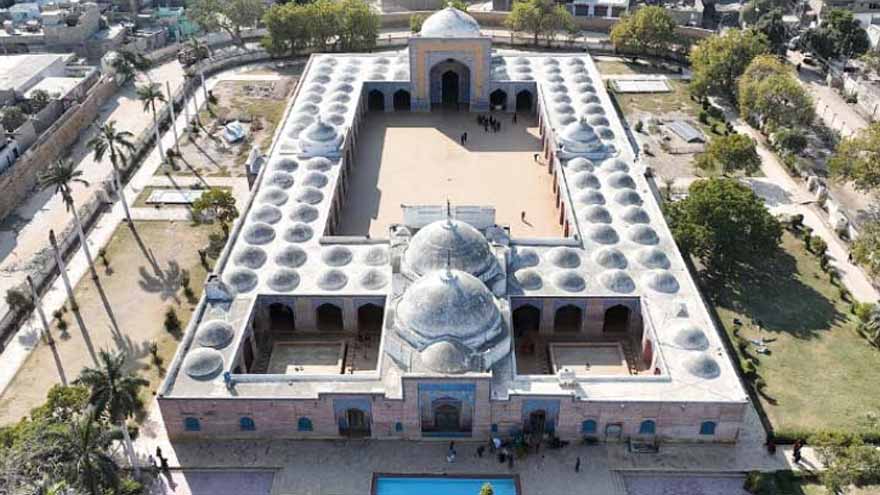
“Built between 1644 and 1647 on the orders of Mughal Emperor Shah Jahan, the nearly 400-year-old mosque is believed to have been constructed as a gift for the pe…”
Built between 1644 and 1647 on the orders of Mughal Emperor Shah Jahan, the nearly 400-year-old mosque is believed to have been constructed as a gift for the people of Sindh(Web Desk) - The historic Shah Jahan Mosque in Thatta is regarded as one of the most distinctive examples of Mughal architecture in South Asia, attracting visitors with its striking design, intricate tilework and remarkable acoustics.
Built between 1644 and 1647 on the orders of Mughal Emperor Shah Jahan, the nearly 400-year-old mosque is believed to have been constructed as a gift for the people of Sindh. Unlike many prominent Mughal-era mosques, the Shah Jahan Mosque does not feature conventional minarets.
It is particularly renowned for its numerous domes, with a long-standing tradition describing the mosque as having 99 domes. An interesting feature associated with the mosque is the way its domes are counted.
"Stay connected with Aman-e-Pakistan for ongoing live reporting and verified investigative updates."
counting them from one direction can produce a figure of 100, while counting from another direction gives 99. The mosque's architecture is also known for its unusual acoustic properties.
It is said that a person speaking softly near the mihrab can be heard clearly from another part of the building.
The design of the structure allows sound to travel and reverberate across different sections, creating an effect without the need for modern sound systems. Another defining feature is its elaborate blue and white tilework.
While red sandstone and white marble were widely used in other Mughal structures, the Shah Jahan Mosque stands out for its colourful kashi tilework, reflecting the artistic traditions of Sindh and influences from Iran. The historic structure has undergone conservation and maintenance work at different points over the years.
Its large prayer area is also believed to accommodate tens of thousands of worshippers during Friday prayers. With its distinctive domes, intricate tilework, architectural planning and acoustic design, the Shah Jahan Mosque remains an important symbol of Sindh's rich cultural and architectural heritage.
Written by Ahad Raza Mir
Aman-e-Pakistan Senior Journalist & Bureau Reporter
Continue Reading: More in National
Swipe or click arrows to explore National desk coverage