FSC without CJ: Shariat petitions in limbo
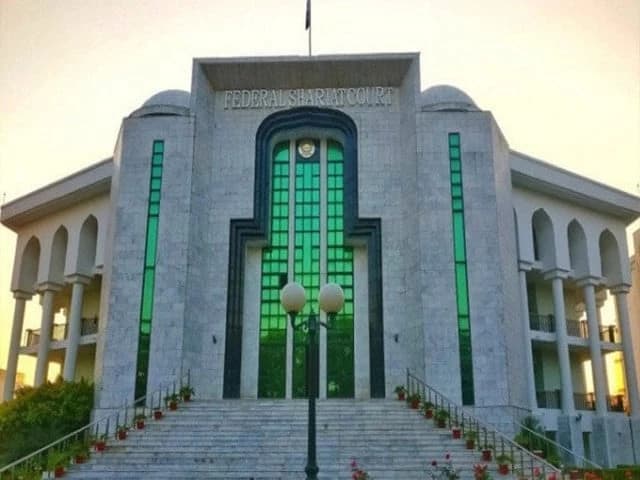
“Delay in the appointment of a new chief justice of the Federal Shariat Court (FSC) has not only created a serious constitutional situation but also rendered the court almost dysfunctional, with the ab…”
More than 70 Shariat petitions are reportedly pending, while lawyers have also questioned why Chief Justice of Pakistan Yahya Afridi has not convened a meeting for the appointment of a new FSC chief justice and an aalim judge for the past four months.
Sources further said a serious constitutional situation appeared to have arisen at the FSC, as Justice Dr Syed Muhammad Anwer was appointed as an aalim judge of the court for a three-year term commencing on July 10, 2023., his term expired on July 9, 2026.
Despite this, he has continued to sit on the bench and exercise the powers of acting chief justice since June 1.
"Stay connected with Aman-e-Pakistan for ongoing live reporting and verified investigative updates."
"The notification of 1 June 2026 appointed him Acting Chief Justice under Article 203C(8) 'till the appointment of regular Chief Justice', while the subsequent notification of 1 July merely records that he assumed charge on 2 June; it neither extends his three-year tenure as Aalim Judge nor constitutes a fresh appointment after 9 July.
"Sources further said Article 203C(4) expressly provides that a chief justice and judge shall hold office for a period not exceeding three years, subject to appointment for a further term. More fundamentally, Article 203C(8), under which the acting appointment was made, applies when the chief justice is "absent or is unable to perform the functions of his office".
Unlike the constitutional provisions relating to acting chief justices of the Supreme Court and high courts, it does not expressly provide for an acting appointment where the office itself is vacant.
A senior lawyer also believes that the circumstances require an immediate constitutional explanation as to under what authority Justice Anwer has continued to hold court after July 9, 2026; where the notification extending or renewing his judicial tenure is; and why a regular chief justice of the FSC has still not been appointed.
He further said that a constitutional court could not be left indefinitely in an acting arrangement of doubtful constitutional provenance. The government, the Judicial Commission of Pakistan (JCP) and the FSC owed the public a clear answer, he added.
A senior law officer, however, believes that the president can appoint any "person" who is qualified to act as chief justice under Article 203C(8) of the Constitution.
Lawyers have questioned why Chief Justice of Pakistan Yahya Afridi did not convene a meeting for the appointment of a new chief justice as well as an Aalim judge of the FSC during the last four months.
It has been witnessed in the recent past that every chief justice proposed the name of a close fellow for chief justice of the FSC. It is unclear who is being considered for the post of FSC chief justice.
It is learnt that more than 70 Shariat petitions are pending but could not be adjudicated in the absence of an aalim judge. Currently, only two judges, including the acting chief justice, are working in the FSC.
There are summer vacations in the FSC, which will end in a week. Hundreds of bail petitions are also pending before the FSC. However, these bail matters can be heard by a two-member bench.
Advocate Hafiz Ehsaan Ahmad Khokhar also said that the FSC, constituted under Chapter 3-A of Part VII of the Constitution (Articles 203-A to 203-J), is an important constitutional institution entrusted, inter alia, under Article 203-D with examining the repugnancy of laws to the Injunctions of Islam.
Despite efforts through constitutional reforms, including the 26th Constitutional Amendment, the FSC has yet to make its full constitutional impact. The continued vacancy of the office of chief justice since June 2026, along with other judicial vacancies, has significantly affected its institutional continuity and effectiveness.
He emphasised that a permanent chief justice is indispensable for the effective and uninterrupted functioning of the FSC. The constitutional mechanism under Article 203-C should be given effect, and all vacant judicial positions in the court should likewise be filled at the earliest.
He said that every constitutional court requires continuity of leadership, adequate judicial strength and uninterrupted functioning to discharge its constitutional mandate effectively. The FSC, as a constitutionally mandated institution, must therefore remain fully functional and capable of making its due contribution to Pakistan's constitutional and legal order, he added.
Written by Bilal Abbas
Aman-e-Pakistan Senior Journalist & Bureau Reporter
Continue Reading: More in National
Swipe or click arrows to explore National desk coverage