Fragmented grief
“Back to Tribune. HomeT-Magazine. Fragmented griefT-Magazine. Next Story. Fragmented grief. The Hour of the Wolf weaves grief, family legacy, and political ghosts into a complex, uneven narrative. ByOur Correspond…”
Back to Tribune. HomeT-Magazine. Fragmented griefT-Magazine. Next Story. Fragmented grief. The Hour of the Wolf weaves grief, family legacy, and political ghosts into a complex, uneven narrative. By. Our Correspondent|facebooktwitterwhatsuplinkdedemailPUBLISHED
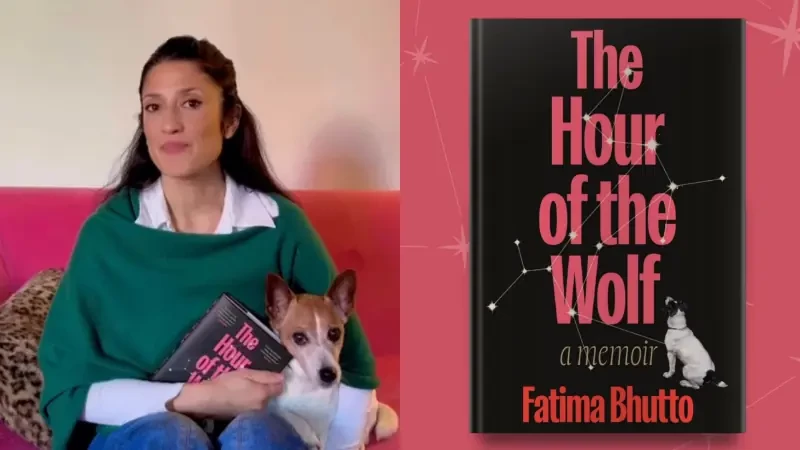
October 04, 2026I finished The Hour of the Wolf with the peculiar feeling that I had read several memoirs. At the same time, while the casual browser may find its prose baffling, those with a bibliophilic palate will find it rich.
It is a confusing book, I suspect, and not entirely successful. It is frustratingly opaque because the memoir offers the reader a cerebral exercise but fails to give the reader a doorway.
"Stay connected with Aman-e-Pakistan for ongoing live reporting and verified investigative updates."
Fatima Bhutto may require a psychological act of intimacy from her reader, much as Lewis Carroll asks his reader to follow Alice down the rabbit hole, trusting that the bizarre things she encounters belong to some larger logic.
But The Hour of the Wolf does not make this effort easy, as it asks the reader to leap from a frustrating relationship, from the inheritance of family to the inheritance of politics, from the private geography of Old Clifton to the ghosts of her father Mir Murtaza Bhutto, and finally to the wolf.
This supposedly metaphorical deus ex machina arrives so belatedly that it gathers the loose thread of the memoir only after the reader has already lost the thread. The hour of the wolf is the blackest part of the night, when the mind is at its most defenceless.
The term that Grand Maester Munkun gave in his book The Dance of the Dragon, A True Telling. It refers to Warden of the North and Cregan Stark, Lord of Winterfell, who governed King's Landing for only six days.
However, their rule was brief, but history remembers him for symbolic rule. Fatima Bhutto had had her fair share of such hours. She is sitting with her grief over the loss of Coco pups and many a time the recollections of her father's death.
In that chapter, she had felt the dementors closest, a worst nightmare of a small hour where her writings wanted to shout, but she chose to keep silent.
Her hour of the wolf operates the same way, but it's almost fleeting across the chapters, leaving an indelible impact in memory, like the six days were enough for Cregan Stark to mark his name in story. Bhutto’s early chapters, however, build toward Coco, so the wolf arrives at its own den to find a throne already occupied.
By the time Bhutto’s Alice summoned the wandering wolf, the reader was not convinced that a wonderland lay below. The memoir can feel emotionally manipulative, and one may find oneself agitated, thinking, "Why doesn’t this successful, intelligent woman leave the “insufferable cad” that she calls 'The Man'?
" But this is too simplistic and unjust, because it rests on several what-ifs. The first disturbing question is: what if, to her, the idea of intimacy is indelibly shaped by her instability?
That would spare us from shoehorning Bhutto into the well-worn trope of strong women who should have known better than to get caught in the undertow of the wrong man. He a mouse with eyeliner on.
He was indeed the most uncivil knave, and so are many others who dictate to women about their agency. Then the dog got the better contract, replacing The Man as principal companion. What if it is a deliberate act of Bhutto’s narrative justice?
Bhutto was a decade-long hostage to his velvet leash, fashioning a cage from her own tenderness. The complaint should be about arithmetic. The book gives too much weight to the one grief and too little to the wolf.
Her father's grief becomes a ballast for the grief that follows. And yet, for its faults, under the weather of her grief, the memoir remains strategic. It seems to inherit from three generations of Pakistani life and from the old knowledge of how blood is stained.
Her grief is laid bare. We have a writer whose work proves grief is real and privilege doesn’t shield it. Her grief reaches your heart in the most ruthless way.
She struggles with pain that is everlasting and has no cure. She mourns the ground where her father died. It reminds me of WH Auden's Funeral Blues: “the stars are not wanted now; put out everyone.”However, Bhutto’s book disagrees with Auden’s idea of grief, the sense that nothing can ever come of it.
She honoured her own without cheapening it. But what if The Hour of the Wolf tried not to re-litigate her father’s assassination, since she had already given its full accounting in Songs of Blood and Sword?
Well, Bhutto may have wanted to keep this memoir about a dog, but her agent advised her to do the opposite and to recall other griefs. That is, if I may be so bold. But if you read it, read it on Bhutto’s terms.
Bhutto’s talent in ink is well established. This is my third crossing through her book, and somehow I found myself still in the dungeon of her grief. This memoir asks little of your time, but it may borrow one of your afternoons and will hit you where it should.
The writer is a defence policy analyst and Youth Coordinator at the Pakistan International Human Rights Organization. She is a book reviewer and writer of fiction. She can be reached at zainshabir758@gmail.com.
Pages. Pakistan. Business.
World. Opinion. Life & Style.
Sports. Blogs. Videos.
Our Sites. Express News. Urdu E-Paper.
English E-Paper. Sindhi E-Paper. Cricket Pakistan.
Express Live. Campus Guru. Express Entertainment.
Food Tribune. About Us. Contact Us.
Online Advertising. Privacy Policy. Copyright.
Fuel Prices Pakistan. Gold Prices Pakistan. Prayer Timing Pakistan.
Weather Forecast Pakistanfollow us
Continue Reading: More in National
Swipe or click arrows to explore National desk coverage