Moderate earthquake strikes Islamabad and Khyber Pakhtunkhwa
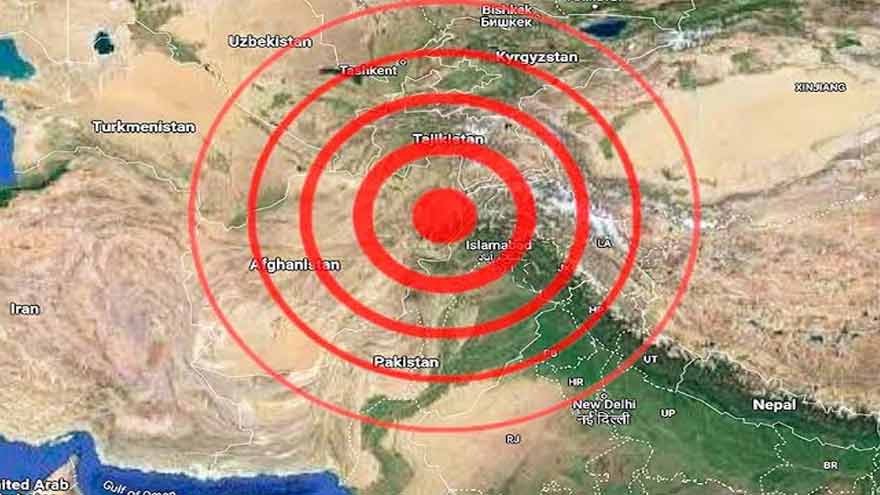
“A moderate earthquake measuring 5.4 on the Richter scale struck parts of Pakistan on Wednesday, causing tremors to be felt across the federal capital of Islamabad and several districts within the Khyb…”
According to the Pakistan Meteorological Department (PMD), the seismic activity was recorded at 12:51pm local time. The agency confirmed that the earthquake originated from the Hindu Kush region in neighbouring Afghanistan, a mountainous area frequently prone to seismic shifts due to its complex tectonic structure.
The PMD reported that the tremor occurred at a significant depth of 187 kilometres, which often helps in dissipating the intensity of the shaking felt at the surface, though the magnitude remained high enough to be widely perceived by residents in urban centres.
In the immediate aftermath of the event, local authorities and emergency response teams across the affected regions reported no casualties or significant structural damage to property.
"Stay connected with Aman-e-Pakistan for ongoing live reporting and verified investigative updates."
The tremors were felt distinctly in the capital city of Islamabad, as well as in major population centres including Peshawar and the Malakand division, where residents reported brief periods of shaking that prompted many to evacuate buildings as a precautionary measure.
While the Pakistan Meteorological Department placed the magnitude at 5.4, the United States Geological Survey (USGS) provided a slightly different assessment, recording the earthquake at a magnitude of 5.3. The USGS further specified the epicentre to be located approximately 35 kilometres south-southwest of Jurm, a town situated in the Badakhshan province of Afghanistan.
The discrepancy in magnitude readings is common in seismology, as different agencies utilize varying networks of sensors and calculation models to estimate the energy released during a seismic event.
The Hindu Kush region, which spans across parts of Afghanistan and Pakistan, sits at the intersection of several major tectonic plates, making it one of the most seismically active zones in the world. Earthquakes in this region are frequently felt in northern Pakistan, particularly in Khyber Pakhtunkhwa and the northern mountainous areas, due to the proximity of the fault lines.
Despite the frequency of such events, the depth of this particular earthquake likely contributed to the lack of reported destruction. Emergency services in Khyber Pakhtunkhwa and Islamabad remain on alert, as is standard protocol following any seismic event of this magnitude, to monitor for any delayed reports of damage or secondary risks.
Officials have urged the public to remain vigilant and follow established safety guidelines during tremors, such as moving to open spaces or taking cover under sturdy furniture if evacuation is not immediately possible.
As of late Wednesday, no further aftershocks of significant concern had been reported by the meteorological authorities, and normal life in the affected cities appeared to resume shortly after the initial shaking subsided.
The government continues to coordinate with regional disaster management authorities to ensure that all districts remain prepared for potential seismic activity, given the geographical vulnerability of the northern regions of the country.
This event serves as a reminder of the ongoing geological activity in the Hindu Kush range, which continues to influence the safety and infrastructure planning requirements for the surrounding provinces in Pakistan.
Written by Sheheryar Munawar
Aman-e-Pakistan Senior Journalist & Bureau Reporter
Continue Reading: More in National
Swipe or click arrows to explore National desk coverage