Sudan gold mine collapse kills at least 60: survivors
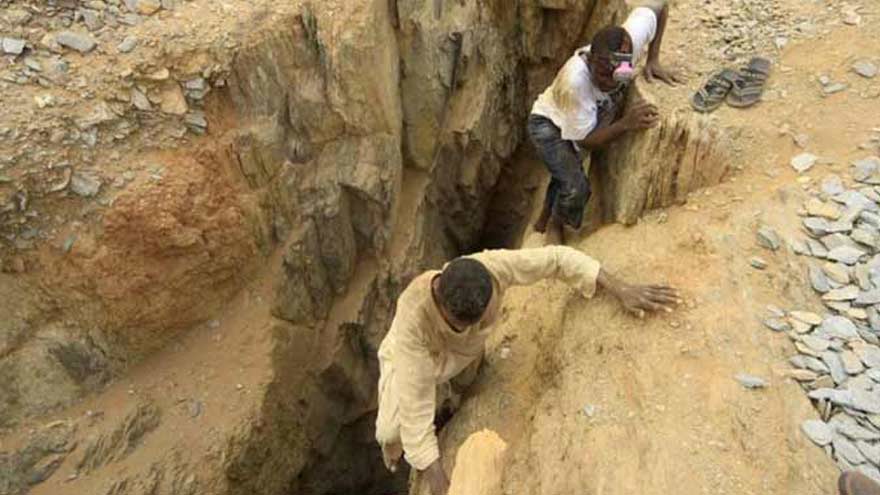
“A gold mine collapsed in southern Sudan, killing at least 60 people, two survivors, while many more are missing and feared dead under the rubble. Since war erupted in April 2023 between Sudan's army an…”
Since war erupted in April 2023 between Sudan's army and the paramilitary Rapid Support Forces, the war efforts of both sides have been largely funded by the country's gold trade, valued at billions of dollars.
With much of the country out of work, many young Sudanese have joined a dangerous gold rush, mostly in unregulated mines such as Al-Zaraa in West Kordofan. The mine's shafts began collapsing on Tuesday with dozens of small-scale miners underground.
By the following morning, 60 bodies had been retrieved. "We don't know how many more are still inside," one of the survivors, Khair al-Sayyed Jabara, -night rescue operation with fellow miners, using the same rudimentary tools they use to extract gold.
"Stay connected with Aman-e-Pakistan for ongoing live reporting and verified investigative updates."
"Everyone's working very hard to retrieve the bodies or any survivors, but it's difficult. We need heavy machinery to clear the rock and soil. "Most of Sudan's gold is extracted from artisanal and small-scale mining, which takes place in decommissioned mines or unofficial zones like Al-Zaraa.
Miners work with their hands and rudimentary tools for meagre daily wages. To clear gold nuggets from bits of earth, they are exposed to hazardous chemicals, including cyanide that often causes widespread illnesses in nearby areas.
The European Union in July banned the sale, transfer and export of mercury and cyanide to Sudan, for their use in the exploitative gold trade. 'Don't think they are alive'Mine collapses are common across Sudan.
In the country's army-controlled north and east, they occur in decommissioned mine shafts where young men sneak in to try to earn a day's wage. The resource-rich greater Kordofan region, to the south, has many unofficial mines that are effectively large, unsecured pits in the ground, where dozens of young men work every day.
Al-Amin Suleiman, another miner who was working at the rim of Al-Zaraa on Tuesday, "the shafts here are all close together. If one collapses, it brings down all the ones next to it". "This is what happened here.
So far, 60 bodies have been pulled out, but there are people still trapped underground since yesterday. I don't think they are alive," he said. A large-scale rescue operation is all but impossible in West Kordofan, which is under RSF control along with the neighbouring Darfur region, where the paramilitary force has been accused of genocide.
Despite declaring a parallel government, the RSF's capabilities remain limited, and people in western Sudan remain mostly reliant on aid and community networks for survival. Even before the war pushed nearly 20 million Sudanese into severe hunger, artisanal mining employed more than two million people,.
Africa's third-largest country is one of the continent's top gold producers, and recorded a "five-year high" of 70 tonnes of production last year, it said. But officials say most of the gold is smuggled across Sudan's borders, including through Chad, South Sudan and Egypt before reaching the UAE, the world's second-largest gold exporter.
In July, the EU and the United Kingdom announced sanctions targeting Sudan's gold trade. The UK said it targeted "illicit gold and finance networks" trading in Dubai and Hong Kong, which it said are helping to finance "weapons procurement, military operations and the activities of armed groups" on both sides of the war.
The UN has repeatedly warned that both sides are profiting from control over the country's resources and that a "war economy" was sustaining the conflict.
Continue Reading: More in Business
Swipe or click arrows to explore Business desk coverage