When New York turns the movies into a summer ritual
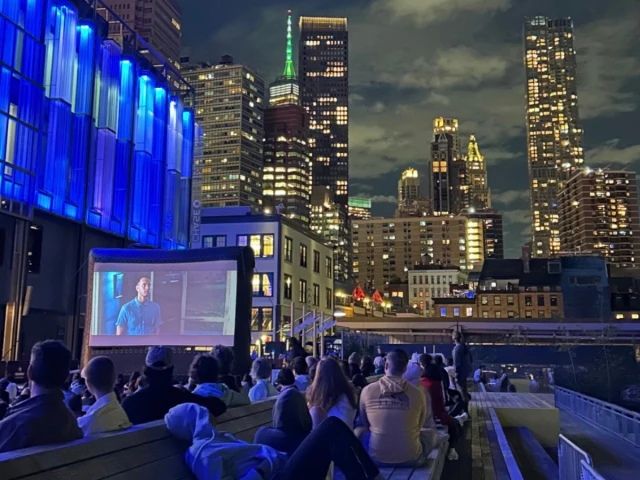
“From Bryant Park to Pier 17 and Manhattan rooftops, New Yorkers are turning movie and television screenings into shared summer rituals, where the setting, the crowd and the stories become part of the …”
There is something different about watching a movie in New York when the cinema has no walls.
Instead of rows of seats in a dark theatre, there is grass beneath you, people arriving with blankets and snacks, friends trying to find a good spot, couples settling in beside strangers and a city skyline providing a backdrop that no movie theatre could reproduce.
Then the lights go down and, for the next two hours, hundreds of people are watching the same story together. That simple idea has become one of New York's most enjoyable summer rituals. Across the city, parks, waterfronts and rooftops are transformed into temporary cinemas.
"Stay connected with Aman-e-Pakistan for ongoing live reporting and verified investigative updates."
Some screenings are devoted to beloved classics, while others are built around the latest television obsession. Photo: Author. Many of the outdoor events are free and operate on a first-come, first-served basis, while special screenings may require registration or reservations.
But what they have in common is the feeling of watching something together. After experiencing several of these events myself, I have started to think that the movie is sometimes only half of the attraction.
Bryant Park is one of the clearest examples of how this works. Its Movie Nights have become a New York summer tradition, with people arriving well before the film begins to claim a place on the lawn.
The atmosphere starts building long before the opening credits, as people bring blankets, meet friends, bring food and settle in for an evening rather than simply arriving for a two-hour screening. This year, the summer movie-night special ended with.
The Truman Showbeing screened for the second time, as watchers came in the afternoon and waited until after sunset for the film to begin. Sitting on the lawn in the middle of Manhattan and watching a film that so many people already know by heart made the experience feel strangely new.
Photo: Author. The movie itself was familiar, but the setting and the audience changed it. Someone laughs at a line you have heard ten times before, someone reacts to a scene you had forgotten was coming, and people around you quietly comment on moments as they happen.
You become part of an audience again. Perhaps that is one reason these screenings feel particularly appealing now, when so much entertainment is consumed privately and on demand. Streaming has made it possible to watch almost anything at any time, but it has also made entertainment increasingly solitary.
Outdoor cinema brings back the simple pleasure of reacting to a story alongside other people. Television becomes a communal event. The phenomenon is not limited to old movies.
Last summer, I experienced the other side of this culture with. The Summer I Turned Pretty. I went to Bryant Park for a special screening of the first two episodes of the show's third and final season.
Fans gathered on the lawn with blankets, snacks and friends, and the atmosphere was closer to a concert or fan gathering than an ordinary television screening. Photo: Author. What made the evening particularly memorable was the appearance of the cast.
The actors came onto the stage to greet the fans, turning what had already been a large communal viewing experience into a live fan event. For people who had followed the characters and storylines through the previous seasons, suddenly seeing the cast in front of them added another layer to the experience.
The audience already had theories, favourite characters and strong opinions about what was going to happen next. So when something happened on screen, the reaction travelled across the lawn: laughter, screams, cheers and collective gasps.
It was essentially a giant group chat, except everyone was sitting together in the same physical space. That is where watching television becomes something more than watching television. The audience is no longer simply consuming an episode; it is participating in a shared cultural moment.
City skylines become part of the film. The same idea takes on a completely different atmosphere at Pier 17. Brooklyn Bridge Park's.
Movies With A Viewbrings free outdoor films to the waterfront, where audiences can watch with New York Harbor and the Manhattan skyline behind the screen. The screenings are first-come, first-served, making arriving early part of the ritual.
I first watched. Forrest Gumpat Pier 17, where the waterfront setting changes the entire feeling of a familiar film. The light changes as the evening progresses, the water moves, buildings begin to glow and the skyline becomes part of the visual experience.
Somewhere between the real city and the movie on the screen, the two begin to overlap. You are not just watching. Forrest Gumpanymore.
You are watching. Forrest Gumpin New York on a summer night. That distinction sounds small, but it is exactly what makes these events memorable.
The location becomes part of the story you remember later, just as much as the film itself. Photo: Author. Branding for entertainment.
The. Summer I Turned Prettyexperience also showed another side of this new entertainment culture. For the show's finale, I attended a special screening event at the rooftop at 230 Fifth, where the atmosphere was much closer to a nightlife event than a traditional television screening.
There was a bar-style rooftop setting, fans gathered around the screening and the feeling that the finale was an occasion rather than simply another episode. There were even Sephora gift bags with. Summer Fridayslip balms as part of the special collab.
That detail might sound incidental, but it says a lot about where entertainment culture is going. The show was not only being watched; it was being experienced, photographed, branded and remembered. The screening itself became content, the rooftop became part of the story, and the gift bag became something to photograph and take home.
The people attending were not just viewers anymore. They were part of a community of fans who could say they were there. Photo: Author.
This is where the relationship between entertainment and brands becomes particularly interesting. Streaming platforms and advertisers have realised that audiences do not necessarily want another telling them to watch something. Increasingly, they want to be invited into the world of the show.
The. Summer I Turned Pretty. Bryant Park event is a good example.
Prime Videopartnered withT-Mobileto transform the park into an experience inspired by the show's Cousins Beach setting, with themed installations and fan activities. The event brought the fictional world of the series into a real New York park and gave fans an opportunity to interact with the show beyond simply watching it on a screen.
The brand is no longer simply interrupting the entertainment; it is helping construct an experience around it. A beauty company can appear through gift bags, a telecommunications company can create a fan experience and a streaming platform can transform a television premiere into a physical gathering.
The marketing becomes experiential. And that can be remarkably effective because people are more likely to remember an experience than an .
You may forget seeing a sponsored post online, but you are less likely to forget sitting on a lawn with hundreds of fans, watching a new episode and then seeing the cast walk onto the stage in front of you. There is a larger cultural reason these evenings work.
New York is one of the most densely populated cities in the world, yet it can also be surprisingly isolating. We pass thousands of people every day without knowing anything about them. Outdoor cinema temporarily changes that dynamic because everyone is looking at the same screen, waiting for the same scene and reacting to the same ending.
For a few hours, strangers become a temporary community. That may be the most interesting thing about the city's outdoor cinema culture.
It is not really about replacing the movie theatre; it is about adding something that the theatre, and certainly streaming at home, cannot provide: a sense of occasion, a sense of place and a sense that other people are experiencing the same thing at exactly the same moment.
Perhaps that is why New Yorkers keep coming back, bringing blankets, snacks and friends and waiting for the sun to go down. In a city where everyone is constantly moving, these screenings offer a rare opportunity to stop, sit beside strangers and share a story from beginning to end.
Because sometimes we do not just want to watch the story. We want to have someone beside us when it happens.
Continue Reading: More in International
Swipe or click arrows to explore International desk coverage