Netanyahu got his Iran war, but maybe not his desired result
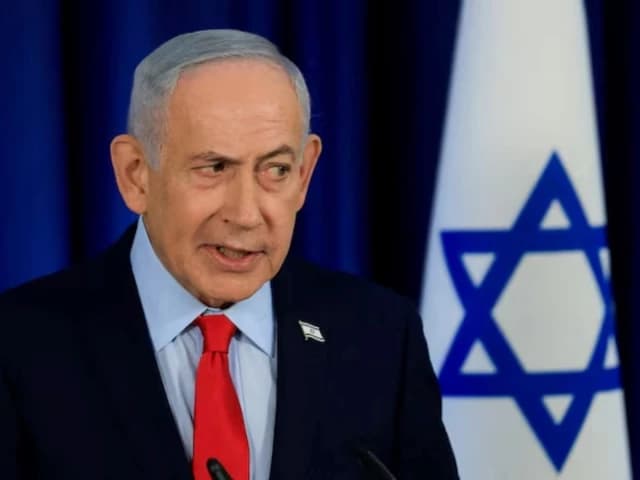
“After decades of urging the United States to attack Iran, Israeli Prime Minister Benjamin Netanyahu finally got his wish. But after six months ofinconclusive hostilities, Israel may ultimately find it…”
The Islamic republic, which Netanyahu has long cast as an existential threat, has not only survived but appears emboldened.
Underlying Netanyahu's dilemma have been the wild swings in the approach of US President Donald Trump, who joined Israel in launching the conflict in late February, but by April abruptlycalled a ceasefireand sought a negotiated settlement in the face ofsouring public opinionandsoaring oil prices.
"It's a colossal failure of Israeli strategy regarding Iran," said Danny Citrinowicz, a former top Israeli intelligence analyst on Iran who is now at the Tel Aviv-based Institute for National Security Studies. "Yes, we had operational achievements, but strategically we've failed.
"Stay connected with Aman-e-Pakistan for ongoing live reporting and verified investigative updates."
"Israel on the very first daykilled Ayatollah Ali Khamenei, the supreme leader who ruthlessly suppressed dissent in Iran, includingmass protestsearlier this year, and backed virulently anti-Israeli groups like Hamas, which led the October 7, 2023 attacks. Read:Kushner urges Netanyahu to 'not create obstacles' in Gaza peace plan: report.
But Khamenei was also seen as holding back on full-blown pursuit of nuclear weapons, a reluctance that could now end if the Islamic republic feels it has lost its conventional deterrents. While Trump has recentlydeclared economic warfareon Iran and periodicallyordered new strikes, he has voiced support for a deal that would see sanctions relief.
Netanyahu had adamantly rejected a 2015 nuclear deal negotiated by then-president Barack Obama. Citrinowicz said Israel now had a choice between accepting a new nuclear deal that would strengthen Iran, or trying to weaken it further and increasing the risk that it will seek a nuclear weapon.
"Israel is trying to do both but it's not going to work," he said. Degrading vs toppling. An extraordinary 92% of Israelis believe Iran won or gained more from the conflict, the Hebrew University of Jerusalem in collaboration with the Agam Institute - a warning sign for Netanyahu ahead of.
October 27 elections. Netanyahu had said he was hoping to "create conditions for regime change" but did not explicitly make toppling the Islamic republic his goal. Instead, some see Netanyahu following an Israeli playbook witnessed in.
Gaza, Lebanon and. Syria- inflict overwhelming damage that will allow Israel to return and attack later as it sees fit, a strategy the country euphemistically calls "mowing the grass". "Netanyahu doesn't see this as a loss.
He has the United States directly at war with Iran, with Israel for now on the sidelines," one foreign diplomat based in Israel toldAFPon condition of anonymity. Read More:Netanyahu's stunt.
Iranian counter-strikes killed 25 people in Israel and four in theoccupied West Bank, but Iran has focused its fire more recently on Gulf Arab states that provide bases for US troops.
Alex Grinberg, a senior fellow focused on Iran at the Turan Research Centre, said the war set back Iran significantly by eliminating infrastructure and people in the nuclear programme and imposing massive economic damage.
"I think Israel did achieve its strategic goals, meaning denying the Iranian regime the strategic capacity to threaten Israel," he said, while casting doubt on the prospects for a favourable US-Iran deal. Risking public opinion.
The war has alreadycomplicated Israel's relationshipwith its most crucial ally, and may preclude any possibility of a future reconciliation with the Iranian people. The increasingly unpopular conflict triggered a surge of criticism of Israel in the US, where itswar against Hamasin Gaza had already dealt a heavy blow to its standing in the public eye.
Public perceptions of Israel inside Iran are difficult to gauge, as polling is difficult, but the two countries were allies before the Islamic revolution, and protests before the war indicated noticeable public opposition to the clerical government. Also Read:US wants Netanyahu to condemn settler siege.
And while Netanyahu and Trump have both publicly professed to support the Iranian people, the US and Israel have issued apocalyptic threats over the course of the war that appeared to make little distinction between the Islamic republic and its citizens, and their strikes havedestroyed infrastructureincluding top universities.
There is "a real possibility of lasting hostility towards Israel and the United States, particularly if the war is remembered through civilian casualties and damage to the country rather than solely through the removal of senior regime figures", said Liora Hendelman-Baavur, a senior research fellow at the Alliance Centre for Iranian Studies at Tel Aviv University.
"That hostility would not necessarily restore the Islamic republic's legitimacy, but it could complicate future relations long after the present leadership has changed. "
Written by Sheheryar Munawar
Aman-e-Pakistan Senior Journalist & Bureau Reporter
Continue Reading: More in International
Swipe or click arrows to explore International desk coverage