Taiwan receives new F-16V fighter jets from US to tackle China threat
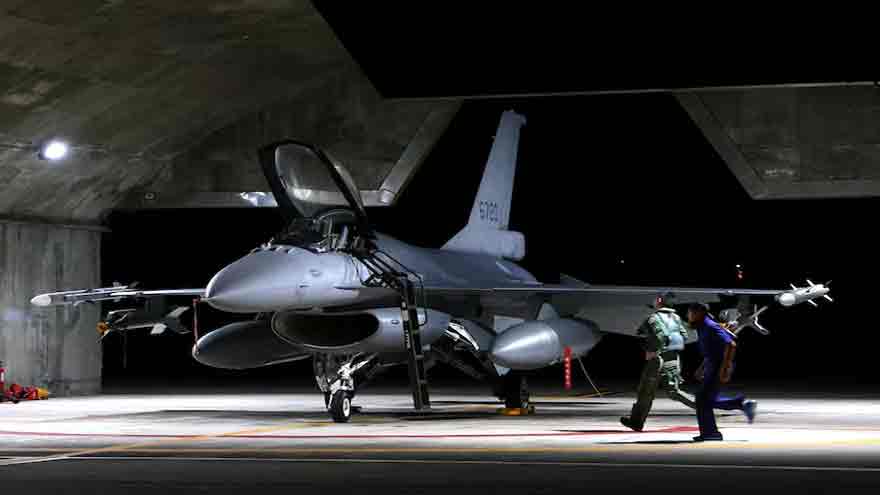
“The first two of a batch of 66 new F-16V fighter jets ordered in 2019 will arrive in Taiwan on Friday after months of delays, helping to strengthen an air force that has to scramble almost daily to s…”
Taiwan faces a rising military threat from Beijing, which claims the democratically governed island as its own territory. Taipei has complained of repeated delays to weapons ordered from the United States, its most important international backer and arms supplier.
The delivery, to the Taitung air base on the island's mountainous east coast, comes amid growing concern in Taiwan about the Trump administration's commitment to arming Taipei, despite Washington saying there has been no change in policy.
Speaking to reporters at parliament in Taipei, Defence Minister Wellington Koo said there would be other new F-16Vs arriving soon, though he did not give details. "Of course we won't only have delivered these two by year-end," he said.
"Stay connected with Aman-e-Pakistan for ongoing live reporting and verified investigative updates."
The United States in 2019 approved an $8 billion sale of Lockheed Martin (LMT.N), opens new tab F-16V fighter jets to Taiwan, a deal that would take the island's F-16 fleet to more than 200 jets. But delivery of the planes has been hit by issues including software problems.
The arrival of the first two aircraft will come almost exactly a week after US President Donald Trump met Chinese President Xi Jinping in Beijing. Trump said in May, after meeting Xi in Beijing, that he was holding a new $14 billion package for Taiwan in abeyance, though he did approve one worth $11 billion in December 2025.
The F-16Vs have advanced avionics, weapons and radar systems to better face down the Chinese air force, including its stealthy J-20 fighters. An upgrade programme for Taiwan's existing F-16s was completed in 2023. The United States is bound by law to provide Taiwan with the means to defend itself, but the two have no formal diplomatic relations.
Beijing has repeatedly to stop arming Taiwan. The Chinese foreign ministry did not respond to a request for comment on the arrival of the F-16s. "We continue standing with friends and allies across the Indo-Pacific to advance our shared prosperity, security, and values — that includes Taiwan," a US State Department spokesperson said when asked about the new F-16s.
Most countries will not sell weapons to Taiwan for fear of angering China. Even the United States has been unwilling to provide Taiwan its most advanced fighters like the F-22 or F-35, and Taiwan has no direct answer to China's new stealth fighters.
Continue Reading: More in International
Swipe or click arrows to explore International desk coverage