Syria had been on the list since 1979, when Washington
“Syria had been on the list since 1979, when Washington accused the government of former President Hafez al-Assad of supporting militant groups() - The United S…”
Syria had been on the list since 1979, when Washington accused the government of former President Hafez al-Assad of supporting militant groups() - The United States removed Syria from its list of state sponsors of terrorism on Monday, lifting what Damascus says was the last major impediment to investing in the country as Washington deepens ties to the new Syrian government. The removal, posted on the U.S.
Treasury's website, took effect after a 45-day congressional review period triggered when Trump formally notified Congress on July 8 of his intention to rescind the designation. “These actions were all taken in recognition of the positive actions taken and further commitments by the Syrian government under President Ahmed al-Sharaa to fully distance Syria from acts of international terrorism,” U.S.
Secretary of State Marco Rubio said in a statement. Syrian Foreign Minister Asaad al-Shibani the government hoped removing what he called the "last obstacle" would help reconnect Syria to the global financial and economic system and boost investment.
"Stay connected with Aman-e-Pakistan for ongoing live reporting and verified investigative updates."
The designation remained throughout the rule of his son Bashar al-Assad, who was toppled by rebels led by current President Ahmed al-Sharaa in December 2024. CUBA, IRAN, NORTH KOREA REMAINMonday's announcement also removed the designation of the Nusrah Front as a Specially Designated Global Terrorist organization, leaving Cuba, Iran and North Korea as the three countries designated by Washington as state sponsors of terrorism. The designation carries restrictions on U.S.
foreign assistance, defense exports and sales, certain dual-use items and financial transactions, and had remained a major deterrent for banks and investors even after Washington dismantled its broader sanctions program on Syria. Trump's administration terminated comprehensive U.S.
Treasury has since said American financial institutions can provide services to Syria, process payments involving Syrian banks and establish correspondent banking relationships with them, provided sanctioned parties are not involved.
But the terrorism designation remained a source of legal and compliance risk for firms considering entering Syria, whose government is seeking billions of dollars in investment to rebuild after nearly 14 years of war. Signs of interest had grown ahead of the removal.
Bank officials expressed willingness to visit Syria and continue discussions,. Mastercard has gone further, announcing in May that it was working with QNB Group and Syria's central bank to prepare infrastructure for international card payments in the country.
The company has described itself as an early investor in Syria and said it wants to help connect Syrian consumers and businesses to global payment networks.
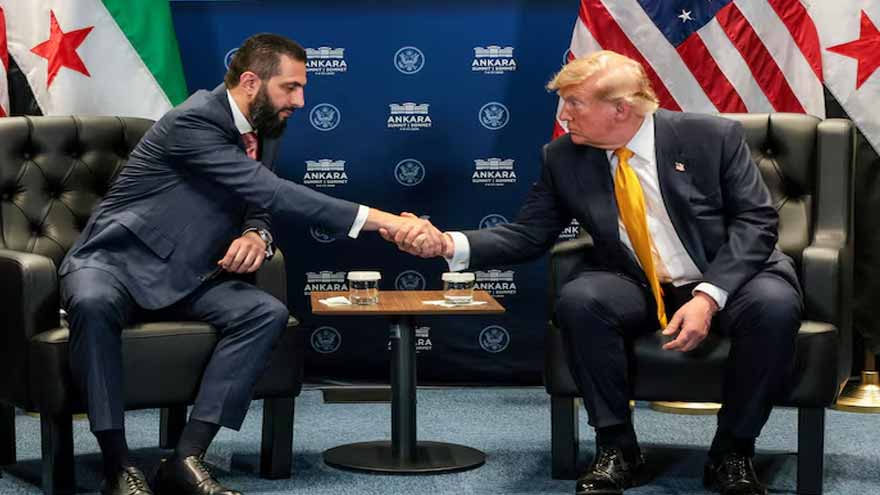
CONTINUED COOPERATIONTrump notified Congress of his decision after meeting Sharaa in Ankara in July, telling the Syrian president in a letter seen by that he had promised to "remove all barriers" preventing Syria from rebuilding.
The delisting also followed months of negotiations between Damascus and Washington over Syria's economic and foreign policy. reported this month that Damascus agreed to drastically reduce imports of Russian oil during discussions with Washington over lifting the terrorism designation, according to three sources familiar with the talks.
Trump has increasingly embraced Sharaa, the former commander of al Qaeda's Nusra Front who broke ties with the global jihadist network in 2016 and led the rebel coalition that overthrew Assad. Washington has praised cooperation by Sharaa's government against Islamic State and said easing restrictions is intended to give Syria an opportunity to stabilise, attract investment and rebuild.
Written by Iqra Aziz
Aman-e-Pakistan Senior Journalist & Bureau Reporter
Continue Reading: More in International
Swipe or click arrows to explore International desk coverage