UN chief says nuclear tests 'shatter trust,' wants global test ban
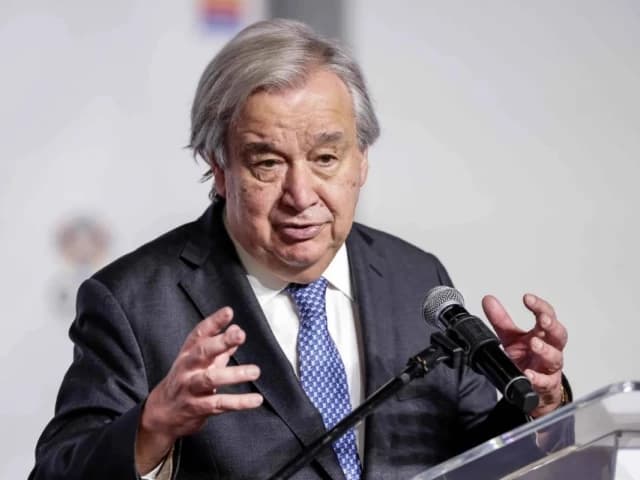
“UN Secretary-General Antonio Guterres on Friday urged all nations possessing nuclear weapons to maintain existing pauses on testing and to formalise global bans on nuclear explosions. “Nuclear tests sh…”
“Nuclear tests shatter trust, fuel a nuclear arms race & betray every community still living with the legacy of past nuclear tests,” Guterres wrote on US social media company X.Nuclear tests shatter trust, fuel a nuclear arms race & betray every community still living with the legacy of past nuclear tests.
I call on all countries possessing nuclear weapons to maintain existing moratoria & bring the Comprehensive Nuclear-Test-Ban Treaty into force.…— António Guterres (@antonioguterres)August 29, 2026He urged countries to bring the Comprehensive Nuclear-Test-Ban Treaty (CTBT), a multilateral agreement intended to prohibit all nuclear detonations, into effect, while demanding a renewed commitment to ending the activities.
The appeal followed an announcement from Russia on the training launch of a "nuclear-capable" intercontinental ballistic missile (ICBM). Read:Iran decries US 'terrorist' strike on nuclear power plant, warns of devastating response.
"Stay connected with Aman-e-Pakistan for ongoing live reporting and verified investigative updates."
The Russian Defence Ministry reported that the mobile solid-fuel missile was launched from the Plesetsk Cosmodrome, a military spaceport in the northwestern Arkhangelsk region, and reached its designated target at the Kura training ground in the Far East Kamchatka region.
Moscow confirmed that the launch was intended to confirm the “tactical, technical, and flight characteristics of the missile system.”Although the CTBT was adopted in 1996 to establish a legally binding global ban on all nuclear test explosions, it has not officially entered into full legal force because a subset of key nations has not ratified the treaty.
The activation of the treaty remains contingent upon ratification by all "Annex 2" states, nations that possessed nuclear technology during the treaty's negotiation. Nine countries, including the US, Russia, China, Iran, Israel, Egypt, India, Pakistan, and North Korea, have yet to fulfil the requirement.
As of 2026, 188 states have signed, and 179 states have ratified the treaty.
Written by Hania Amir
Aman-e-Pakistan Senior Journalist & Bureau Reporter
Continue Reading: More in International
Swipe or click arrows to explore International desk coverage