SBP raises policy rate by 50bps to 12%
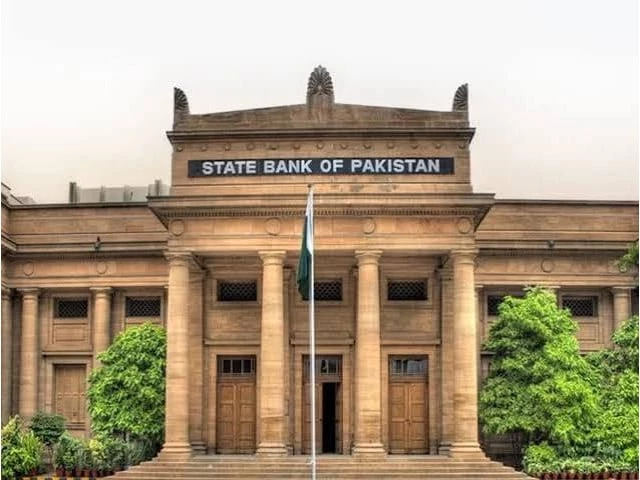
“The State Bank of Pakistan (SBP) raised its key policy rate by 50 basis points to 12% on Monday, citing mounting inflationary pressures amid economic uncertainty and rising global oil prices. Last mont…”
Last month, the MPC kept the policy rate unchanged at 11.5%, in line with market expectations. The decision was the third consecutive hold after the 100-basis-point increase in April, the first hike in nearly three years.
The July meeting had also left the rate at 11.5%, citing an improved macroeconomic outlook tempered by risks from renewed conflict in the Middle East. Pakistan’s external buffers also remained stronger than a year ago.
Total liquid reserves were about $23.7 billion as of September 4, with SBP holdings at $18.3 billion. The government had also recently raised $3 billion in a Eurobond. In July, the MPC decided to maintain the policy rate at 11.5%, citing an improved macroeconomic outlook tempered by elevated risks from the renewed conflict in the Middle East.
"Stay connected with Aman-e-Pakistan for ongoing live reporting and verified investigative updates."
The committee assessed that earlier de-escalation had lowered global oil prices and eased supply-chain pressures, contributing to some improvement in recent indicators. Meanwhile, headline inflation eased to 11.1% year-on-year in June from 11.7% a month earlier, while core inflation moderated to 8.4%.
Both, however, remained elevated during the month. High-frequency data pointed to a pickup in economic activity in June after a slowdown in the final quarter of FY26. The MPC noted that proactive policy management and fiscal consolidation had helped absorb the ongoing supply shock and preserve stability.
It reiterated its commitment to bringing inflation into the 5-7% medium-term target range and said the current stance remains appropriate.
Key positive developments since the last meeting included SBP foreign exchange reserves surpassing the end-June target of $18 billion, an upgrade of Pakistan’s sovereign credit rating to “B” by Standard & Poor’s, easier inflation expectations among consumers and businesses, and the Federal Board of Revenue meeting its revised tax target for FY26.
The MPCin Junekept the policy rate unchanged at 11.5%, in a cautious approach amid mixed signals on inflation and external risks. Market experts had shown divided opinions ahead of the announcement. Securities, 49% of respondents anticipated no change, while another 49% expected a hike, with 34% forecasting a 50bps increase and 15% a 100bps rise.
Only 2% predicted a cut of up to 50bps. Notably, the MPC’s decision came on the heels of significant positive developments on the global front.
Prime Minister Shehbaz Sharif announced that the US and Iran had reached a deal to end their conflict, with the pact calling for the “immediate and permanent termination of military operations on all fronts, including in Lebanon.”Analysts believed the breakthrough could help stabilise oil prices and ease imported inflation pressures for Pakistan, supporting the central bank’s decision to pause further tightening.
However, it was expected that the MPC would continue to monitor core inflation, fiscal developments, and external account indicators in the coming months. In March, amid the outbreak of the United States-Israeli war against Iran and heightened regional geopolitical tensions, the MPC decided to maintain the policy rate unchanged at 10.5%.
The stance reflected caution over potential imported inflation pressures from surging global energy prices, triggered by the US-Iran tensions that drove Brent crude up sharply to around $108 per barrel.
The cautious pause in March was seen as support for ongoing macroeconomic stability efforts, building on prior rate reductions (including the 50 bps cut to 10.5% in December 2025), while allowing time to monitor energy price dynamics, domestic inflation trends, and external account resilience.
Later, in a move that defied market expectations, the MPC announced a sharp 100 basis point increase in the policy ratein April, raising it to 11.5%. The SBP’s move signaled a decisive pivot, prioritising inflation anchoring over near-term growth support, even as the economy posted a 3.89% GDP expansion in Q2 and a $1.07 billion current account surplus in March.
In Januarythis year, SBP Governor Jameel Ahmad that the monetary policy would be maintained at 10.5% for the next one and a half months. Ahmad had also announced a reduction in the rate for banks to deposit cash by 1%, setting it at 5%.
He had added that the inflation outlook was going to stay between 5-7% going into 2027, explaining that inflation expectations were easing and confidence among consumers and businesses was improving, noting that the decision to maintain the policy rate aimed to support economic stability and sustained growth.
The SBP governor said recent high-frequency indicators, including large-scale manufacturing data, suggested economic activity was expanding faster than anticipated. He said economic growth was projected to range between 3.75-4.75% in the current fiscal year. He noted that while imports had increased, widening the trade deficit, the current account deficit remained manageable.
Ahmad said the current account deficit stood at $244 million in December 2025 and totalled $1.2 billion in the first half of the current fiscal year, supported by higher remittances and ICT exports. The decision to hold the policy rate came againstexpectationsthat the bank might bring it back into single-digit territory.
Continue Reading: More in International
Swipe or click arrows to explore International desk coverage