South Korea reviewing military options for Hormuz, no decision made, official says
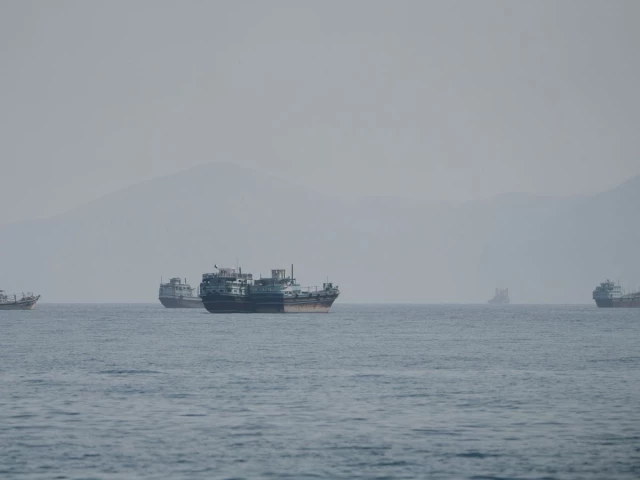
“South Korea is reviewing options, including military measures, to support freedom of navigation inthe Strait of Hormuz, the presidential office said on Friday, while denying media reports that the gov…”
Several South Korean media outlets, includingJTBCandMBC, reported late on Thursday that Seoul was preparing to deploy military assets before the end of the year and could seek parliamentary approval this month. The reports said options under consideration included a maritime patrol aircraft, a logistics support vessel or a mine detection and clearance unit.
Seoul had also been discussing the scale and nature of a potential contribution with countries including the United States, Britain and France, they said. A presidential official had been discussing practical ways to contribute to freedom of navigation in the strait and confirmed that military measures were among the options under review.
Read:China urges South Korea not to take sides, blames US policy for Korea tensions"Nothing has been decided," the official said, adding that Seoul would also have to consider domestic legal procedures, military readiness on the Korean Peninsula and parliamentary approval.
"Stay connected with Aman-e-Pakistan for ongoing live reporting and verified investigative updates."
The official also said claims that South Korea had provided no assistance related to the Strait of Hormuz were "not true", saying Seoul had long discussed practical contributions with the international community. South Korean President Lee Jae Myung may discuss options on the Strait of Hormuz when he meets French President Emmanuel Macron next week, the official said.
US President Donald Trump said in an August social media post that he hadscaled back US-South Korea joint military exercisesin part because South Korea had declined to help the US in thewar against Iran. Managing alliance risks.
Ban Kil-joo, a professor of international security studies at the Korea National Diplomatic Academy, said a deployment would send an important signal to Washington that Seoul remains willing to shoulder alliance responsibilities despite recentfriction over tradeand other issues.
"A deployment would help South Korea manage alliance risks and reinforce its credentials as a model US ally at a time when Washington is asking partners to do more," Ban said.
Ban said the reported options pointed to a "medium-intensity" contribution that would demonstrate Seoul's support forinternational efforts in the Straitof Hormuz without amounting to participation in combat operations against Iran. Read More:US, South Korea agree to closely cooperate on resolving North Korea’s nuclear issue.
Retired Lieutenant General Chun In-bum, a former South Korean special forces commander, said a deployment would be in line with South Korea's national interests. "It is important to contribute to ensuring the Strait of Hormuz remains open because South Korea has significant economic interests tied to the waterway," Chun told.
Reuters. He said South Korea's "asymmetric" relationship with the US made a proactive response preferable. Under South Korean law, overseas military deployments require approval by the National Assembly.
Public support may be limited. In March, a Gallup Korea poll found 55% opposed sending South Korean warships to the Strait of Hormuz, while 30% supported such a move. If approved, the mission could mark South Korea's first maritime deployment outside the Korean Peninsula since the Cheonghae anti-piracy unit was dispatched to the Gulf of Aden in March 2009,.
The unit remains deployed off Somalia as part of international maritime security efforts and to protect commercial shipping. South Korea relied on the Strait of Hormuz for 61% of its crude oil imports and 54% of its naphtha imports last year.
Continue Reading: More in International
Swipe or click arrows to explore International desk coverage


 International
PM Shehbaz reaffirms Pakistan’s support for multilateralism in meeting with UN chief candidate
 International