Humanitarian worker attacks reach record levels in 2025
“The global humanitarian community faced an unprecedented surge in violence throughout 2025, with a record 907 aid workers falling victim to attacks, including killings, injuries, and kidnappings. This…”
This figure represents a significant escalation from the 833 incidents recorded in the previous year, according to data compiled by the Aid Worker Security Database, an initiative supported by Canada and Australia that tracks major security threats facing those delivering essential relief in conflict zones.
While the number of fatalities saw a marginal decrease from the record-breaking 387 deaths in 2024, the 350 aid workers killed in 2025 underscore a persistent and worsening climate of danger for those operating on the front lines of global crises.
United Nations Secretary-General Antonio Guterres described the trend as appalling, emphasizing that the act of serving others has become more perilous than ever before. In his statement, Guterres issued a stern call to action for states to strictly adhere to the established rules of war and to ensure that perpetrators of these violent acts are held accountable for their actions.
"Stay connected with Aman-e-Pakistan for ongoing live reporting and verified investigative updates."
The United Nations marked these somber statistics ahead of World Humanitarian Day, with ceremonies held in New York and Geneva where flags were flown at half-staff to honor the memory of those who lost their lives while performing their duties.
The rise in violence is being attributed to several factors, most notably the proliferation of cheap, adaptable, and increasingly lethal armed drones. Tom Fletcher, the United Nations aid chief, highlighted that these technological advancements have fundamentally altered the risk landscape for humanitarian operations.
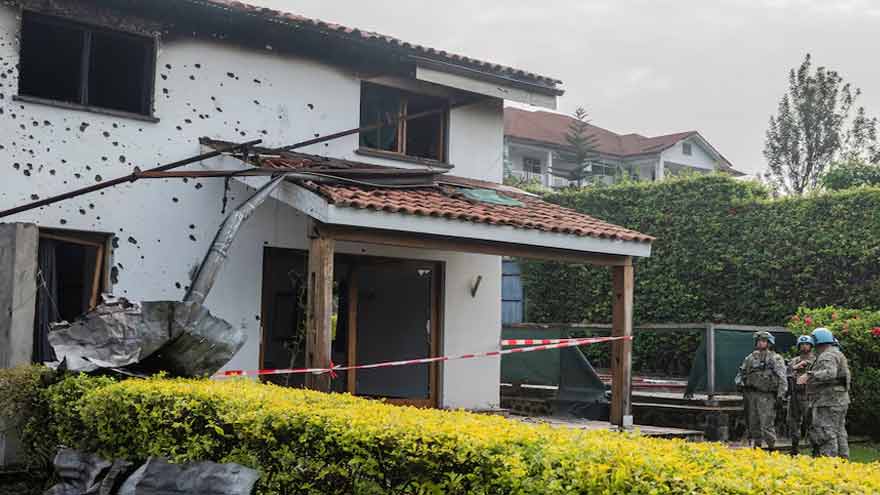
The impact of this technology was starkly illustrated in March when drone strikes targeted Goma in the eastern Democratic Republic of Congo, resulting in at least three deaths, including a French aid worker. Furthermore, aid convoys operating in Sudan and Ukraine have faced recurring attacks, further complicating the delivery of life-saving supplies.
Geographically, the Gaza Strip emerged as the most lethal environment for humanitarian personnel in 2025, accounting for 186 deaths. This figure is part of a broader, devastating toll reported by the United Nations Palestinian refugee agency, which has documented at least 393 staff deaths since the onset of the Israel-Gaza conflict on October 7, 2023.
In response to the high mortality rate, former UNRWA chief Philippe Lazzarini had previously advocated for the formation of a high-level panel to conduct a thorough investigation into the deaths of staff members. Meanwhile, the Israeli government, which is engaged in ongoing military operations against Hamas militants in Gaza, has maintained that it takes extensive measures to minimize civilian casualties.
The situation has drawn sharp criticism from international advocacy groups, with Bushra Khalidi, the global humanitarian policy lead at Oxfam, characterizing the current environment as a direct assault on the very principles of humanitarian action.
As the international community grapples with these figures, the consensus among aid organizations is that the current level of violence is unsustainable and requires immediate, coordinated intervention to protect those who risk their lives to provide relief to the world's most vulnerable populations.
The persistence of these attacks, particularly in high-conflict regions like Sudan and Gaza, continues to challenge the ability of international agencies to maintain a presence in areas where their work is most desperately needed.
Written by Sara Ali
Aman-e-Pakistan Senior Journalist & Bureau Reporter
Continue Reading: More in International
Swipe or click arrows to explore International desk coverage