Iranian FM spokesperson rebukes Canadian PM for calling ‘annihilation’ threat ‘language of war’
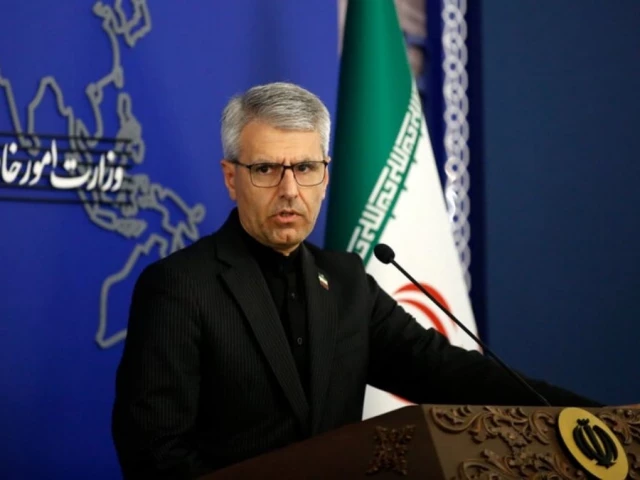
“Iranian foreign ministry spokesperson Esmaeil Baghaei on Thursday criticised Canadian Prime Minister Mark Carney for “reframing a threat to 'annihilate' Iran as merely 'speaking the language of war'”.…”
Baghaei on X said that “Mark Carney must understand that time is too ruthless to let the shelter of illusion and hypocrisy endure forever.”
He has added that “those who sought refuge in the long shadow of American bullying” would eventually learn that “averting their eyes from reality and bartering away their dignity and self-respect buys no salvation.”To the Canadian Prime Minister who, instead of condemning U.S. blatant aggression and warmongering, chose to appease Washington by reframing a threat to "annihilate" Iran as merely "speaking the language of war":Mark Carney must understand that time is too ruthless to let the…pic.twitter.com/87XRoT8cjc— Esmaeil Baqaei (@IRIMFA_SPOX)September 24, 2026He also stated that “they will see that the nation they once conspired with empires to crush was the solitary guardian of a sacred flame” which "kept a torch burning" against coercion, "a torch that, if allowed to die, would leave humanity with nothing but the cold embrace of naked force, burying the civilised and humane altars of reason beneath the brutal logic of might.
"Yemeni government forces stop Houthi attack near key southern provinces. The Yemeni government’s armed forces thwarted an attack and infiltration attempts by the Houthis aiming to reach positions near the road linking the southern and southwestern provinces of Aden, Taiz and Lahj, the Ministry of Defence has said in a statement, Al Jazeerareported.
"Stay connected with Aman-e-Pakistan for ongoing live reporting and verified investigative updates."
BREAKING —Yemeni government forces thwart Houthi attack near key southern provinces🔴 LIVE updates:https://t.co/y. IoLRqH3fapic.twitter.com/GP4Oefje3j— Al Jazeera Breaking News (@AJENews)September 24, 2026According to the official spokesperson of the Yemeni armed forces, “clashes ensued”, which forced “the attackers to retreat” and inflicted heavy losses in lives and equipment.
“We affirm that our armed forces stationed on those fronts have regained the initiative, are highly prepared, and continue to repel attacks and infiltration attempts,” the spokesperson has said. Shipping traffic via Strait of Hormuz stays lower than 10-day average, data shows.
Ten commodity vessels transited the Strait of Hormuz on Wednesday, up from seven a day earlier and below the 10-day moving average of about 17, preliminary shipping data showed on Thursday. Nine vessels entered the strait, including Supramax ships carrying metals, grain and other dry bulk cargoes, as well as an empty very large gas carrier.
One Supramax carrying fertiliser exited,, as of 0923 PKT on Thursday. The figures exclude any vessels that might have crossed the strait with their transponders turned off to avoid detection.
Before the US-Israeli war on Iran started on February 28, the strait typically handled about 125 large, commercial vessels a day, including tankers, gas carriers, bulkers and container vessels, accounting for some 20% of the world’s daily crude oil and liquefied natural gas supply.
Iran and the US remain far apart on how to end the war, but diplomacy must continue, a senior Iranian official told. Reuterson Wednesday, after Iran's president Assembly that Tehran would never surrender to US pressure.
The senior Iranian official, speaking on the condition of anonymity, said Tehran was reviewing Washington's response to its peace proposals, which prioritise lifting a US naval blockade on Iranian ports and reopening the Strait of Hormuz.
In the Bab el-Mandeb Strait, 27 commodity vessels transited the waterway on Wednesday, up from 24 the day before and compared with an average of 26 ships using the strait over the past 10 days.
Continue Reading: More in International
Swipe or click arrows to explore International desk coverage