Food imports raise supply shock risk
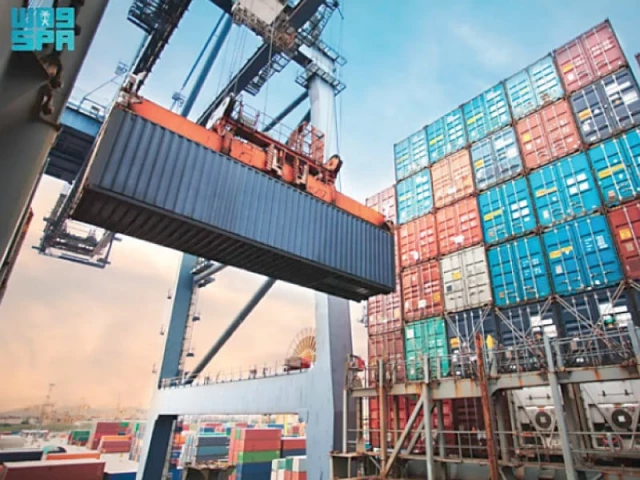
“Pakistan's food security challenge is rapidly shifting from the question of producing enough crops to whether the country can afford to continue importing the food it fails to produce competitively, w…”
The problem is not unique to Pakistan. Latest UN estimates show that about 645 million people, or 7.8% of the world's population, faced hunger in 2025, while around 2.1 billion people experienced moderate or severe food insecurity.
Although both figures improved from 2024, the Food and Agriculture Organisation (FAO) has warned that progress remains fragile, with climate shocks, geopolitical tensions, trade disruptions and high food prices continuing to threaten food access. Global food markets have already shown how quickly these pressures can reach importing countries.
The FAO Food Price Index averaged 133.3 points in August 2026, up 1.9% from July and 2.5% from a year earlier. FAO attributed the latest increase to supply concerns linked to adverse weather, the Middle East conflict and disruptions affecting trade logistics.
"Stay connected with Aman-e-Pakistan for ongoing live reporting and verified investigative updates."
For Pakistan, the vulnerability is particularly significant because agriculture remains a major part of the economy while the country continues to spend substantial amounts of foreign exchange on food that could potentially be produced or processed domestically. Statistics, the country's food bill rose 11.66% to $9.150 billion in FY26.
Currently, the government is once again looking to import wheat to stabilise markets, despite claims of a bumper crop this year. At the same time, Pakistan's food export performance has weakened. Food exports fell 29.49% to $5.02 billion, creating a deficit of $4.17 billion.
This widening gap between food imports and exports has raised concerns among agricultural and business-sector stakeholders about the structure of Pakistan's farm economy.
Shahid Imran, Convener of the Federation of Pakistan Chambers of Commerce and Industry's Regional Committee on Food, called for greater private investment in seeds and agricultural supply chains, arguing that better inputs and supply-chain efficiency could raise yields, exports and rural incomes.
He said Pakistan needed to diversify its agricultural priorities towards crops such as oilseeds and pulses, where import dependence remained high, while improving productivity, quality and value addition to meet both domestic requirements and international standards. People associated with agriculture business call such new initiatives long-term investment, which could help the country compete in global markets.
Najam Mazari, head of an organisation working on organic agriculture and products, said Pakistan's inability to develop modern agricultural research, technology and value-addition capacity had limited its ability to compete in international markets. He called for specialised agricultural research and educational institutions focused on technology, food processing, international marketing and agricultural policymaking.
The case for such a shift is strengthened by the performance of Pakistan's agriculture itself. The Economic Survey shows that agriculture grew 2.89% in FY2026, while wheat production increased 4.3% to 29.6 million tons, rice production rose 2.8% to almost 10 million tons and sugarcane output increased 6.2% to 89.45 million tons.
However, stronger production of major crops has not eliminated the need for large food imports. Climate change adds another layer of risk. Pakistan is highly exposed to floods, droughts and heat waves, all of which can disrupt crops, livestock, transport and food supply chains.
The World Food Programme estimates that 20.7% of Pakistan's population is undernourished and 40% of children under five are stunted, while recurrent climate shocks continue to affect food and nutrition security. The challenge, stakeholders say, therefore, is no longer simply to increase the acreage under cultivation.
Pakistan needs higher yields, better seeds, efficient water use, storage and cold-chain infrastructure, stronger agricultural research and greater investment in processing and marketing. A more diversified farm economy could also reduce the country's exposure to international commodity prices while creating exportable value beyond traditional crops.
Continue Reading: More in International
Swipe or click arrows to explore International desk coverage