US and South Korea curtail joint military exercises following presidential directive
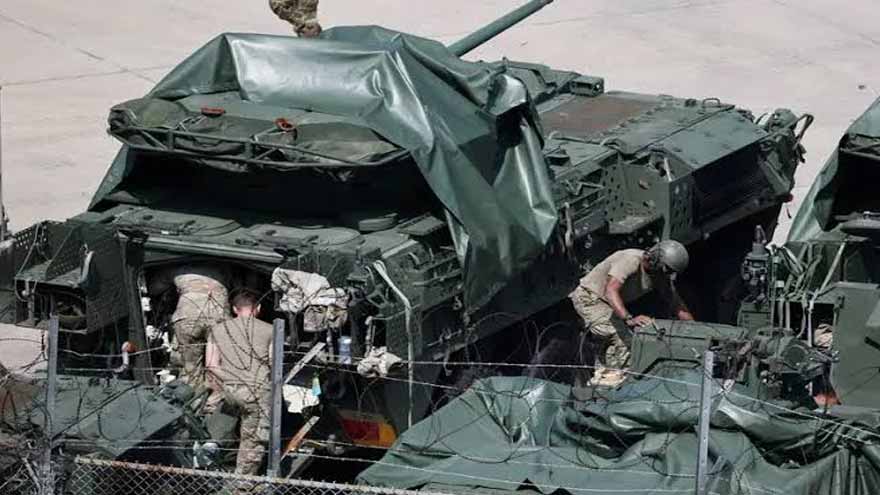
“The United States and South Korea have announced a significant reduction in the duration and scope of their annual joint military exercises, cutting the duration of the Ulchi Freedom Shield drills fro…”
The exercises, which commenced on August 17, are now scheduled to conclude on August 21 instead of the previously planned August 27. This strategic adjustment follows a direct order from U.S. President Donald Trump, who mandated a substantial decrease in American participation in the drills.
According to officials from South Korea’s Joint Chiefs of Staff and the U.S. Department of Defense, the decision was reached following consultations between the two allies to modify the scale of field training and associated live-manoeuvre events.
South Korean Defence Minister Ahn Gyu-back confirmed that the allies are moving to cancel the second phase of the exercises, which was originally intended to focus on counterattack operations following an initial defensive phase.
"Stay connected with Aman-e-Pakistan for ongoing live reporting and verified investigative updates."
While some training elements have been cancelled or transitioned into simulations, a Pentagon representative maintained that these changes would preserve essential readiness and training objectives without compromising the military goals of the United States.
The shift in the exercise schedule coincides with a high-level diplomatic visit by Chinese Foreign Minister Wang Yi to Seoul, where regional security developments on the Korean peninsula are expected to be a primary focus of discussions.
The reduction in the drills is widely viewed as a reflection of President Trump’s stated desire to manage his relationship with North Korean leader Kim Jong Un. President Trump cited his rapport with the North Korean leader as a primary reason for the order, which was issued on Sunday.
Analysts suggest that the move may serve multiple diplomatic and economic purposes, including pressuring Seoul regarding trade investment commitments and potentially reopening channels for direct negotiations with Pyongyang. Despite the scaling back of the exercises, North Korea has continued to voice strong opposition.
The state-run news agency in Pyongyang issued a commentary on Wednesday labeling the United States and South Korea as warmongers responsible for heightening regional tensions.
However, observers noted that the rhetoric remained relatively measured, as it avoided direct mentions of President Trump or the specific details of the drill reduction, potentially signaling a desire to maintain space for future diplomatic engagement.
The North Korean government reiterated its stance that it maintains the right to self-defence against what it characterizes as military threats from Washington and Seoul. Conversely, both the United States and South Korea have consistently maintained that the Ulchi Freedom Shield exercises are purely defensive in nature and necessary for maintaining regional stability.
South Korean President Lee Jae Myung emphasized on Tuesday that the drills are not intended to provoke North Korea or escalate tensions.
The sudden nature of the directive appears to have caught officials by surprise, as South Korean Foreign Minister Cho Hyun admitted during a parliamentary hearing that neither Seoul nor Washington had been aware of the President’s order in advance.
Meanwhile, reports suggest that the U.S. administration is actively exploring the possibility of arranging an in-person summit between President Trump and Kim Jong Un as early as this autumn. Potential venues for such a meeting could include the upcoming Asia-Pacific Economic Cooperation summit in China.
While the White House has not provided official confirmation regarding these diplomatic efforts, President Trump recently indicated that he has received a response from the North Korean leader regarding his outreach, though he provided no specific details on the nature of that communication.
As the shortened exercises proceed, the international community remains focused on whether this de-escalation in military posturing will successfully lead to a resumption of formal denuclearization talks or if it will simply serve as a temporary pause in the long-standing security friction on the peninsula.
Written by Iqra Aziz
Aman-e-Pakistan Senior Journalist & Bureau Reporter
Continue Reading: More in International
Swipe or click arrows to explore International desk coverage