The new face of South Asian representation at Vogue
“South Asian representation in fashion is no longer confined to the margins of the industry. Across the pages, covers, runways and social feeds of the world’s most influential fashion publications, a n…”
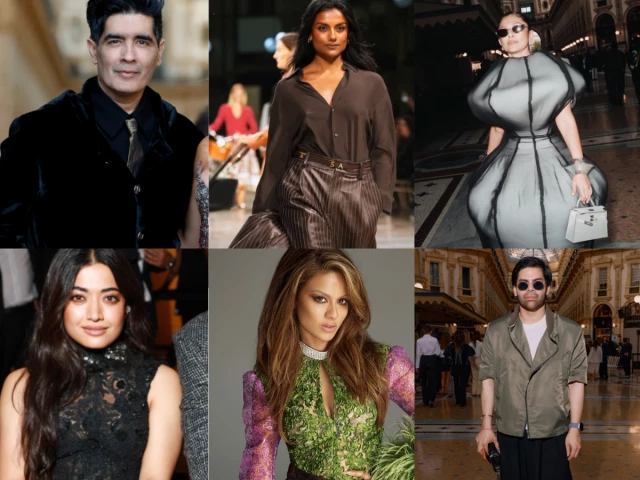
Arecent. Vogue Instagram post brings together six names that capture different facets of that changing landscape: Manish Malhotra, Rashmika Mandanna, Simone Ashley, Natasha Poonawalla, Dhruv Kapoor and Jaya Raheja. Together, they reflect the breadth of South Asian influence in contemporary fashion—from couture and cinema to global celebrity, luxury and emerging creative talent.
What makes the group particularly interesting is that there is no single definition of what South Asian representation looks like anymore. View this post on Instagram. Manish Malhotra.
Few names demonstrate the evolution of Indian fashion on the global stage quite like Manish Malhotra. He first became widely known through his work as a Bollywood costume designer before establishing his eponymous label in 2005.
"Stay connected with Aman-e-Pakistan for ongoing live reporting and verified investigative updates."
View this post on Instagram. His work has long occupied the space between cinema, celebrity and couture, bringing Indian embroidery, embellishment and traditional silhouettes into the vocabulary of contemporary glamour. Voguehas described his career as a journey from costumes to couture, with hundreds of film credits shaping his visual language.
In 2026, that journey reached another significant milestone when Malhotra made his debut on the official Paris Haute Couture Week calendar. His couture collection drew heavily on Indian craftsmanship, including zardozi, resham, crystal work and hand embroidery, while experimenting with ways to take traditionally Indian techniques into an international luxury context.
Rashmika Mandanna. For Rashmika Mandanna, representation is inseparable from the idea of crossing borders. View this post on Instagram.
Her career has moved across India's regional film industries and languages, making her part of a new generation of Indian stars whose audiences are increasingly national and global. Vogue Indiarecently described her as someone who has had to navigate different languages, industries and ideas of regional identity throughout her career.
Mandanna's presence in fashion reflects the increasing visibility of Indian popular culture internationally, while also demonstrating how celebrity style can become a form of cultural representation. She represents an India that is multilingual, regional and global all at once.
Simone Ashley. Few contemporary actors have become as closely associated with a new generation of South Asian representation in Western popular culture as Simone Ashley. View this post on Instagram.
Her breakout role as Kate Sharma in. Bridgertonplaced a British Indian woman at the centre of one of the world's biggest television franchises. Ashley has spoken openly about what it means to represent Indian women on screen, telling.
Vogue Indiathat representing Indian women has been a joy. Her relationship with fashion has expanded that visibility beyond the screen. From.
Vogue Worldto international magazine appearances and luxury fashion campaigns, Ashley occupies a space where British, Indian and global identities intersect. Her significance lies partly in what she makes possible for the women who come after her.
As she told. Voguerecently, there is still substantial room for progress in representation, even as she sees more women from diverse backgrounds receiving major roles. Natasha Poonawalla.
View this post on Instagram. Natasha Poonawalla represents another side of South Asian influence: the fashion insider and tastemaker who moves comfortably between Indian design and the international luxury establishment. A fixture on major fashion and red-carpet circuits, Poonawalla has become known for highly considered, often experimental fashion choices.
Vogue India has repeatedly documented her appearances, including her collaborations with Indian designers and her Met Gala looks. Her fashion choices also demonstrate how South Asian heritage can operate within global luxury without necessarily being presented as costume or nostalgia.
Her 2025 Met Gala ensemble, for example, incorporated vintage Parsi Gara saris into a look created by Manish Malhotra, bringing an element of Parsi textile history into one of fashion's most visible international stages. Dhruv Kapoor.
Dhruv Kapoor represents a younger, more contemporary vocabulary of Indian fashion. View this post on Instagram. Rather than relying exclusively on familiar ideas of Indian luxury, designers of this generation are questioning what South Asian fashion can look like in the first place.
Vogue's recent coverage of the region's fashion landscape has highlighted precisely this shift: younger designers are taking local craft and heritage and placing them into silhouettes and ideas that speak to a global contemporary audience. This is an important distinction.
Representation is not simply about putting a South Asian person in a fashion photograph. It is also about allowing South Asian designers to define their own aesthetic language. Jaya Raheja.
View this post on Instagram. Jaya Raheja represents another part of this changing ecosystem: the emerging South Asian fashion voice. Her inclusion alongside established figures such as Malhotra and Poonawalla, and globally recognised performers such as Ashley and Mandanna, points toward a fashion landscape that is becoming broader and more generational.
That matters because South Asian representation is no longer a story that can be established names. It is increasingly an ecosystem made up of different generations, professions, aesthetics and identities. Perhaps the most interesting thing about these six names is what they collectively say about the meaning of South Asian representation.
For decades, international fashion's relationship with South Asia was often filtered through a narrow set of visual references: embroidery, bridalwear, saris, jewellery and craftsmanship. Those elements remain enormously important, but they are no longer the whole story.
Continue Reading: More in International
Swipe or click arrows to explore International desk coverage