A deception revisited
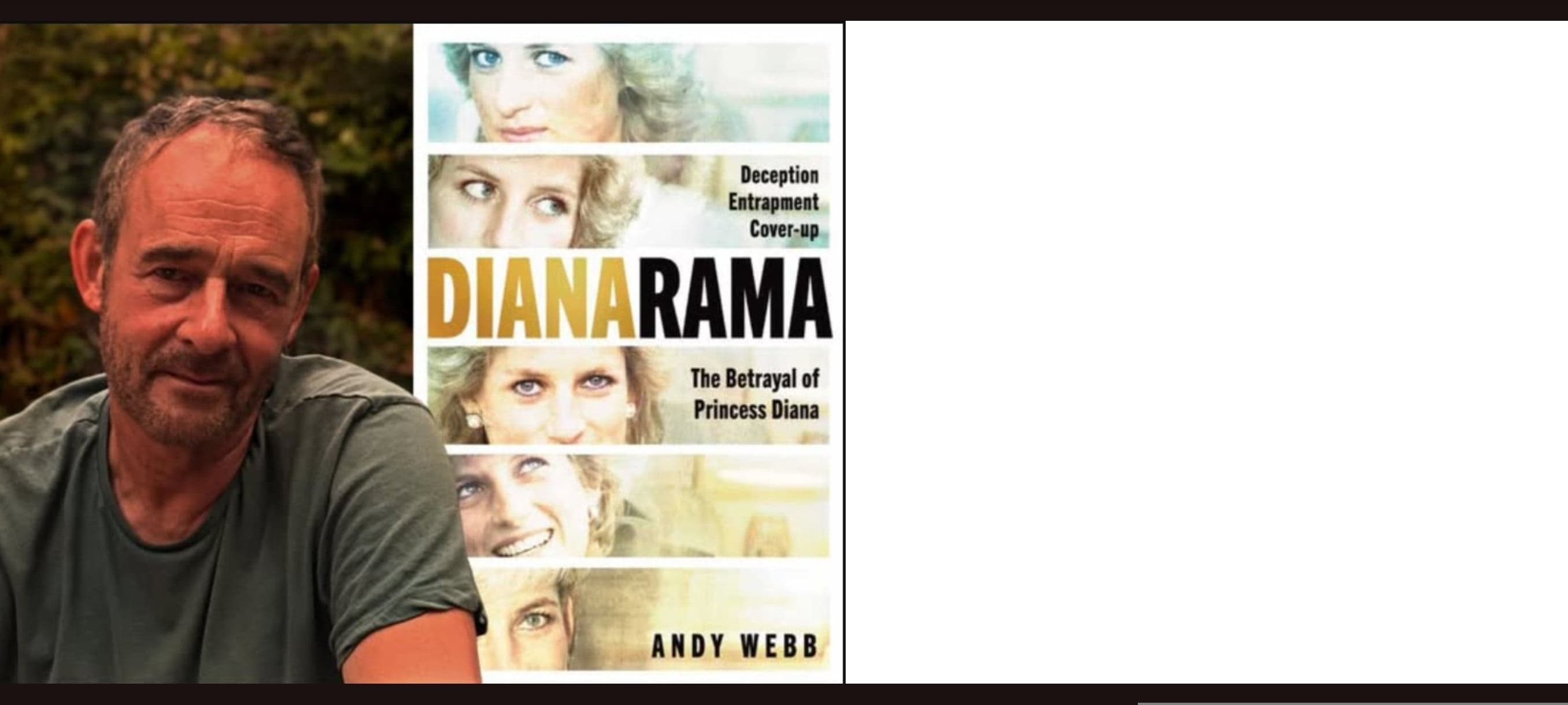
“Back to Tribune. HomeT-MagazineA deception revisitedT-Magazine. Next StoryA deception revisited. Andy Webb’s Dianarama revisits the scandal behind Princess Diana’s explosive 1995 Panorama interview. ByOmair A…”
Back to Tribune. HomeT-MagazineA deception revisitedT-Magazine. Next StoryA deception revisited. Andy Webb’s Dianarama revisits the scandal behind Princess Diana’s explosive 1995 Panorama interview. By. Omair Alavi|facebooktwitterwhatsuplinkdedemailPUBLISHED
August 30, 2026Some books tell you what happened; others make you understand how it happened, why it happened, and why it still matters.
Andy Webb’s Dianarama: Deception, Entrapment, Cover-Up—The Betrayal of Princess Diana belongs firmly in the latter category. Published ahead of the 29th anniversary of Princess Diana’s death, the book is surprisingly unputdownable.
"Stay connected with Aman-e-Pakistan for ongoing live reporting and verified investigative updates."
It reads less like a conventional work of investigative journalism and more like a mystery thriller in which the reader already knows the ending but keeps turning the pages to discover how the pieces came together. Webb takes readers back to the turbulent 1990s, when the marriage of Prince Charles and Princess Diana was already in serious trouble.
Charles had admitted to adultery, Diana was increasingly willing to challenge royal conventions, and the British public was fascinated by every new development in the unhappy marriage. Into this volatile environment stepped Martin Bashir, a young BBC journalist determined to secure the interview that every broadcaster wanted but few believed they could obtain.
The interview eventually became one of the most consequential television broadcasts of its era. When Diana appeared on Panorama in November 1995, her statement that there were “three of us” in her marriage became an instant part of popular culture.
Her revelations about Charles, the royal family, her struggles, and her position within the monarchy dominated headlines around the world. Yet Dianarama is not particularly interested in the interview as a television spectacle. Its real question is much more disturbing: How did Bashir get Diana to agree to it in the first place?
The answer involves forged documents, fabricated allegations, manipulation, institutional failure, and a cover-up that,, lasted for decades. Bashir’s route to Diana was through her brother, Charles Spencer, the 9th Earl Spencer. Webb reconstructs how the journalist showed Spencer forged bank statements that appeared to indicate that people close to Diana were receiving money from MI5.
The documents were accompanied by sensational claims about members of the royal household and the security services. The documents were fake. Their consequences were very real.
By presenting the material to Spencer, Bashir was able to establish himself as someone who appeared to possess privileged information about the people surrounding Diana. Spencer subsequently helped introduce him to his sister, opening a door that had remained firmly closed to countless other journalists.
Webb’s account is particularly effective because he does not simply state that Bashir deceived Diana. He reconstructs the mechanics of the deception—how trust was manufactured, how suspicion was encouraged, and how a journalist managed to position himself as someone Diana could believe.
It is one thing to know that forged bank statements were involved. It is quite another to follow the process by which those documents became the key to one of the biggest interviews in television history.
Divided into seven sections—The Mindset, The Takedown, Covering Up, Shining a Light, Judge and Jury, Looking for Answers, and Open Questions—the book gradually shifts from the original deception to the long struggle to uncover it. Webb is particularly interested in Martin Bashir himself.
The author describes him as “pathologically, compellingly charming” and ruthless, creating a portrait of a journalist whose greatest talent may have been his ability to make people trust him. Bashir was hardly an insignificant figure in British journalism.
He had already established himself at the BBC and would later work for ITV and American broadcasters before returning to the BBC. But his pursuit of Diana became the defining episode of his career—and eventually the scandal that permanently damaged his reputation.
Perhaps the most intriguing figure in the book, however, is not Bashir or Diana but Matt Wiessler, the freelance designer who produced the forged documents at Bashir’s request. Wiessler did not initially appreciate the full significance of what he was being asked to create.
Yet the episode followed him for years. After Diana died in the Paris crash in 1997, he felt such intense guilt that he joined the crowds mourning her outside Buckingham Palace. It is one of those details that gives Dianarama its thriller-like quality.
The consequences of the deception spread far beyond the people who were directly involved in securing the interview. Webb’s most controversial argument comes when he examines the possible connection between the interview and the events that followed.
The author believes Bashir’s intervention contributed to Diana’s growing isolation and distrust of those around her., she was encouraged to believe that people in her own circle could not be trusted, while members of her loyal team were kept unaware of the interview.
Webb goes further, suggesting that had Bashir never entered Diana’s life, she might have retained the support structure around her that could have been present during the final weeks of her life—and that this could potentially have altered the circumstances surrounding her death.
This is a serious claim and one that should be read as Webb’s interpretation rather than established fact. But it is central to his argument: that the significance of Bashir’s deception cannot be measured solely by what happened inside the Panorama studio.
The interview accelerated the already bitter conflict surrounding Charles and Diana while giving millions of viewers an unprecedented glimpse into the private misery of the royal marriage. Within two years, Diana would be dead.
The book becomes even more compelling when Webb turns his attention to the BBC.Had the corporation confronted Bashir’s deception immediately, dismissed him, and apologised to Diana, the scandal might have ended very differently. Instead, Webb argues, the BBC had opportunities to discover the truth but failed to act decisively.
This is where Dianarama moves from being a story about one dishonest journalist to becoming a story about institutional responsibility. A BBC investigation conducted in 1996 failed to uncover the full extent of Bashir’s deception.
Years later, Lord Dyson’s investigation into the affair found serious flaws in the BBC’s handling of the matter. The corporation was ultimately forced to acknowledge that its original investigation had not met the required standards.
The most troubling question, therefore, is not simply why Bashir lied. It is why an organisation with the BBC’s resources and reputation was unable—or unwilling—to properly investigate what had happened. Webb’s own role in uncovering the truth gives the second half of the book an additional layer of suspense.
His investigation eventually led to a 2020 Channel 4 documentary about the interview. During that process, Earl Spencer contacted Webb and gave an account of events that contradicted aspects of the BBC’s version. Spencer had remained largely silent for years, partly because criticising Bashir could also have meant questioning his sister’s decision to trust the journalist.
That silence is significant. It helps explain why the truth took so long to emerge. Webb was effectively confronted with two competing versions of the same story.
His decision to believe Spencer helped reopen the case and contributed to the renewed scrutiny that ultimately led to Lord Dyson’s investigation. The author's investigation eventually extended into the courts. Dianarama moved from the BBC offices of the 1990s to the legal battles of 2024, where Webb sought access to thousands of pages of contested documents.
That 30-year span could easily have made the book cumbersome, but Webb keeps the narrative moving by constantly returning to the people involved and the decisions they made. This is the book’s greatest strength. There are no unnecessary detours into the later chapters of Diana’s life involving Dr Hasnat Khan or Dodi Al-Fayed.
Instead, Webb stays focused on the Panorama interview, its origins, and its consequences. The result is a remarkably concentrated account of a story that has been quite in this way. Prince William’s response to the Dyson investigation adds another dimension.
He strongly criticised the BBC for failing to ask difficult questions about Bashir’s conduct and argued that the interview had contributed to the deterioration of his parents’ relationship and to Diana’s fear, paranoia and isolation before her death. The fact that the issue remains relevant to the royal family demonstrates just how far-reaching the scandal has become.
What makes Dianarama particularly effective is that it does not depend on suspense created by ignorance. Most readers already know what happened. They know Diana gave the interview.
They know she exposed the problems in her marriage. They know Charles and Diana eventually divorced. They know Diana died in Paris in 1997.
They know Bashir’s deception was eventually exposed and that the BBC apologised. Yet Webb makes the reader keep going because the real mystery is different. It is not what happened but how did so many people allow it to happen—and why did it take so long for the truth to emerge?
That makes Dianarama much more than another book about Princess Diana. It is a cautionary tale about journalism, celebrity, ambition, and institutional loyalty. It examines what happens when obtaining the biggest story becomes more important than the methods used to obtain it and what happens when an organisation becomes more concerned about protecting its reputation than confronting its mistakes.
Three decades after Diana sat in front of the Panorama cameras, the interview remains one of the most debated moments in British television history. Webb adds another deeply uncomfortable chapter to that history. And perhaps the most disturbing aspect of Dianarama is that, despite knowing the outcome, it reads like a thriller.
We know how the story ends. But Webb makes us want to know how it got there. The writer is a freelance contributor who writes about film, television, and popular culture.
All facts and information are the sole responsibility of the writer. Pages. Pakistan.
Business. World. Opinion.
Life & Style. Sports. Blogs.
Videos. Our Sites. Express News.
Urdu E-Paper. English E-Paper. Sindhi E-Paper.
Cricket Pakistan. Express Live. Campus Guru.
Express Entertainment. Food Tribune. About Us.
Contact Us. Online Advertising. Privacy Policy.
Copyright. Fuel Prices Pakistan. Gold Prices Pakistan.
Prayer Timing Pakistan. Weather Forecast Pakistanfollow us
Written by Bilal Abbas
Aman-e-Pakistan Senior Journalist & Bureau Reporter
Continue Reading: More in International
Swipe or click arrows to explore International desk coverage