PM Shehbaz meets world leaders at COP31 in Turkiye, set to highlight Pakistan's climate priorities
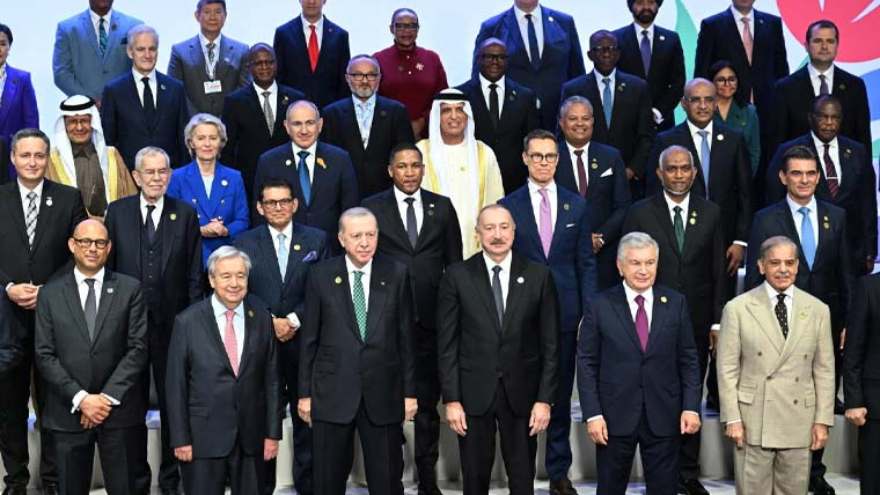
“PM Shehbaz joins world leaders at COP31 in Turkiye, holds key meetings and calls for stronger global climate action and financial support for developing nations…”
AANTALYA —Prime Minister Shehbaz Sharif joined world leaders at the COP31 Antalya Leaders’ Summit in Turkiye on Wednesday, where he is set to outline Pakistan’s climate priorities and call for stronger international cooperation to tackle the growing threat of climate change.
The prime minister was welcomed at the summit venue by Turkish President Recep Tayyip Erdogan and United Nations Secretary-General Antonio Guterres, ’s Office (PMO). Shehbaz also met Erdogan and Turkish First Lady Emine Erdoğan, while the leaders attending the high-level gathering posed for a group photograph.
The summit has brought together delegates from nearly 200 countries in the Mediterranean city of Antalya amid mounting concerns over rising global temperatures, greenhouse gas emissions and increasingly destructive weather events.
"Stay connected with Aman-e-Pakistan for ongoing live reporting and verified investigative updates."
Pakistan is expected to use the international platform to highlight the challenges faced by developing countries, particularly those bearing the consequences of climate change despite contributing relatively little to global emissions., PM Shehbaz will highlight Pakistan’s progress towards rapid solarisation and expanding renewable energy capacity as part of the country's transition to a cleaner and more resilient economy.
He is also expected to draw attention to efforts to strengthen disaster preparedness and early-warning systems, while calling for predictable, adequate and accessible climate financing to help developing nations improve their resilience and pursue sustainable development.
The prime minister is scheduled to address a high-level dialogue on clean energy transition and electrification, convened by the COP31 presidency under the title 35 by 35: Powering the Future. The session is scheduled for 3pm local time (5pm Pakistan time).
A dedicated Pakistan Pavilion has also been established at the conference venue, where 54 events will be organised around various climate-related themes. Meetings with regional leaders. Alongside his participation in the summit, Shehbaz held a series of bilateral and informal meetings with international leaders and representatives of global organisations.
One of the key engagements was his meeting with Iranian President Masoud Pezeshkian and his delegation. The discussions covered bilateral relations, opportunities to expand mutual cooperation, the regional situation and matters concerning peace and stability.
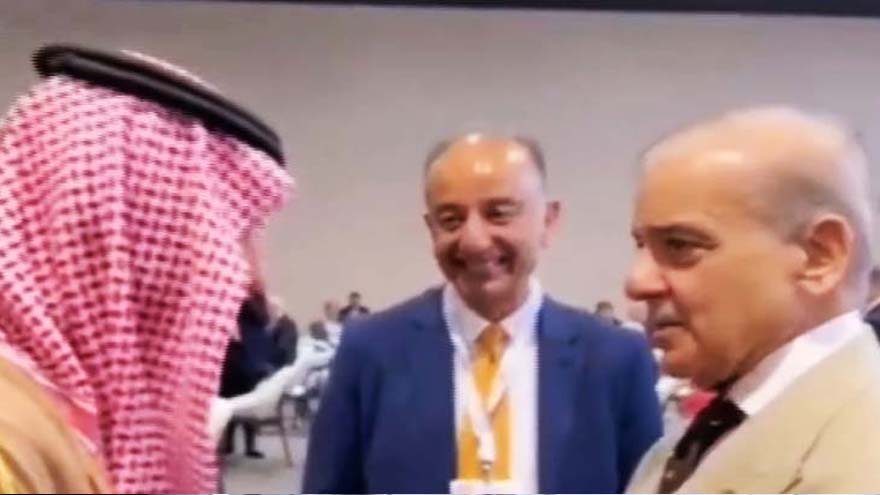
The prime minister also held separate meetings with Syrian President Ahmed al-Sharaa and Bangladesh Prime Minister Tarique Rahman. His engagements included Saudi Energy Minister Prince Abdulaziz bin Salman Al Saud and Saudi Minister of State for Foreign Affairs Adel bin Ahmed al-Jubeir.
PM Shehbaz also met Organisation of Islamic Cooperation (OIC) Secretary-General Ismail Ould Cheikh Ahmed, Palestinian Prime Minister Mohammad Mustafa and World Bank President Ajay Banga.
During his interaction with Mustafa, the Pakistani premier reaffirmed Islamabad's solidarity with the Palestinian people and reiterated Pakistan's support for their position on the international stage., the Palestinian prime minister thanked the government and people of Pakistan for raising their voices internationally against injustices inflicted on Palestinians and supporting their cause.
The meetings also covered ways to strengthen bilateral relations, developments in the region and the importance of bringing greater international attention to the difficulties faced by countries most vulnerable to climate change. UN chief warns of climate catastrophe.
The summit's high-level discussions began against a stark warning from UN Secretary-General Antonio Guterres, who said the international response to climate change had been too slow to prevent the crisis from escalating. Addressing world leaders on Wednesday, Guterres said rising emissions, increasing temperatures and worsening climate-related disasters were pushing the planet towards a dangerous future.
"The brutal truth is that the climate crisis is outrunning us," he said, warning that the world was heading towards a path of mutually assured destruction. However, he stressed that scientific evidence was a call for stronger action rather than surrender.
Negotiators from nearly 200 countries are seeking agreement on measures to increase electricity's share of global energy consumption and revive efforts to move away from fossil fuels. Turkiye, which is hosting COP31, has been pushing for electricity to account for 35 per cent of global energy consumption by 2035, compared with slightly more than one-fifth currently.
The proposal is intended to encourage electrification across transport, industry and buildings. However, critics have pointed out that it does not specifically require the additional electricity to come from clean energy sources. Guterres urged governments to accelerate the transition towards renewable energy, warning that dependence on fossil fuels was creating economic vulnerabilities as well as environmental damage.
He said around three-quarters of humanity lived in countries dependent on imported fossil fuels, leaving them exposed to price shocks beyond their control. Climate finance remains a major challenge. The discussions are taking place after another year of extreme weather events and growing concerns that the world is falling short of its climate commitments.
A United Nations report released last month found that the planet was on course to exceed the 1.5-degree Celsius warming threshold that countries agreed to pursue under the Paris Agreement. The year 2026 has witnessed severe heatwaves across Western Europe, while a glacier collapse in Nepal triggered a catastrophic flood that killed more than 1,450 people, with thousands still missing.
Climate financing has also emerged as a major point of disagreement at COP31, with developing countries demanding greater financial support from wealthier nations to deal with climate impacts and transition towards cleaner energy. Negotiations over the official agenda continued late into Sunday, as developing nations pushed for discussions on financial commitments agreed upon at previous climate conferences.
African countries have also called for discussions on tripling adaptation finance, which would help vulnerable nations fund measures such as coastal protection infrastructure and drought-resistant agriculture.
The United States, the world's largest historical emitter of greenhouse gases, has skipped the conference for the second consecutive year following President Donald Trump's withdrawal from international climate cooperation after returning to office in 2025. Several other major economies, including France, Germany, Japan, Italy and Canada, have also not sent their top leaders to the summit.
With geopolitical tensions, the US-Israeli war against Iran and disruptions to Middle Eastern oil exports adding to economic uncertainty, expectations of major breakthroughs at COP31 remain limited. The high-level segment continues on Wednesday and Thursday, with speeches expected from Erdogan, Iranian President Masoud Pezeshkian, Brazilian President Luiz Inácio Lula da Silva and other international leaders.
Continue Reading: More in International
Swipe or click arrows to explore International desk coverage