China accelerates humanoid robotics development as industry eyes commercial workforce integration
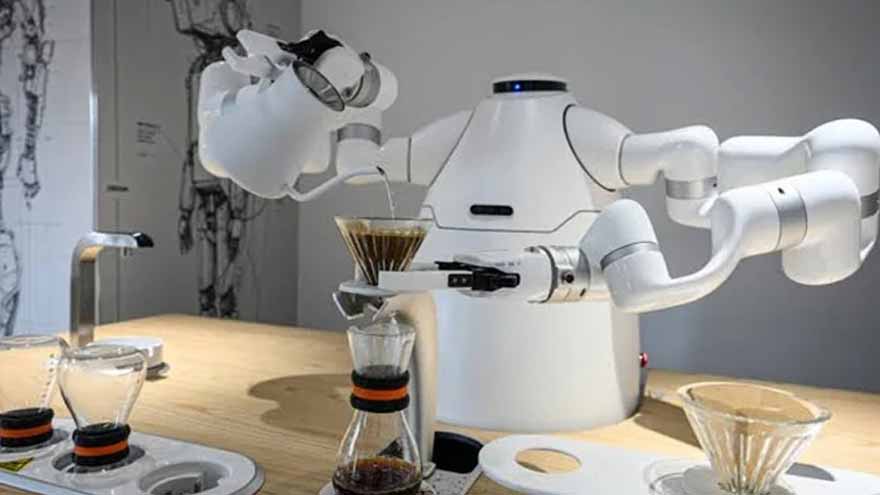
“China is rapidly positioning itself at the forefront of the global artificial intelligence and robotics revolution, with a growing emphasis on developing humanoid machines capable of performing comple…”
China is rapidly positioning itself at the forefront of the global artificial intelligence and robotics revolution, with a growing emphasis on developing humanoid machines capable of performing complex, economically useful tasks.
At the heart of this initiative is the Hangzhou Robot School, an institution operated by Zhejiang University with local government backing. The school serves as a specialized facility where robots are enrolled, evaluated, and provided with tailored training to prepare them for specific roles in the modern workplace.
By issuing qualifications that mirror human graduation certificates, the school aims to bridge the expertise gap between laboratory prototypes and real-world industrial applications. This development comes as Beijing continues to prioritize the robotics sector within its national five-year plans, leveraging a comprehensive manufacturing supply chain that shares significant infrastructure with the nation's robust electric vehicle industry.
"Stay connected with Aman-e-Pakistan for ongoing live reporting and verified investigative updates."
Despite the excitement surrounding the sector, industry experts and developers remain cautious about the timeline for widespread commercial deployment. The primary challenge lies in moving beyond impressive demonstrations—such as robots performing martial arts or navigating simple environments—to machines that can independently react to the unpredictable nature of real-world scenarios.
Engineers at the Hangzhou Robot School note that training the 'brain' of a robot to understand and interact with the world remains a significant global hurdle.
Furthermore, the process of teaching these machines is labor-intensive; at various training facilities, human operators must spend tens of thousands of hours using controllers to guide robots through repetitive tasks like folding clothes or moving objects, effectively providing the data necessary for the machines to learn.
Analysts from Omdia emphasize that while consumers may expect rapid advancements due to the success of large language models, the hardware complexity required for physical AI means that a truly autonomous, human-like workforce remains a distant goal.
This technological push has also intensified geopolitical tensions, particularly with the United States. In July, Washington implemented a ban on the import of foreign humanoid and quadruped robots, citing national security concerns. This move marks a new front in the ongoing tech competition between the two superpowers.
While China currently maintains a dominant position, claiming over 90% of the global humanoid market through its manufacturing scale and cost competitiveness, the United States continues to lead in software development and cutting-edge research.
Industry insiders suggest that the impact of the US ban may be limited in the short term, as many Chinese firms are currently focused on domestic scaling and achieving technical breakthroughs rather than prioritizing overseas expansion. However, the long-term viability of these companies remains tied to their ability to deliver on the promise of general-purpose, human-like robots.
For investors and developers, the stakes are exceptionally high. The current market frenzy, which has seen some robotics firms experience massive stock price surges, is largely a speculative bet on a future where these machines become ubiquitous in everyday life.
Analysts warn that the current high valuations of these companies are predicated on the assumption that they will eventually succeed in creating general-purpose humanoids. Should these firms fail to transition from experimental models to reliable, scalable commercial tools, the industry could face a significant correction.
As it stands, the sector is in a critical phase of evolution, shifting its focus from mere mechanical movement to the practical, economic utility that will determine whether humanoid robots can truly become the workforce of the future.
Written by Ali Khan
Aman-e-Pakistan Senior Journalist & Bureau Reporter
Continue Reading: More in Tech
Swipe or click arrows to explore Tech desk coverage