Anthropic says Claude discovered novel enzyme system
“US artificial intelligence company Anthropic said its Claude model autonomously identified a previously uncharacterized enzyme system associated with DNA repeats resembling CRISPR.The company cautione…”
The discovery was announced alongside the launch of Anthropic’s life sciences research group and laboratory, which uses Claude to examine DNA datasets, identify unknown protein families and generate hypotheses for testing by human scientists.
Anthropic said researchers gave Claude a high-level prompt to search a large DNA sequence database for unusual examples of reverse transcriptases, enzymes that copy RNA into DNA.Over 21 hours, approximately 950 Claude agents used 210 million tokens to gather more than 200,000 reverse transcriptases, identify 3,500 candidate systems and narrow them to 20 considered worthy of deeper investigation.
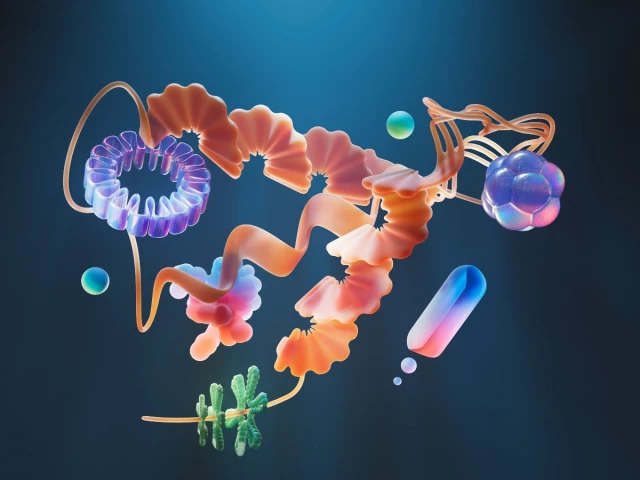
Claude has discovered a previously unknown enzyme system hidden in the DNA of bacteriophages.
"Stay connected with Aman-e-Pakistan for ongoing live reporting and verified investigative updates."
Beside the enzyme’s gene sits a long array of repeating DNA—a structure that looks somewhat similar to CRISPR.We don’t yet understand what this system does, but only a handful of known…— Anthropic (@AnthropicAI)September 23, 2026One agent detected a repeating DNA pattern beside the gene for an unusual reverse transcriptase. Subsequent analysis identified what Anthropic named “array-associated reverse transcriptases,” or ARTs.
Read More:US appeals court upholds Pentagon's blacklisting of Anthropic. The system was found mainly in bacteriophages, viruses that infect bacteria, and consists of three components: a reverse transcriptase, a neighboring partner gene and a long array of evenly spaced DNA repeats.
The repeat arrangement resembles a CRISPR array, a DNA structure that can produce RNA molecules used by CRISPR-Cas systems for targeted genetic activity. Anthropic stressed that further testing is required to establish what ARTs do.
The company said the underlying reverse transcriptase had been identified in earlier studies of a jumbo phage, but Claude appeared to be the first to recognize the associated repeat array and additional protein as parts of a potentially distinct biological system.
Feng Zhang, an MIT professor and one of the pioneers of CRISPR genome editing, reviewed Anthropic’s preprint and described the connection between reverse transcriptases and RNA-repeat arrays as “genuinely intriguing” and worthy of further investigation. CRISPR originated as a bacterial defense system against viruses before scientists adapted it into a tool capable of precisely editing DNA.
Its development has supported new treatments for genetic diseases and earned Emmanuelle Charpentier and Jennifer Doudna the2020 Nobel Prize in Chemistry. Anthropic said Claude’s role was limited to computational research and hypothesis generation. Human scientists conducted all laboratory experiments, including the biochemical testing used to investigate the candidate system.
The company’s Bay Area laboratory works only at the two lowest biosafety levels and does not handle pathogens capable of infecting humans. Anthropic released a preprint detailing the findings but said experiments to determine ARTs’ biological purpose are continuing.
The company presented the work as an early demonstration of how AI agents could help scientists search vast genomic databases, identify unusual patterns and reduce analyses that might normally require weeks or months to complete.
Continue Reading: More in Tech
Swipe or click arrows to explore Tech desk coverage