Ukraine uses laser weapon to destroy Russian Shahed drone in combat first
“Ukraine has used its Blysk laser air defence system to shoot down a Russian jet-powered Shahed drone for the first time in combat. KYIV (Web Desk) – Ukraine has …”
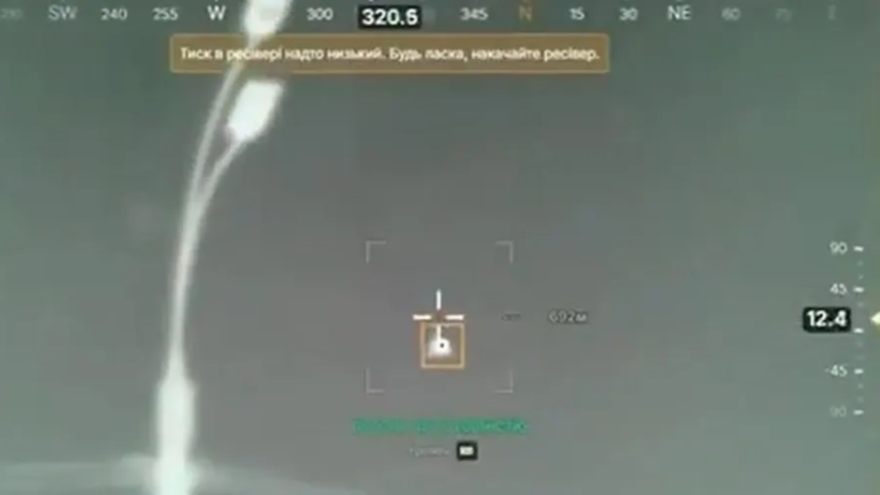
KKYIV —Ukraine has used a ground-based laser weapon to shoot down a Russian jet-powered attack drone for the first time, marking a significant development in its efforts to counter Moscow's increasingly sophisticated aerial attacks. The interception was carried out using the Blysk laser air defence system, developed by Ukrainian defence technology company Carmine Sky.
Serhii Beskrestnov, an electronic warfare expert and adviser to President Volodymyr Zelenskyy's office, shared details and video footage of the operation on November 25, describing it as the first reported combat results of the system. The target was a Russian Geran-series drone, which is based on the Iranian-designed Shahed family of unmanned aerial vehicles (UAVs).
Russia has relied heavily on these weapons during its invasion of Ukraine, regularly deploying them in attacks against cities and critical infrastructure. The "Blysk" air defense laser systems from the company Carmin Sky deployed to protect a critical infrastructure facility shot down a "Geran" jet-powered drone, a world first!
"Stay connected with Aman-e-Pakistan for ongoing live reporting and verified investigative updates."
This laser air defense system technology is being developed under the state program "Private Air Defense" with the support of the Brave1 defense tech cluster. Several companies in Ukraine are working on R&D for applying lasers to air defense.
Laser technologies are highly complex and financially costly, so these results are incredible. Testing is ongoing, during which the lasers are actively protecting critical infrastructure facilities. Serial production will follow in due course.— Anton Gerashchenko (@Gerashchenko_en)November 25, 2026The reported interception highlights Ukraine's growing interest in directed-energy weapons as it searches for more affordable ways to protect its airspace.
Laser defence. The Blysk system is a relatively compact installation, with an estimated power output of around four kilowatts and an operational range of up to one kilometre,. A representative of Carmine Sky, identified only as Oleksandr by the BBC's Ukrainian service, said the system could engage targets at distances of up to one kilometre.
Ukraine began testing laser-based air defence technology over the summer, while the Blysk installation reportedly entered military use at the beginning of November. The system has been deployed to protect critical infrastructure, although officials have not disclosed its precise operational locations.
Beskrestnov said several Ukrainian companies were developing and testing laser-based air defence solutions under the wider Private Air Defence initiative, which involves around 100 companies. However, he cautioned that the technology remained complicated and expensive to develop.
He also indicated that it was too early to discuss serial production of the systems. Countering faster drones. Russia's growing use of jet-powered attack drones has created additional challenges for Ukrainian air defences.
Unlike conventional propeller-driven Shahed-type UAVs, the faster variants give defenders less time to detect, track and intercept incoming threats. Russia has increasingly deployed the Geran-4 and Geran-5 models, adding pressure on Ukraine's existing air defence network.
The challenge is particularly significant because Ukraine has faced sustained attacks on its energy infrastructure while also dealing with shortages of expensive air defence missiles and delays in deliveries of US-made Patriot systems. Laser weapons offer a potential alternative because they can engage targets without consuming conventional ammunition.
Their operating cost per shot can be extremely low once the installation is in place, with individual laser engagements estimated to cost less than $1 in electricity. The technology works by concentrating energy on a specific point of the target, heating its components until the drone can no longer operate.
However, laser systems have limitations. Their effectiveness can be reduced by rain, fog, dust and other atmospheric conditions, while the initial investment in equipment, power supplies and supporting infrastructure remains substantial. Ukraine's reported interception comes as several countries accelerate the development of directed-energy weapons to counter the growing threat posed by relatively inexpensive drones.
Israel has deployed high-energy laser technology against aerial threats, while the US military has acknowledged using laser systems to intercept drones in the Middle East. The UK has also advanced trials of its Dragon. Fire laser weapon, which is designed to engage aerial targets with concentrated energy.
Although laser technology has been under military development for decades, its use against operational battlefield threats represents an important area of defence innovation. One of the earliest demonstrations dates back to 1973, when a US military laser shot down a small radio-controlled drone aircraft at White Sands Missile Range.
Continue Reading: More in Tech
Swipe or click arrows to explore Tech desk coverage