Sweden turns the page: a lesson for Pakistan's classrooms
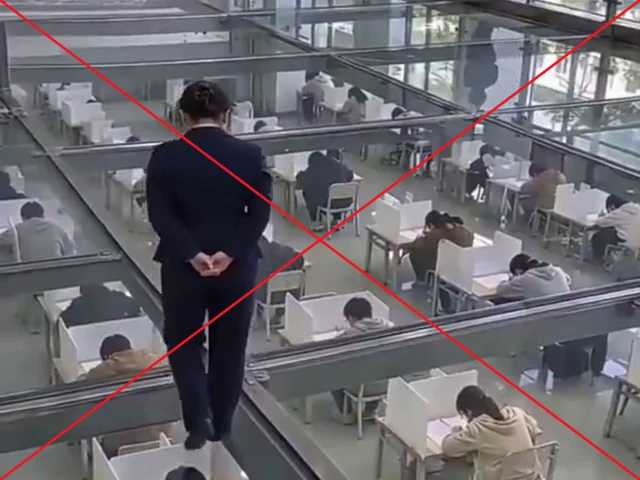
“When I arrived in Gothenburg, in November 2005, as a doctoral student at Chalmers University of Technology, what struck me first was not the laboratories, impressive as they were, but the silence of t…”
On dark winter afternoons, with snow on the windowsills, Swedish students and researchers sat for hours with books and notebooks, and I soon learnt to do the same. Sweden was already among the world's most technologically advanced societies, yet it revered the printed page.
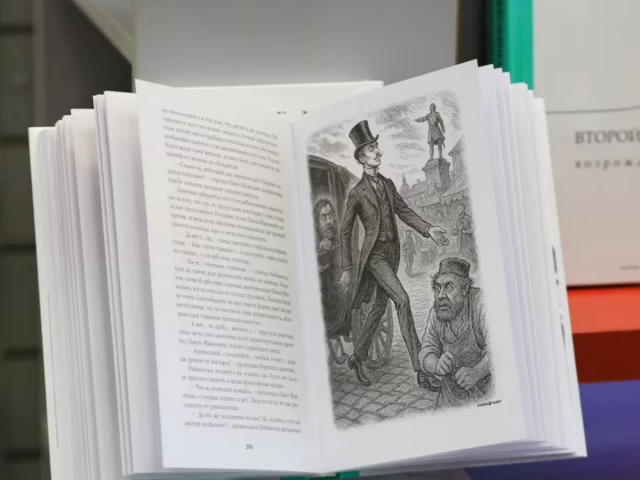
So, I read with special interest the news that Sweden, once hailed as a pioneer of digital classrooms, is bringing printed textbooks back into its schools. Around 2010, Swedish municipalities replaced many textbooks with laptops and tablets.
By 2023, the national education agency had even proposed making digital devices compulsory in preschools. Then the evidence arrived. In the PIRLS (Progress in International Reading Literacy Study) reading test, Swedish ten-year-olds fell from 555 points in 2016 to 544 in 2021.
"Stay connected with Aman-e-Pakistan for ongoing live reporting and verified investigative updates."
In PISA (Programme for International Student Assessment), mathematics scores dropped from 502 in 2018 to 482 in 2022, and the latest round shows reading down another 21 points, to 466. Sweden's renowned Karolinska Institute declared that there is "clear scientific evidence that digital tools impair rather than enhance student learning.
" The government listened. It dropped the preschool device rule, set aside 658 to 755 million kronor a year for printed books, guaranteed every pupil the right to proper printed material in 2024, and required staffed school libraries in 2025.
Since August 2026, mobile phones have been banned throughout the school day. The reasoning is not nostalgic. Readers understand long texts better on paper than on screens, where the eye skims and notifications interrupt.
Handwriting engages memory and attention together. A shared textbook keeps a class literally on the same page. Sweden has not abandoned technology; coding and digital skills remain in the curriculum.
It has simply changed the order: first deep reading and patient thought, then the machine as a servant of the mind. The Swedes I studied with were brilliant with machines, but they had first learnt to read deeply.
Pakistan is heading the other way. Punjab has distributed tablets to thousands of primary schools and launched laptop schemes for more than 100,000 students. But our crisis lies in the foundations.
In decades of teaching physics in Karachi, I have seen many bright students struggle not with equations but with reading the question carefully. The latest Annual Status of Education Report finds that only about half of Class 5 children can read a story meant for Class 2.
Sweden worried when its children dropped eleven points; many of ours cannot read at all. A tablet cannot cure that. It only offers the same failure in brighter colours.
The remedy is unglamorous: good textbooks delivered on time, a small library and a daily reading period in every primary school, handwriting in the mother tongue before typing, well-trained teachers, and phones kept out of classrooms. Above all, we should copy Sweden's habit of piloting reforms, measuring results and changing course when the evidence demands it.
In Gothenburg, I saw children carrying library books on trams as naturally as lunch boxes, and parents reading aloud at bedtime. Such habits cost little; they are cultural, and culture can be built in our schools too.
Modernity is not a device; it is a habit of mind. I learn that lesson not in a computer lab but in a quiet reading room in Gothenburg, among some of the most technologically gifted young people in Europe.
Sweden has now turned back the page. It would be a pity if Pakistan had to lose a generation of learning to discover what Chalmers taught me long ago: the book was never obsolete. We simply stopped opening it.
Continue Reading: More in Tech
Swipe or click arrows to explore Tech desk coverage