How bidding works for passengers and drivers in Pakistan
“Across the world’s urban centers, digital ride-hailing has long been dominated by rigid, automated algorithms. Under those traditional models, software dictates trip costs behind the scenes, leaving b…”
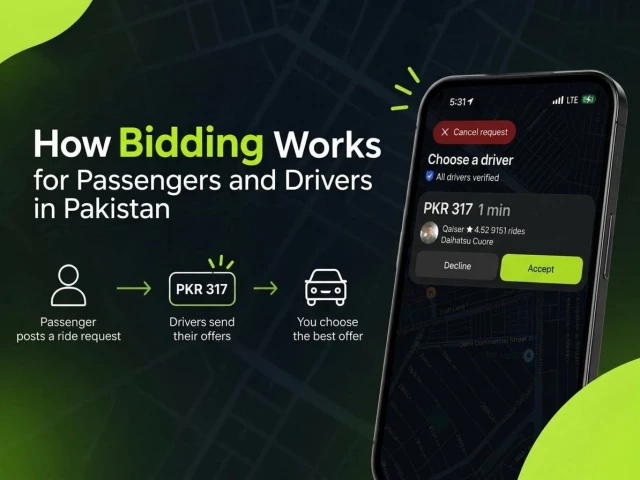
Drive, on the other hand, challenges this static system through a transparent, peer-to-peer (P2P) model that puts control directly back into the hands of the people on the road. The core mechanism of in. Drive revolves around mutual agreement rather than algorithmic preset prices.
When a passenger requests a ride, in. Drive provides a recommended baseline price calculated from live market data updated every 30 minutes. However, this figure serves only as a fair starting point.
The passenger can accept the estimate or suggest a custom fare based on their budget. Nearby drivers instantly receive the offer alongside complete trip transparency before making an informed choice. The driver can accept the offer, counter with a higher bid, or decline the request entirely without facing any system penalties or fine print deductions.
"Stay connected with Aman-e-Pakistan for ongoing live reporting and verified investigative updates."
This mutual transparency removes the friction and uncertainty common in traditional ride hailing. Drivers enjoy complete operational independence, choosing only the trips that align with their personal financial goals and route preferences. Whether driving full time, balancing work around family commitments, or earning extra side income, drivers operate without arbitrary caps or limits on their working hours. in.
Drive also eliminates unexpected peak hour surge pricing, balancing urban supply and demand naturally through transparent market prices and targeted geo-incentives. This model brings a certain level of empowerment for passengers, as it allows them to regain full control over their travel expenses, rather than being subject to sudden, unpredictable price hikes during rush hours or bad weather.
They can view multiple driver offers, review their ratings and vehicle details, and choose the option that best fits their personal budget and safety preferences. This direct control ensures that commuters are never forced to pay inflated rates simply to reach their destinations.
For drivers across Pakistan, the platform’s 7% commission rate means they retain 93% of every fare, making it the lowest commission rate in the ride-hailing industry and allowing drivers to maximise their earnings. This competitive commission structure is made possible by the company’s lean, cost-conscious operational model.
It supports higher take-home earnings for drivers while helping keep fares competitive, predictable and fair for daily commuters navigating inflationary pressures. Recent data from Oxford Economics highlights how this flexibility directly boosts travel activity in Pakistan., 59% of riders and 54% of drivers in Pakistan reported completing more trips specifically because of the ability to negotiate fares.
By replacing hidden surge fees, automated penalties, and deductions with clear, real time negotiation, in. Drivehas established a balanced, dignified ecosystem. This approach proves that when technology empowers passengers and drivers to agree on a fair price together, urban mobility becomes safer, more accessible, and economically sustainable for everyone involved.
Continue Reading: More in Tech
Swipe or click arrows to explore Tech desk coverage