Beyond the logo
“Back to Tribune. HomeT-Magazine. Beyond the logoT-Magazine. Next Story. Beyond the logoA book that looks at the people, businesses and history behind Pakistan’s iconic brands. ByOur Correspondent|facebooktwitte…”
Back to Tribune. HomeT-Magazine. Beyond the logoT-Magazine. Next Story. Beyond the logoA book that looks at the people, businesses and history behind Pakistan’s iconic brands. By. Our Correspondent|facebooktwitterwhatsuplinkdedemailPUBLISHED
September 13, 2026A brand is rarely just a name on a packet, a sign above a shop or a familiar logo.
Over time, brands become woven into everyday life, shaping what people buy, trust and remember. The history of a country can often be traced through the brands its people grew up with. Familiar names, products, s and slogans become markers of particular eras, reflecting changing lifestyles, aspirations and social values.
"Stay connected with Aman-e-Pakistan for ongoing live reporting and verified investigative updates."
In Pakistan, many home-grown brands have become part of the country’s collective memory, surviving political upheavals, economic uncertainty and changing consumer tastes. Their stories are, in many ways, also stories of Pakistan itself.
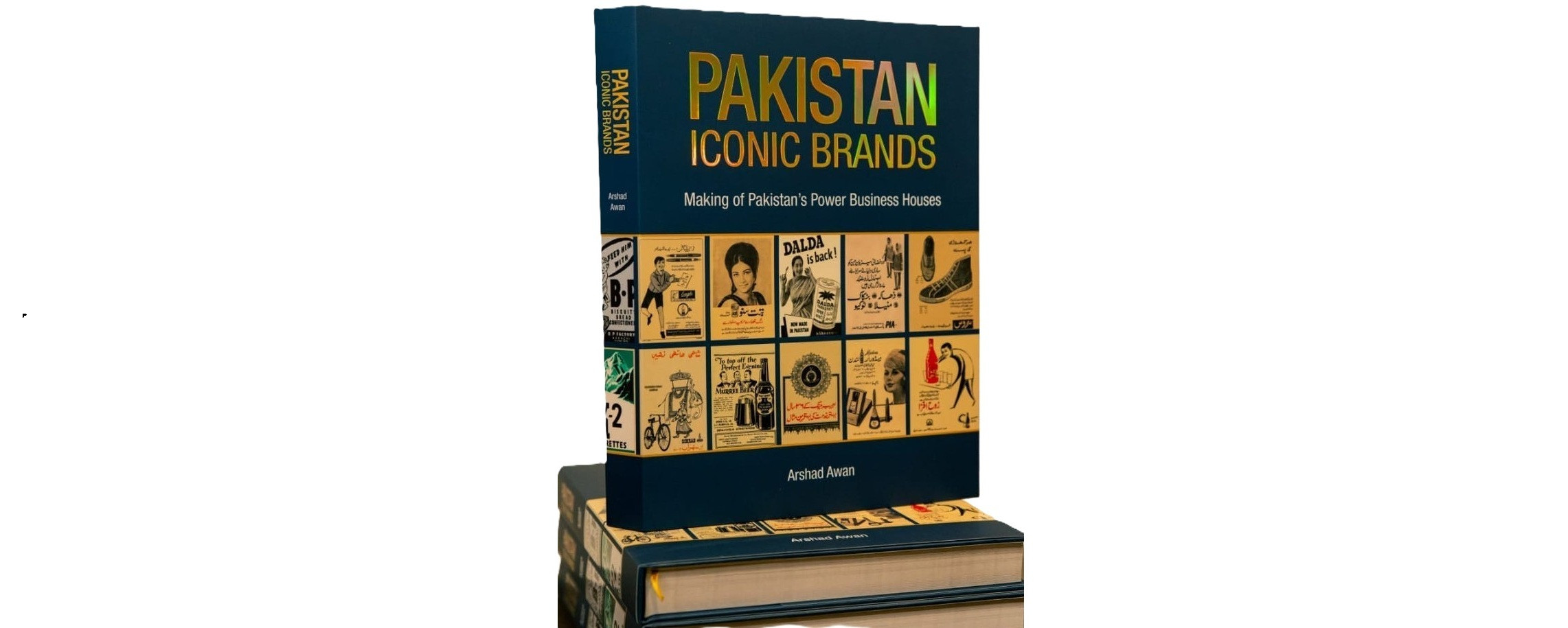
Pakistan Iconic Brands: Making of Pakistan’s Power Business Houses by Arshad Awan is an interesting addition to the ever-increasing volume of work on the history, entrepreneurship, branding and corporate cultural heritage of Pakistan.
The book provides valuable insights into the course of some of Pakistan's most successful business houses, detailing the entrepreneurial vision and strategic thinking that contributed to their success and resilience. Against the backdrop of ongoing economic challenges, it is a valuable reminder of the country’s industrial capabilities and the remarkable journeys of iconic corporate brands.
At the book launch held recently at Islamabad Club, the diverse gathering that included included diplomats, politicians, senior civil servants, leading members of the business community, advertising and communications professionals, academics, media personalities, entrepreneurs, reflected the book's wide appeal and central theme– that iconic brands are not merely commercial entities but an integral part of the country’s social, economic, and cultural life.
The enthusiastic participation of people from such varied professional backgrounds demonstrated a shared interest in recognising, documenting, and celebrating the entrepreneurial journeys that have contributed to Pakistan’s economic and corporate heritage. The book showcases the author's knack for linking the rise of leading brands in Pakistan to the socio-economic and cultural shift of Pakistan as a whole.
Awan does not offer a mere account of the business houses; he places them within the country’s business history. The story demonstrates that despite political upheavals, economic changes, global competition, and shifting consumer preferences, Pakistani businesses survived.
This is why the book goes beyond the realm of business writing and is a significant document that reflects Pakistan's economic identity. With a wealth of experience in branding as a brand strategist and educationist, Awan offers a perspective that goes beyond marketing, viewing it as a cultural and emotional phenomenon.
The book effectively illustrates how iconic Pakistani brands have built a strong emotional rapport with consumers by understanding local values, traditions and aspirations. Brands can become a part of people's routine in Pakistan, representing trust, familiarity, and a sense of national pride.
The author brilliantly captures this relationship and how customer loyalty was built within successful businesses through consistency in products, community involvement and the use of culturally appropriate communications. The stories of entrepreneurs in the book are inspirational.
The success stories of many top business houses in Pakistan can be traced back to their humble origins and how they gradually evolved into strong corporations with determination, creativity, and foresight. Readers interested in entrepreneurship will find these success stories particularly compelling due to the personal challenges, calculated risks and visionary leadership that led to them.
The stories are rich with insights for young entrepreneurs, students, and professionals, offering a first-hand look at the challenges and opportunities of business growth in a developing country like Pakistan. One of the book’s strengths is also its treatment of the theme of brand and consumer culture in Pakistan.
Awan charts the development of branding strategies over the years, as the media landscape and consumer expectations shifted. Previous generations of Pakistani brands were traditionally dependent on communication media such as radio, newspapers, billboards, and television ads.
In recent years, however, as digital media and social networking sites have proliferated, brands have been forced to become more interactive and consumer-oriented. The author explores how Pakistani brands did this and still managed to make it big while retaining their core values and identity.
The book further offers important lessons on the organisational structure and culture of family-run business houses, which remain integral to Pakistan's business landscape. Awan discusses how these family businesses have combined traditional business principles with the needs of contemporary corporate governance.
The issue of succession planning, generational change, and professionalisation is particularly significant, as it has been a central concern for the sustainability of many Pakistani companies. The way Awan tackles these issues, enriches the book's discussion of corporate resilience and brand longevity.
The volume most intriguingly explores aspects of nationalism and local identity in consumer behaviour. Very often, Pakistani consumers are emotionally attached to local brands that represent the country’s national business culture and heritage. This was especially noticeable during periods of political unrest and economic uncertainty, when people actively preferred to buy locally.
Awan skilfully portrays the iconic brands' attempt to become the symbols of Pakistani resilience, pride and self-reliance. These conversations make the book very topical in the discourse on political consumerism and national branding today. This book's writing style is informative and accessible.
The subject matter is about business strategy and corporate development, but the language is engaging and reader-friendly. There is no overly technical jargon, so both scientists and non-scientists can enjoy the narratives and insights provided.
The case-based approach also enhances the book’s readability and helps readers grasp more complex business developments through stories and concrete examples. In an academic sense, the book on “Pakistan Iconic Brands” plays an important role in the domains of marketing, consumer behaviour, media studies and cultural studies.
The book illustrates the interplay of brands as economic units and social and cultural symbols. Awan's analysis focuses on the relationship between branding, identity formation, and economic development in Pakistan. This makes the book especially relevant to scholars who study emerging markets, postcolonial economies and South Asian business cultures.
The book also plays an important role in the national agenda by challenging the stereotypical international story about Pakistan. Often, global conversation about the nation focuses only on political unrest or security, rather than on its entrepreneurial successes or bustling commercial scene.
Awan offers an alternative story through detailed narratives of successful Pakistani businesses that built houses based on innovation, resilience, and economic capability. It is not only about brands, but it's also about the spirit of enterprise that continues to define Pakistan's future.
The book has many strengths, but it also presents some ideas for further research. Although it is rich in discussions of legacy business houses, future editions might offer more insights into new entrepreneurial ecosystems such as e-commerce start-ups, fintech businesses and digital-native brands.
The business environment in Pakistan is rapidly changing, and younger businesses are refining consumer culture and market dynamics. It would be beneficial to have such developments in this book for future readers. Likewise, a greater focus on women entrepreneurs and female leadership in Pakistan’s business landscape would provide a more balanced view.
The role of women entrepreneurs and professionals in branding, media and entrepreneurship is of great significance, yet their contributions are missing from the discourse of Pakistan's corporate evolution. Another strength of the book is the way it preserves the memory of brands that have become landmarks in the lives of generations.
For many readers, these names will evoke products, s, packaging, slogans, shops, workplaces and experiences. By recording the histories behind these familiar names, Awan performs a form of cultural preservation alongside his business analysis. This is particularly important because archives, advertising material and memories of older brands can disappear as markets change and companies restructure.
The book therefore has value not as a study of branding and enterprise, but also as a record of a changing Pakistan. The historical perspectives make the book useful beyond management education. Students can read the stories as examples of strategy, positioning, leadership, innovation and adaptation, while researchers can approach them as evidence of patterns of production, consumption and identity.
Practitioners in advertising and communications may find lessons in the longevity of brands that remain relevant across generations. Ultimately, the book encourages readers to look at Pakistani brands with attention and curiosity. It asks us to recognise that behind every familiar name there may be a story of ambition, uncertainty, experimentation and perseverance.
In bringing these stories, Awan contributes to documenting the people, enterprises and ideas that helped shape Pakistan’s landscape. It is this combination of business history, branding insight and cultural memory that gives the book significance.
Pakistan Iconic Brands: Making of Pakistan's Power Business Houses is an informative, timely and motivating book that explores entrepreneurship, branding, consumer culture and corporate resilience makes it a valuable resource for academics, students, marketers, entrepreneurs, and general readers.
The writer is a Cultural Studies Scholar, Assistant Professor, Media Studies, Art and Design, Lahore School of Economics and can be reached atnaeema@lahoreschool.edu.pk. All facts and information is the sole responsibiity of the writer. Pages.
Pakistan. Business. World.
Opinion. Life & Style. Sports.
Blogs. Videos. Our Sites.
Express News. Urdu E-Paper. English E-Paper.
Sindhi E-Paper. Cricket Pakistan. Express Live.
Campus Guru. Express Entertainment. Food Tribune.
About Us. Contact Us. Online Advertising.
Privacy Policy. Copyright. Fuel Prices Pakistan.
Gold Prices Pakistan. Prayer Timing Pakistan. Weather Forecast Pakistanfollow us
Continue Reading: More in National
Swipe or click arrows to explore National desk coverage