25 years after 9/11, Americans fear domestic extremists more than foreign attacks
“Twenty-five years after the September 11 attacks focused United States fears on threats from abroad, Americans are now considerably more worried about attacks by domestic extremists than by foreign gr…”
Reuters/Ipsos poll found. When asked to name the biggest threat to the safety of average Americans, 33% of respondents picked "domestic terrorism," while 20% picked foreign terror and 42% pointed to random acts of violence such as mass shootings, the August 28-31 poll found.
The picture was much different a decade ago. Reuters/Ipsos polling from mid-2013 showed 21% of Americans viewed domestic terror as the top threat, less than the 28% who pointed to foreign terror and 51% who picked random acts of violence.
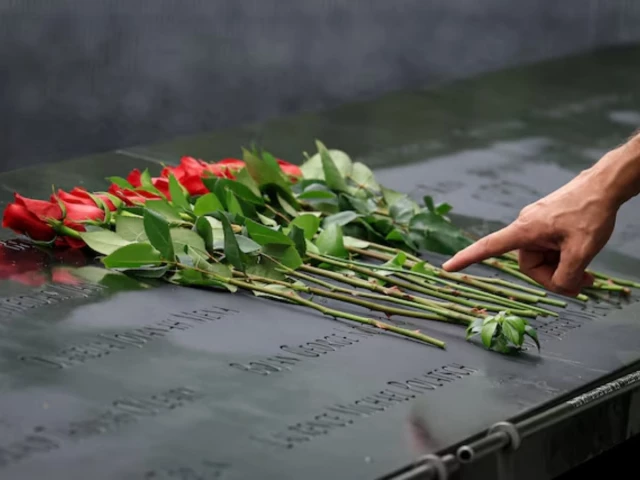
Foreign al Qaeda militants crashed airplanes into New York City's World Trade Centre and the Pentagon outside Washington on September 11, 2001, killing thousands and sparking decades of war, including the US-led invasion of Afghanistan, where al Qaeda leaders were based.
"Stay connected with Aman-e-Pakistan for ongoing live reporting and verified investigative updates."
Al Qaeda also inspired the 2013 Boston Marathon bombing, in which a pair of foreign-born brothers killed three and injured more than 260, with a fourth person killed a few days later. Fears of domestic extremism.
But the US has also seen many domestically inspired attacks, including the 2016 mass shooting that killed 49 people at a Florida gay nightclub and other attacks on Black, Latino or Jewish Americans.
President Donald Trump himself faced multipleassassination attempts, including a 2024 shooting that wounded his ear, andconservative activist Charlie Kirkwas gunned down in September 2025 while speaking to university students in Utah. Asked which ideology-driven attacks pose the bigger threat, 61% of respondents in the latest poll picked domestic extremists and 34% picked those from abroad.
The legacy of the September 11 attacks remains strong, the survey found. Six in 10 people say they periodically think about the attacks and roughly the same share say they would support a military response if there were another major attack.
Read:Independent voters shift toward Democrats ahead of US midterms: poll. But Americans do not believe that wars that followed 9/11 were worth the cost. Some 48% said the war in Afghanistan was not worth its toll, compared with 21% who said it was, while the rest were unsure or didn't answer the question.
The war in Iraq was similarly unpopular, with 51% disapproving and 21% approving. Public disapproval of those wars played a role in Trump's rise, as he campaigned on a platform of avoiding enduring wars. Trump himself launched awar on Iransix months ago that has eluded efforts for a speedy resolution.
The poll found only 25% of Americans think the conflict has been worth it, compared with 54% who think it hasn't been. Support for increased security.
Six in 10 Americans - including eight in 10 Republicans - think the US government response to the September 11 attacks has been at least somewhat effective in preventing attacks against Americans on US soil.
A bipartisan majority - including 71% of Democrats and 75% of Republicans - think the beefed-up airport security that took hold following the September 11 attacks has been worth the disruptions to people's trips.
Americans are also more inclined to support government-run airport security, with only 23% supporting an idea studied by the Trump administration that would replace federal security with private contractors. 48% were opposed, the poll found.
The expansion of domestic surveillance after 2001 has been less popular, with 65% opposed to allowing US intelligence agencies to monitor electronic communications of US citizens without a warrant. A 2008 law that allowed that to happenlapsed in June, though the Trump administration has asked Congress to reauthorise the practice.
Most Americans look back on September 11 as an event that unified the country, and 75% of the country thinks it had a major impact on the nation, far more than the 41% who think the 2007-2009 financial crisis had a major impact. The.
Reuters/Ipsos poll, which was conducted online, surveyed 1,167 US adults nationwide, with margins of error between three and six percentage points.
Continue Reading: More in National
Swipe or click arrows to explore National desk coverage