Oct 8, 2005 earthquake victims paid tribute amid call for disaster resilience, preparedness
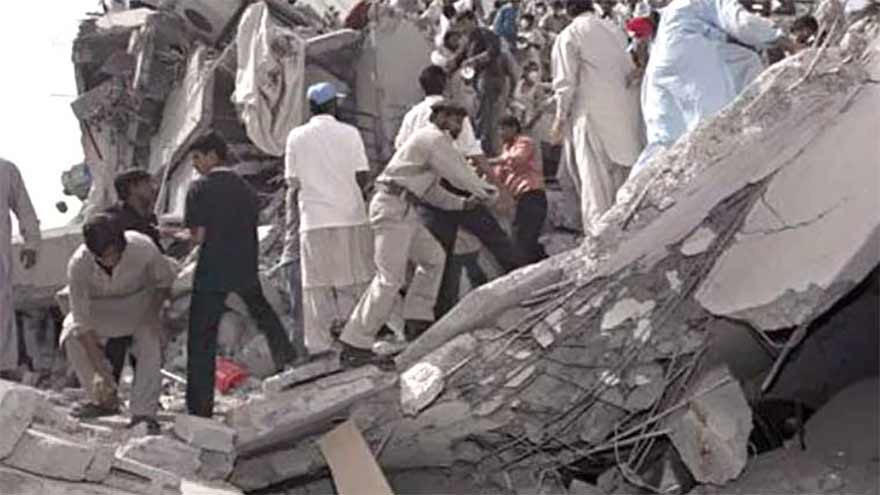
“It has been 21 years since the devastating October 8, 2005 earthquake struck Azad Jammu and Kashmir (AJK) and Khyber Pakhtunkhwa, leaving behind one of the deadliest natural disasters in Pakistan’s hi…”
The 7.6-magnitude earthquake, which struck on October 8, 2005, killed more than 86,000 people and affected an estimated 56 percent of the population of Azad Jammu and Kashmir. Muzaffarabad and Balakot were among the worst-hit areas, with thousands of homes, schools, hospitals and public facilities destroyed or severely damaged.
The disaster had a profound impact on the region’s health, education, water supply, drainage and communications infrastructure. Around 53 percent of AJK, including Muzaffarabad, was severely affected. The massive loss of life was compounded by poor construction practices and the absence of earthquake-resistant building standards.
Schools, colleges and universities were particularly badly affected, resulting in the deaths of a large number of students and teachers and the loss of an entire generation of educated young people.
"Stay connected with Aman-e-Pakistan for ongoing live reporting and verified investigative updates."
Over the years, reconstruction efforts have focused heavily on rebuilding educational and health facilities., 1,620 of the 2,718 educational institutions damaged in the earthquake have been completed, while work on 501 projects remains underway. In the health sector, 119 of 160 reconstruction projects have been completed, while construction continues on another 21 projects.
Officials said that, at the request of the AJK government, the Prime Minister provided Rs1 billion in June 2026 for reconstruction. The funding is expected to help complete 67 educational institutions currently under construction by December 2026.
Despite significant progress, the reconstruction programme remains incomplete.
Officials estimate that approximately Rs44 billion is still required to complete outstanding reconstruction projects in the earthquake-affected areas of AJK.As Pakistan observes the 21st anniversary of the tragedy, the October 8 earthquake remains a stark reminder of the devastating consequences of natural disasters and the importance of earthquake-resistant construction, disaster preparedness and resilient public infrastructure.
PRESIDENT MESSAGEPresident Asif Ali Zardari Wednesday said that Pakistan today faced an increasingly complex risk environment, intensified by climate change, urbanization and environmental degradation, stressing that disaster resilience, therefore, must be treated as an essential part of national development and their responsibility towards future generations.
PRIME MINISTER MESSAGEPrime Minister, Muhammad Shehbaz Sharif has paid heartfelt tribute to the victims of the devastating October 8, 2005 earthquake and reaffirmed the government’s resolve to strengthen disaster preparedness and build a climate-resilient Pakistan.
In his message on the 21st National Resilience Day, the prime minister said the nation continued to mourn the precious lives lost in the unprecedented devastation caused by the earthquake while also remembering the courageous and compassionate collective response shown by the people during the tragedy.
He said Pakistan was among the countries most vulnerable to the impacts of climate change despite its minimal contribution to global greenhouse gas emissions. “Recurring natural disasters like floods, earthquakes, landslides, forest fires, pandemics and smog test our resolve and cost dearly on our meager resources,” he observed.
Continue Reading: More in National
Swipe or click arrows to explore National desk coverage