How two men survived nine days in a Nepal flood tunnel
“Maharjan was one of hundreds of hydropower workers believed to have been buried when a glacier collapsed above Nepal's Trishuli valley on August 26. A delirious …”
A delirious Kabir Maharjan drifted in and out of consciousness in a pool of muddy water in complete darkness, trapped for nine days in a tunnel beneath the wreckage of Nepal's worst flood disaster in decades. When he finally awoke at a hospital after a miracle rescue, he did not recognise his wife.
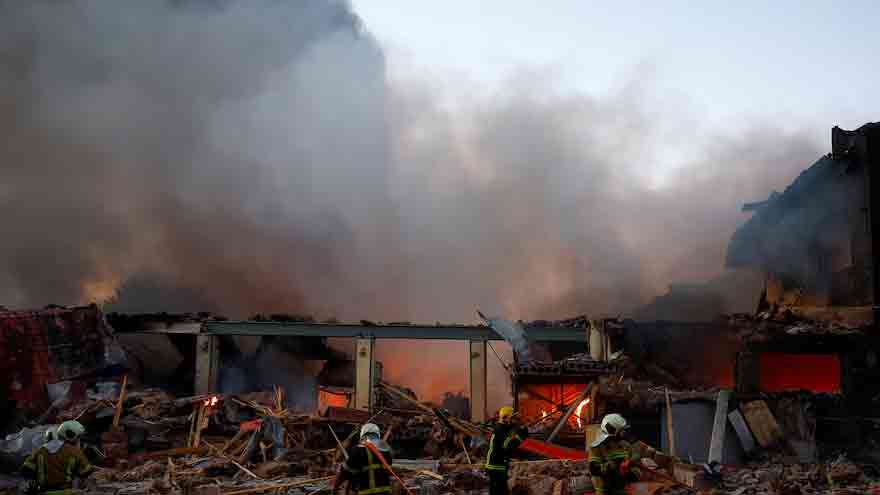
Confused, he asked her why she had not given him a bed sooner. Maharjan was one of hundreds of hydropower workers believed to have been buried when a glacier collapsed above Nepal's Trishuli valley on August 26, unleashing a wall of mud and water that killed more than 1,300 people and left thousands missing across Nepal and neighbouring Tibet.
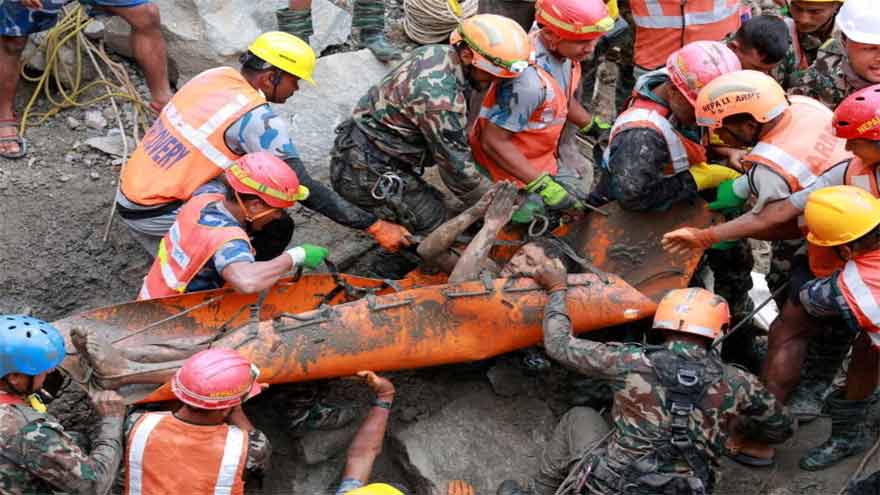
He and mechanical foreman Sanjay Sah survived in an air-filled chamber, said lawmaker Shri Ram Neupane, a veteran tunnel engineer who helped lead the rescue effort.
"Stay connected with Aman-e-Pakistan for ongoing live reporting and verified investigative updates."
Their rescue against the odds has given hope to search teams working at the sites along the devastated valley that some of the 121 workers still believed to be trapped in tunnels as of Monday are still alive.
Reuters has reconstructed the full story of the men's survival and the frantic effort to save them through exclusive interviews with a dozen people, including the previously unreported accounts shared by relatives, engineers, government officials and rescuers directly involved in the operation and a review of site documents, maps, and internal conversations between rescuers.
THE MORNINGAt 7:30 a.m. (0145 GMT) on the day of the disaster, Maharjan called his wife before his shift at the Upper Trishuli 3A hydropower project. “I have to go inside the tunnel,” he.
“There won’t be any network inside.”Around 60 minutes later, a glacier collapsed at the Langtang Lirung mountain some 25 miles upstream, causing a landslide so powerful that it formed a wall of water that flattened villages and submerged a network of 12 hydropower projects with nearly 900 workers inside. Survivors rescued from Nepal’s power project.
Two people were pulled out alive on September 4 from a tunnel linked to the Upper Trishuli 3A hydropower station in Nepal, nine days after a glacier collapse burried the area under mud. In the capital Kathmandu, electricity department officials were monitoring the projects' power supplies on their screens.
Then the fields started going blank — one after another, stations disappearing from the control panels, falling like dominoes. Suraj Dahal, an engineer at the Nepal Electricity Authority who led parts of the rescue effort, said he was not immediately alarmed because "floods are normal" in Nepal.
They soon understood otherwise. Because the 3A station manager was abroad, it took officials two extra minutes to reach out on call to the roughly 40 workers estimated to be inside. By then, at least two hydropower projects upriver had already been hit.
At 9:15 a.m. — two minutes after Maharjan's wife, Hira Shova Maharjan, had tried and failed to reach him — officials gave the final order to 3A: "Evacuate! "Sah, who worked in the power house's control room, sped from floor to floor, warning colleagues individually, he later.
Outside the tunnels, evacuating workers tried to run away from the flood, but were not fast enough. Officials pointed to footage showing a group of roughly 30 workers swept away by a wave many times their height.
Rescuers later identified an escape ladder which, had workers known of it, could have saved as many as two-thirds of those inside, said Dahal. But they "didn't know where to go," he said.
Of the tunnel's four access routes, engineering drawings seen by Reuters showed one ran more than 180 meters to the underground powerhouse — but rescuers believed it was fully flooded, offering no hope of survivors. Neupane instead turned his attention to a shorter cable-duct tunnel that sloped upward and was less exposed to the floodwaters.
It was there that Maharjan and Sah had taken shelter, just 160 meters from the exit — "at the corner, at the edge of the tunnel," as Maharjan would later describe it to his wife. FEAR OF THE WORSTFor the next nine days, the air pocket that had saved their lives became their prison.
Sah said he recited Hindu prayers to keep his courage. Maharjan sipped the same muddy water he slept in to stay alive, his wife said. When Hira Shova first heard about the flood, she assumed the powerhouse would be safe.
She tried calling her husband, colleagues, anyone who might know something. No one answered. When officials later showed her photographs of where the site entrance once stood — now a bare riverbank — she, "he couldn't possibly be alive".
"Deep down in my heart, a terrible hopelessness was setting in," she recalled, but to her sons, 15 and 10, she kept up a brave front.
Continue Reading: More in National
Swipe or click arrows to explore National desk coverage