SC draws limits on trial courts' powers
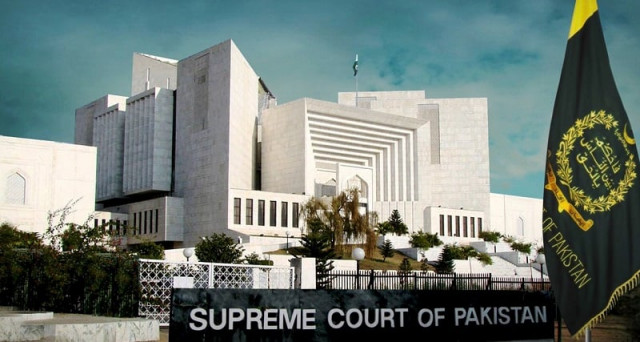
“Issuing guidelines to trial courts on the exercise of their powers under Section 540 of the Code of Criminal Procedure (CrPC), 1898, the Supreme Court has observed that a criminal court is neither a s…”
"Its duty is to adjudicate impartially upon the charge brought by the state, while using the powers conferred by law where necessary to ensure that the decision is reached upon the material essential for justice. " says a 10-page judgement authored by Justice Muhammad Salahuddin Ahmed Panwar.
The case pertains to a matter wherein role of a criminal court in an adversarial process, and the relationship between sections 94 and 540 (CrPC), Article 161 of the Qanun-e-Shahadat Order, 1984 and the constitutional guarantee of a fair trial have been arisen.
"The contest belongs to the parties; the burden of proving guilt remains upon the prosecution; but the responsibility for a lawful and just adjudication remains with the Court," it adds, The three-judge bench led by Justice Muhammad Hashim Kakar has noted that Section 94 (CrPC) enables the court, whenever it considers the production of a document or other thing necessary or desirable for the purposes of an inquiry or trial, to compel its production.
"Stay connected with Aman-e-Pakistan for ongoing live reporting and verified investigative updates."
"Section 540 authorises the court, at any stage, to summon any person as a witness, examine a person present, or recall and re-examine a person already examined; and its latter part commands the Court to do so where the evidence appears essential to the just decision of the case.
The court said that first, the ordinary structure of a Pakistani criminal trial is adversarial, but the court possesses limited statutory powers of an inquisitorial character under sections 94 and 540 (CrPC) and Article 161 QSO.Second, the first part of Section 540 is discretionary, while its second part becomes mandatory only when the evidence appears essential to the just decision of the case.
Third, neither omission from the calendar of witnesses nor absence of a prior statement under Section 161 is, by itself, an absolute bar to examination under Section 540. Fourth, the order said that section 265-C requires timely supply of existing material which the law makes disclosable; it does not require production of a statement never recorded.
Fifth, the Court must not use Section 540 merely to strengthen a party's case or to cure an inherent evidentiary deficiency. Sixth, the order said that whenever additional evidence is received, the accused must be protected against unfair surprise through disclosure, preparation and cross-examination.
Seventh, the remedy for any irregularity depends upon actual prejudice; a de novo trial is not the automatic consequence of every mid-trial exercise of Section 540, says the order.
Continue Reading: More in National
Swipe or click arrows to explore National desk coverage