Stereotypes on TV
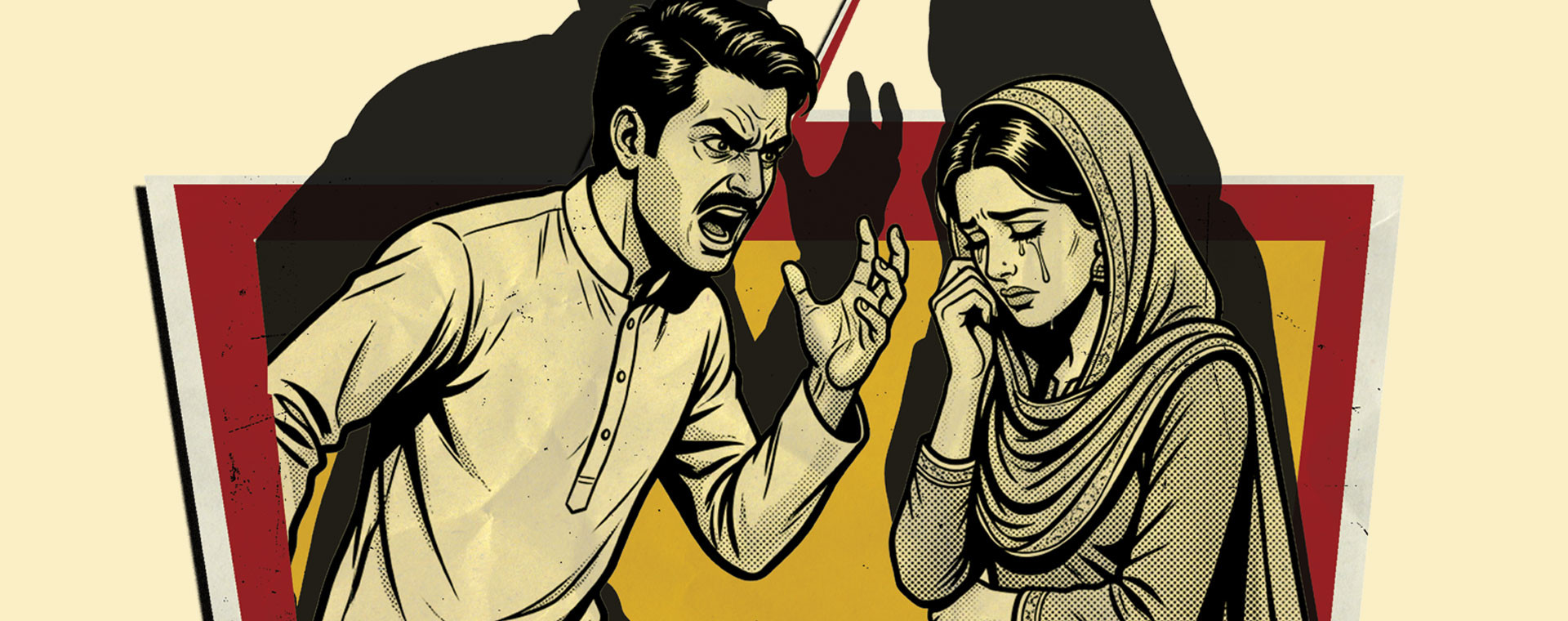
“Back to Tribune. HomeT-Magazine. Stereotypes on TVT-Magazine. Next Story. Stereotypes on TVHow prime-time dramas mirror and reinforce Pakistan's deep-seated reluctance to dismantle patriarchal tropes. ByFaiza S…”
Back to Tribune. HomeT-Magazine. Stereotypes on TVT-Magazine. Next Story. Stereotypes on TVHow prime-time dramas mirror and reinforce Pakistan's deep-seated reluctance to dismantle patriarchal tropes. By. Faiza Shah|Desgen by: Anusha NasirfacebooktwitterwhatsuplinkdedemailPUBLISHED
November 08, 2026Television in Pakistan is a multi-billion-rupee industry driven almost entirely by corporate advertising. Conservative and predictable stories are a safe bet for return on investment for major networks. On the other hand, experimental or socially provocative content represents a massive risk that corporate gatekeepers are hesitant to take.
This corporate risk-aversion has led to the softening of complex themes in our popular contemporary television serials. When a story attempts to tackle deeply entrenched societal issues, it is almost immediately met with pushback. This friction happens either internally from a TV channel’s own content review boards, or externally from state regulatory bodies.
"Stay connected with Aman-e-Pakistan for ongoing live reporting and verified investigative updates."
Conservative institutions believe the general public must be shielded from uncomfortable real-world realities. Instead, they prefer the comforting lies of idealised traditionalism. This ensures that the prime-time viewing slot remains perfectly safe for family entertainment and corporate product placements.
In such an environment, the status quo is rarely shaken. Television ratings will always be prioritised far above artistic bravery by television networks. Yet, every now and then, a massive production manages to disrupt this strict code of entertainment ethic.
Currently, a prime-time drama has captured the collective imagination of millions of viewers across the country. It pulls in staggering viewership numbers, and dominates morning-show post-mortems and social media arguments. However, these type of shows are being consumed by millions of households, a closer look at its narrative reveals a striking contradiction.
It presents a seemingly modern theme—mental health struggles and emotional gaslighting—but packages it within traditional, stereotypical relationship frameworks. Rather than breaking the mold or offering a progressive path forward, the drama walks a dubious tightrope.
In a myriad of ways, it conforms to age-old societal expectations and relationship tropes while attempting to discuss the psychological damage caused by those very structures. It is a modern crisis resolved by old-fashioned rules.
The illusion of progress. The core storyline follows a highly ambitious young woman who is about to pursue a life-changing academic future at a prestigious foreign university. Her bright future, however, is completely derailed by a toxic, manipulative relationship with her childhood sweetheart.
When this young man abruptly abandons her under the guise of a sudden religious awakening—subsequently marrying a woman chosen for her perceived piety—the female protagonist is left behind to pick up the pieces. She is forced to deal with residual shame, clinical depression, and debilitating panic attacks that leave her helpless.
On the surface, dedicating prime-time television space to an exploration of a woman’s psychological breakdown feels like a significant step forward for the medium. The drama does not shy away from showing her raw grief and vulnerability.
Yet, as the weekly episodes progress, the narrative’s treatment of her healing process relies heavily on traditional, regressive tropes that audiences have been seeing for decades. Instead of seeking professional psychiatric help, or finding strength through her own independent agency, financial recovery, or personal growth, her rehabilitation is tied directly to her relationship with a new man.
This new male lead enters the story as a classic, idealised "saviour" figure. He is deeply religious, respectful, and soft-spoken—a stark, refreshing contrast to the narcissistic ex-boyfriend who shattered her life. However, the narrative heavily implies that the young woman’s severe panic attacks can only be cured through his soothing presence and his spiritually blessed water.
By framing her emotional recovery around the intervention and protection of a righteous man, the drama conforms to a deeply patriarchal stereotype: the idea that a broken woman cannot possibly heal on her own terms. Her rehabilitation is not found in self-reliance– or clinical therapy– but in the safe, traditional sanctuary of a new marriage.
The drama sheds light on the unfair dichotomy of how society views the morals of men and those of women. The ex-boyfriend is granted a fresh start by his community without any questions. He is also unbothered by his past emotional cruelty, moving on with a clean slate.
Meanwhile, the female lead suffers immense social isolation, spiritual guilt, and heavy emotional consequences for the exact same shared past. By suggesting that a woman’s ultimate destination, safety, and source of healing must always be a husband, the popular drama reinforces the very patriarchal structure that the initial episodes seemed to critique.
The narrative turns to the age-old misogyny that settles well with conservative viewers and does not upset the societal apple cart. The writer's role. Behind this contradictory narrative framework is the screenwriter.
In the Pakistani entertainment landscape, the scriptwriter occupies a unique position. They must balance their artistic ambitions with the realities of commercial survival. Scriptwriters are tasked with generating massive, competitive ratings for networks while trying to inject some level of social substance into their scripts.
Prominent screenwriters across the industry have spoken candidly about the suffocating, day-to-day pressure of television rating points (TRPs), which directly dictate a channel's advertising revenue and financial health. Themes of domestic misery and clear-cut, easily recognisable formulas are what sell.
A storyline featuring immediate female submission, predictable family politics, or a standard romance consistently generates much higher ratings than a nuanced drama about emotional boundaries or female autonomy. Writers often describe a frustration among the creative fraternity regarding how commercial metrics discourage intellectual depth.
When a writer attempts to introduce complex themes or open-ended endings, they are frequently this is not what the masses want. They want emotional catharsis, clear villains, and recognisable relationship dynamics that do not challenge their worldview.
So to thrive in such a restrictive environment, scriptwriters have learned to weaponise the traditional system against itself. By utilising the familiar framework of a prime-time family drama—complete with marriage plots, weeping mothers, emotional confrontations, and a glamorous cast—the writer of the current hit drama serial hoped to bring about a discussion on emotional gaslighting directly into conservative households.
However, to keep the corporate employers as well as the mainstream audience happy, the script absolutely has ended up conforming to expected societal norms. Portraying an independent woman healing solely through clinical therapy and career focus might have been rejected by the masses as "too westernised" or unrelatable.
Therefore, the modern theme of mental health is filtered through the acceptable lens of marital shelter. It is a compromise that highlights the limits of progressive storytelling within the world of commercial television. For the actors tasked with bringing these characters to life, navigating these mixed thematic signals requires immense artistic nuance.
Veteran actress Sania Saeed, who plays Khushbakht—the mother of the "ideal" male saviour in the drama—offered some of the most blunt critique of the show's underlying social dynamics. In an interview with the BBC Urdu, Saeed pulled back the curtain on exactly why Pakistani dramas remain tied to traditional stereotypes, even when they are genuinely attempting to tackle modern themes.
"Everyone wants to judge a woman by her morals," she noted. She pointed out that writers and viewers alike are collectively obsessed with discussing morality when it comes to prime-time entertainment. She elaborated that Pakistani society, as a whole, is still at a point where it primarily wants to talk about family issues, domestic relationships, and traditional gender roles.
The audience struggles to engage with stories that step outside this domestic sphere. Regarding the drama's specific handling of trauma, Saeed offered a remarkably honest critique that challenged the very script she was a part of.
She openly questioned the narrative's heavy reliance on a new romantic relationship as a magic cure for severe emotional distress of a young woman. She noted that moving straight from one massive relationship trauma directly into another relationship is psychologically unhealthy, and that human beings require time and self-reflection to truly heal.
However, she acknowledged the pervasive, almost unbreakable cultural assumption in Pakistan that marriage is the universal, catch-all remedy for young people facing any kind of life challenge, mental illness, or emotional distress. Saeed also addressed the fascination audiences have with her character's on-screen bond with her son.
Viewers praise the mother-son relationship for depicting an obedient, and angelic eastern son. Saeed interpreted this admiration as a reflection of more patriarchal expectations, arguing that society craves unquestioning compliance from children. She revealed that the son's character was actually written as an unconventional, empathetic idealisation meant to subvert typical, harsh parenting patterns.
Yet, despite this intention, the mainstream audience still gravitated toward the comforting illusion of absolute maternal control. She pointed to the fact that even when creatives try to introduce nuance, the audience often filters it through a conservative lens.
Saeed also focused on the frustrating irony of the quality of scripts that are demanded of contemporary women scriptwriters. “Female roles written by enterprising women are not at all enterprising women. They are not ever economically independent nor do they possess any skill set, education or degree of any kind.
Ever. They have no economic power,” she said bluntly, driving home the point, “We hesitate to portray an empowered woman on screen.”When a prime-time drama pushes too far toward absolute female independence or challenges traditional family structures without offering a conservative safety net, the ratings almost invariably drop.
Conversely, when a show pairs modern struggles with traditional resolutions like marriage and family reconciliation, the viewership numbers rise drastically. This ongoing feedback loop reinforces that audiences are simply unprepared for progressive endings.
The audience holds immense power through their viewership habits, yet they often use that power to demand the reassurance of familiar stereotypes, signalling to channels what the viewer preferences are– modern social commentary wrapped in traditional packaging.
For television to truly mature, channels, scriptwriters, and audiences must collectively find the courage to allow self-growth of on-screen characters—especially female characters—without turning towards marriage or family reconciliations as the only crutches. Viewers and channels must become more comfortable with the notion of a woman finding peace entirely on her own merits.
Until that shift happens, Pakistani television will remain a beautifully produced wheel, spinning endlessly within the safe boundaries set by its corporate gatekeepers and audiences frozen in patriarchal mindset. Pages. Pakistan.
Business. World. Opinion.
Life & Style. Sports. Blogs.
Videos. Our Sites. Express News.
Urdu E-Paper. English E-Paper. Sindhi E-Paper.
Cricket Pakistan. Express Live. Campus Guru.
Express Entertainment. Food Tribune. About Us.
Contact Us. Online Advertising. Privacy Policy.
Copyright. Fuel Prices Pakistan. Gold Prices Pakistan.
Prayer Timing Pakistan. Weather Forecast Pakistanfollow us
Continue Reading: More in National
Swipe or click arrows to explore National desk coverage