$44b remittance run-rate masks risks
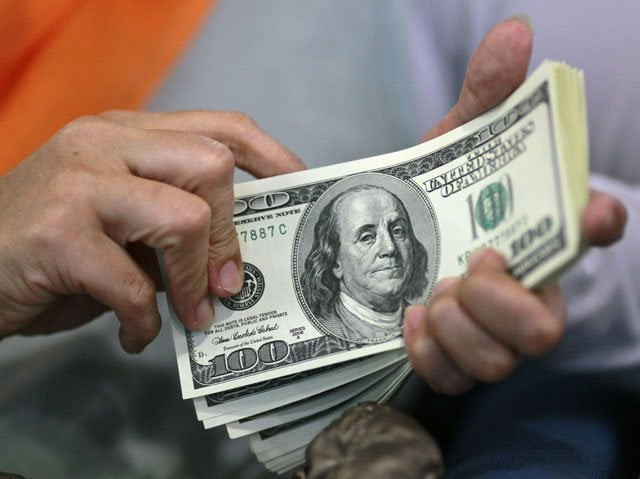
“After a record year, overseas Pakistanis appear set for another milestone, sending $7.3 billion home in the first two months of FY27, 14.7% more than the $6.4 billion received in the same period last …”
The State Bank of Pakistan said workers' remittances stood at $3.7 billion in August, up 16.5% from a year earlier and 0.7% from July. The two-month haul of about $7.29-7.3 billion marks the strongest start to a fiscal year on record and puts full-year inflows projection on a path that brokers now estimate near $44 billion.
August was not a new monthly peak. That remains May's $4.25 billion Eid surge. June cooled to $3.47 billion and July rebounded to $3.63 billion.
What has changed is the floor: a $3.5-3.7 billion month is now routine rather than exceptional. At August's run rate, annual inflows would total close to $44 billion. "Pakistan's remittances stood at $3.7 billion in August 2026, up 17% YoY and 1% MoM.
"Stay connected with Aman-e-Pakistan for ongoing live reporting and verified investigative updates."
This takes 2MFY27 remittances to $7.3 billion, up 15% YoY," noted Topline Securities in a tweet. "We expect remittances for FY27 to clock in at $43.7 billion. "Saudi Arabia remained the largest single source, sending $873.5 million – 19% higher than $737 million in August 2025, but 4% below July's $914 million.
The United Arab Emirates followed with $749.8 million, up 17% year-on-year and 2% month-on-month from $737 million. Together, the two Gulf states supplied about $1.62 billion, or roughly 44% of August's total. The fastest growth among the big four came from Britain.
Inflows from the United Kingdom rose 22% year-on-year to $563.7 million, after a 23% jump in July. The United States sent $308.9 million, up 16% from a year earlier but 2% lower than July. Volume still comes from the Gulf, but momentum is broadening towards Western corridors.
The rise is more striking as the Pakistani state has stopped paying for it. At the start of FY27, the central bank ended the telegraphic transfer rebate and Sohni Dharti rewards that had been used to channel funds into banks.
Lenders are still offering about Rs2 per dollar from their own books. Two months of double-digit year-on-year growth is the first test of whether formal inflows can hold without a fiscal top-up. This matters for the external account.
Remittances have more than doubled since FY17 and reached $41.6 billion in FY26, up 8.6% from $38.3 billion a year earlier. Goods exports have not kept pace. Diaspora inflows now do much of the work a stronger export base would typically perform: funding the import bill, supporting reserves and keeping the current account from widening as demand recovers.
The same concentration that stabilises the account is also a risk. Saudi Arabia and the UAE still dominate. Regional tensions and a slower Gulf labour market have already been flagged as key downsides.
A shock to these two corridors would not be offset quickly by the UK or the US despite their stronger growth. Despite contributing record remittances that bolster the national economy, overseas workers receive virtually no targeted skill training or professional education from provincial governments, especially in Sindh and Balochistan.
Furthermore, governments continue to neglect their long-term security by failing to offer structured welfare plans or social safety nets. Meanwhile, the Pakistani rupee posted a slight gain against the US dollar in the interbank market on Wednesday, closing at 277.36, up Rs0.01 from Tuesday's 277.37.
Overseas, the yen held near its strongest level since February, leaving the dollar on the back foot as oil climbed towards $100 a barrel amid an expanding conflict in the Middle East. Gold prices in Pakistan rose on Wednesday, tracking gains in the global market.
Locally, 24-karat gold climbed Rs800 to Rs462,936 per tola. Ten-gram gold increased Rs686 to Rs396,893, -Pakistan Gems and Jewellers Sarafa Association. Internationally, gold added $8 to $4,404 an ounce, while silver rose Rs72 to Rs7,141 per tola.
Continue Reading: More in National
Swipe or click arrows to explore National desk coverage