From South Punjab to Karachi: New provinces debate heats up as political leaders call for smaller units
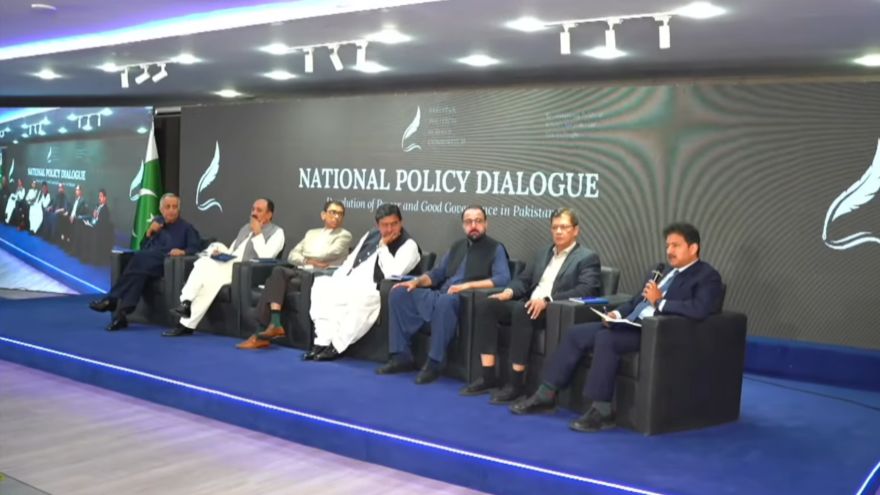
“UMT dialogue brings governance, resources and regional demands into sharp focusLAHORE (Dunya News) – Pakistan’s long-running debate over creating new provinces …”
Speaking at a National Policy Dialogue at the University of Management and Technology (UMT) in Lahore, participants raised demands ranging from new provinces in South Punjab, Karachi, Pothohar and other regions to stronger local governments and greater devolution of funds and authority.
While there were differences over whether administrative divisions should become full-fledged provinces, speakers broadly highlighted the need to bring decision-making, resources and public services closer to citizens. Hamid Mir.
Senior journalist Hamid Mir said the Punjab Assembly had already passed a resolution supporting the creation of Bahawalpur and South Punjab provinces, with the Pakistan Muslim League-Nawaz (PML-N) and Pakistan Peoples Party (PPP) also supporting the move at the time.
"Stay connected with Aman-e-Pakistan for ongoing live reporting and verified investigative updates."
He said the political position had since changed, arguing that the PML-N leadership or those controlling the party now believed Punjab should not be divided because Maryam Nawaz was serving as chief minister. Mir said Prime Minister Shehbaz Sharif still wanted Punjab to be divided into two provinces and remained in favour of creating new administrative units.
However, he claimed that Sharif was unable to advance the proposal in the face of Maryam Nawaz’s position. “Maryam Nawaz has decided that two new provinces will not be created in Punjab, so Shehbaz Sharif is also silent,” Mir said.
The journalist’s remarks placed the Punjab question at the centre of the wider debate, particularly over whether political considerations are preventing administrative restructuring despite earlier resolutions and commitments. Mustafa Kamal. Federal Minister for Health Mustafa Kamal argued that there should be no fundamental objection to dividing Sindh into three parts if the objective was better administration and governance.
He questioned whether the creation of seven administrative districts in Karachi had caused the city to break apart, arguing that the same principle could be applied to the debate over administrative provinces.
Kamal said the Muttahida Qaumi Movement (MQM) had not abandoned its position in favour of administrative provinces and maintained that the issue should be discussed through dialogue to find solutions to public problems.
He also referred to former prime minister Zulfikar Ali Bhutto’s role in the constitutional framework, saying provision for the creation of provinces existed in the Constitution., however, the real dispute was ultimately about the distribution of resources and authority. He said discussions on the proposed 28th Constitutional Amendment had not yet taken place with his party.
Kamal also criticised the governance situation in Sindh, noting that the PPP had been in power in the province for 18 years. He questioned why clean drinking water remained unavailable in many parts of the province, from Karachi to Kashmore, and said the system needed to be changed.
In his broader remarks, Kamal described Pakistan’s political system as a form of feudal democracy and said legislation should address the problems and hardships faced by ordinary citizens. He said Parliament was meant to represent 250 million people, yet many lawmakers were not familiar with the difficulties faced by the common citizen.
Kamal also argued that the National Finance Commission (NFC) mechanism should be accompanied by an effective Provincial Finance Commission (PFC), allowing funds to reach the grassroots level. He criticised what he described as inconsistent political positions, saying the PPP supported local government and new provinces in Punjab while opposing similar demands in Sindh.
He also said Pakistan was facing not simply an economic crisis but a “crisis of intentions”. Naqvi backs 'system reset', says public must decide on new administrative units. Shahid Khaqan Abbasi.
Former prime minister Shahid Khaqan Abbasi said voices in favour of new provinces were growing and maintained that smaller administrative units should be created. He said the country needed a system under which resources were spent at the local level rather than remaining concentrated at higher levels of government.
Abbasi identified South Punjab, Karachi, Pothohar and Balochistan among the areas where demands for new provinces had emerged. He warned that Pakistan had effectively developed “small kingdoms” within its existing political and administrative structure. However, he stressed that the debate over provinces could not be separated from the Constitution and broader political reform.
Abbasi said the system would not improve unless electoral malpractice was addressed and warned that merely creating more provinces would not automatically resolve Pakistan’s problems. “Even if we make 1,000 provinces, the system will not work” without addressing fundamental weaknesses, he said.
He argued that the country should recognise the need for structural change rather than assuming existing arrangements were permanent. Abbasi also said the British had not left behind any rule stating that Pakistan could not change its administrative system.
He said the country needed to examine the constitutional and institutional framework alongside demands for smaller provinces. Khawaja Saad Rafique. Former federal minister Khawaja Saad Rafique said he supported smaller administrative units and an empowered local government system.
He argued that the concentration of authority remained a major problem and said the desire to retain power at the top had not disappeared. Rafique cautioned that creating smaller provinces would serve little purpose if the Constitution continued to be violated.
He said successful governance depended on operating within the framework of law and the Constitution. “We are standing at such a crossroads today that the way forward is not visible,” Rafique said. In his remarks, he also argued that the debate over new provinces should not be treated as a substitute for wider institutional reform.
Rafique said the demand for smaller provinces existed in several parts of the country, including Karachi, Bahawalpur, Hazara and Rawalpindi, while opposition to such proposals also existed in various areas. He said the country needed to discuss provincial restructuring alongside constitutional compliance and accountability.
Malik Ahmad Khan. Punjab Assembly Speaker Malik Ahmad Khan said the Constitution already contained provisions concerning the distribution of administrative authority. He said powers should be transferred to elected representatives and argued that major reforms were required to improve governance., progress would remain difficult until authority was transferred to representatives elected by the people.
His remarks focused on devolution as a central element of governance reform, placing elected institutions and the transfer of authority at the heart of the discussion. Khalid Maqbool Siddiqui. Federal Minister Khalid Maqbool Siddiqui described Pakistan’s political structure as a form of feudal democracy and said the country needed legislation that responded to the needs of ordinary people.
He said the “motherland” was Pakistan and that provinces were parts of the country rather than separate entities. Siddiqui said Parliament was passing legislation without sufficiently understanding the pain and difficulties faced by the public.
He argued that legislation should be designed for the people of Pakistan and that the distribution of financial resources should reach the grassroots level simultaneously. He said his political movement had helped bring middle-class people into Parliament.
Siddiqui also challenged the idea that Pakistan’s problems could be solved simply through the creation of new provinces. He said the 18th Amendment had been intended to distribute powers, but argued that authoritarian tendencies had nevertheless continued to grow., there was no country in the world without a local government system.
He questioned whether the people had been consulted when Karachi was incorporated into Sindh and argued that major administrative decisions should involve public participation. He also criticised the absence of an effective PFC alongside the NFC, saying both mechanisms were required if resources were to reach lower levels of government.
Siddiqui said the country needed to move away from a system where power and resources remained concentrated in a small number of hands. He maintained that there was no purely economic crisis in Pakistan but rather a crisis of political will and intentions.
SM Tanveer. Leading businessman SM Tanveer called for a referendum on the creation of new provinces, saying the Constitution provided an option for such a process. He said Pakistan urgently needed to focus on the district economy and empower individual districts to generate economic activity.
Tanveer pointed to China as an example, saying district-level economic development had helped establish entire cities around specific industries and economic activities. He argued that Pakistan needed economic commissioners and stronger district-level structures to support local development.
Tanveer warned that the country was moving backwards and needed to be rescued through economic reforms. He said Pakistan’s exports were around $30 billion and were not increasing, while between five million and six million children were being born every year.
He questioned how the economy could grow when electricity was becoming increasingly expensive and taxes were rising sharply. Tanveer also pointed to Pakistan’s mineral wealth, saying the country claimed to possess billions of dollars worth of mineral resources while continuing to travel internationally with a “begging bowl”.
He said the country’s debt had risen beyond $120 billion and argued that industrial development was the only sustainable solution to many of its economic problems. SM Tanveer calls for district-based economic development to revive Pakistan's economy.
Tanveer described the scale of Pakistan’s economy as extremely small in global terms, saying an economy of around $450 billion was comparable to the size of a single major company elsewhere in the world. He also criticised the lack of new industrial investment and said the country needed to improve its economic foundations while population growth continued.
“District economy” remained a central theme of his remarks, with Tanveer arguing that stronger local economies could create jobs and opportunities without forcing people to migrate towards major cities. He reiterated his support for a referendum on the provincial question and said the country could not continue operating in its existing manner.
Chaudhry Salik Hussain. Federal minister Chaudhry Salik Hussain said the creation of new provinces could bring administrative improvements. He argued that the NFC Award effectively placed control over funds with the chief minister and said disparities existed between districts, with some remaining significantly underdeveloped while others had received substantial investment.
Hussain proposed converting existing divisions into provinces. His suggestion was for every division to become a province, which he said could provide a straightforward framework for restructuring the country’s administrative system. “If every division becomes a province, there will be no need to discuss this issue again after 40 years,” he said.
His proposal would use existing administrative divisions as the basis for any future provincial restructuring rather than creating entirely new boundaries from scratch. Awn Chaudhry. Minister of State Awn Chaudhry said smaller provinces could make it easier for citizens to access government institutions.
He cited the United States, Türkiye and neighbouring countries as examples of states that had created smaller administrative units. Chaudhry pointed out that Pakistan had been independent for 79 years but still had only four provinces, despite the country’s population and administrative needs having changed considerably.
He said the question of smaller provinces deserved serious discussion., smaller provinces could improve development and prosperity by bringing government closer to citizens. He also linked the provincial debate to the distribution of resources, saying structural weaknesses needed to be examined when resources were limited but administrative expenses continued to rise.
Chaudhry said people would be less likely to move towards major cities if employment opportunities were available in their own towns and districts. He also stressed the need for new political faces and leadership, arguing that smaller administrative units could create space for new leaders to emerge.
He referred to the local government system introduced in 2002, saying elected representatives had greater authority under that arrangement. Ahsan Bhon. Former Pakistan Bar Council vice chairman Ahsan Bhon said the Constitution provided a procedure for addressing the question of new provinces.
He argued that if a provincial assembly or an existing province was seen as an obstacle, dialogue should be initiated rather than allowing the issue to remain unresolved. Bhon said politicians should discuss the creation of new provinces through consensus and within the constitutional framework.
He referred to the support expressed by Makhdoom Ahmed Mahmood for new provinces, despite his association with the PPP, as an example of how the issue could cut across party lines. He called for all stakeholders and political parties to work together to create an environment for dialogue.
Bhon also said political actors should not become selfish in the pursuit of power and should examine national issues within the constitutional framework. He argued that the country needed political and institutional dialogue rather than confrontation.
Makhdoom Ahmed Mahmood. Former Punjab governor Makhdoom Ahmed Mahmood said politicians needed to understand that good governance was the foundation of good politics. He said a political leader needed vision and that there could be no room for corruption or nepotism.
Mahmood said he had previously led a movement for the creation of a new province and that the Punjab Assembly had unanimously passed a resolution on the issue. He argued that every district should receive funds allowing resources to remain concentrated at the provincial level.
Mahmood said administrative units or provinces should be created and that improvements to the overall system were urgently required. He pointed out that Pakistan had a population of around 40 million when it was created in 1947 and had four provinces at the time.
The country still has four provinces despite the dramatic increase in its population. He said he supported new provinces because they could improve access between citizens and governments.
Mahmood said young people would inevitably question the system if they were not provided with a better future and argued that the issue of new provinces should be debated both inside and outside Parliament.
He also supported smaller provinces and local governments, but stressed that restructuring alone would not solve Pakistan’s problems., the country’s system needed to be brought under the Constitution before lasting reforms could be achieved. He criticised the concentration of power in provincial governments and argued that local governments had not been allowed to function effectively.
Mahmood said provincial governments had retained excessive authority and that funds needed to be transferred to lower levels. He questioned the use of funds in Sindh during the PPP’s 18 years in power and called for greater transparency in provincial spending.
He also criticised hereditary political structures, saying political parties needed transparent elections if dynastic politics was to end. Mahmood said the debate over new provinces had to proceed alongside a discussion on the Constitution and institutional accountability.
He warned that merely creating smaller provinces without changing the wider system would not resolve the country’s fundamental problems. He also called for a stronger commitment to constitutional rule before any major administrative restructuring.
Mahmood argued that political parties themselves needed greater internal democracy and that civil society would have to play a more active role in pushing for institutional reform. He said Pakistan had achieved successes on the foreign policy front but had lost some of those gains because of problems within the country.
Continue Reading: More in National
Swipe or click arrows to explore National desk coverage