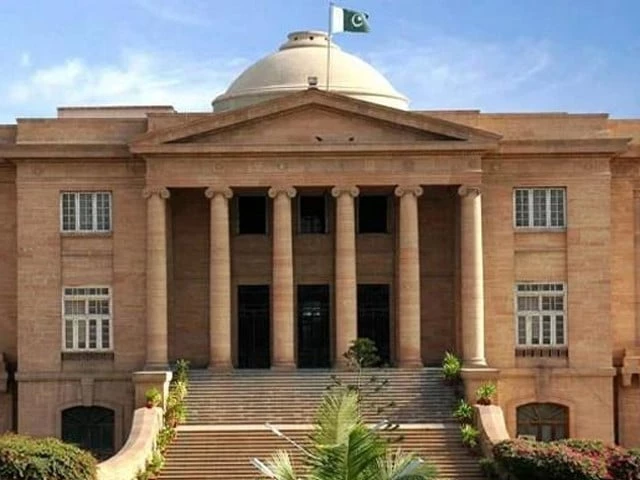
Real problem is execution, not ideas
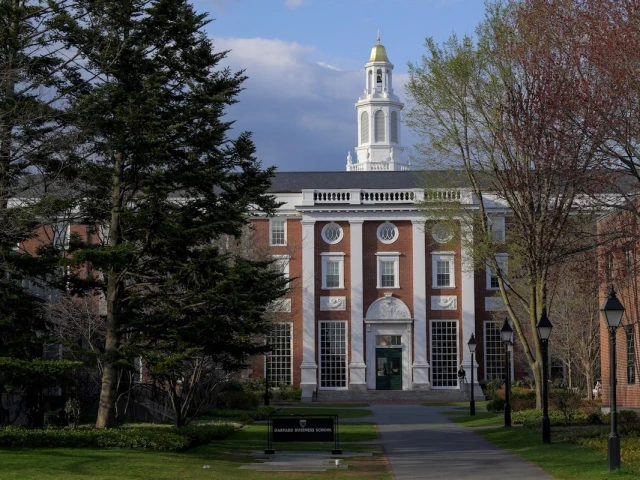
“The recent conference on Pakistan at Harvard University, themed "From Potential to Performance", has generated considerable debate in Pakistan, partly because of the deep pessimism expressed by two hi…”
One of the panellists, Nobel laureate Professor Acemoglu, described Pakistan's economy as having been "comatose" for the past three decades. He attributed this to weak institutions, inadequate investment in education and low tax collection. Unless these serious political economy failures are recognised and addressed, reversing the downward trajectory will be extremely difficult.
With the world now being transformed by artificial intelligence (AI), he warned that Pakistan appears largely unprepared, lacking the digital infrastructure needed to keep pace and risking further marginalisation.
Another panellist, Professor Atif Mian, argued that Pakistan lacked the strategic vision needed to tackle fundamental problems, including elite capture, the failure to achieve inclusive growth and insufficient efforts to establish peace within the country.
"Stay connected with Aman-e-Pakistan for ongoing live reporting and verified investigative updates."
He particularly noted that although Pakistan could address its energy crisis by electrifying its transport sector, it had been unable to do so because it could not confront powerful pressure groups.
Finance Minister Muhammad Aurangzeb, who also participated in the panel, acknowledged that these challenges were well understood but argued that political economy constraints had repeatedly delayed difficult decisions and their implementation. However, he maintained that the situation was changing for the better, as decisions previously postponed were now being taken and implemented.
In particular, he cited long-stalled tariff reforms, the taxation of agricultural income by provincial governments and the privatisation of state-owned enterprises. The question is whether these developments represent a genuine shift in Pakistan's political economy, with reforms overcoming resistance from powerful interest groups, or whether the country remains on the downward trajectory described by the two economists.
Let us first examine three areas where reforms have been blocked for decades. The first is the powerful industrial lobby, which has long feared that opening the economy before addressing fundamental issues such as energy costs, interest rates, taxation, and law and order could seriously damage domestic manufacturing.
With the launch of the five-year National Tariff Policy, the government has indeed embarked on a radical programme of trade liberalisation and making the industry competitive. The reforms are now in their second year of implementation and, with the notable exception of the automotive sector, have faced less resistance from other industrial sectors than many had anticipated.
Furthermore, the predicted collapse of domestic industry and a big fall in import-related revenue have not materialised, while several indicators point towards a more positive outcome. The second major lobby comprises those opposing the expansion of the tax net to previously undertaxed sectors, particularly agricultural income and the retail and wholesale sectors.
Here, the picture is mixed. Although provincial governments have enacted legislation to tax agricultural income, it remains unclear whether these measures will deliver the intended results. The government's experience with the retail sector shows that legislation and concessions alone cannot achieve the desired outcomes without the political will to confront resistance from powerful interest groups.
Nevertheless, after remaining below 10% for almost a decade, the tax-to-GDP ratio rose from 8.8% in FY2024 to 10.3% in FY2025. This 1.5-percentage-point increase is a significant achievement. Another major source of resistance has been trade unions and organised labour, which have opposed the privatisation of state-owned enterprises for decades.
However, the government has begun to break this longstanding stalemate through the sale of Pakistan International Airlines and the closure of Utility Stores Corporation. It is now proceeding with a broader programme involving 27 state-owned enterprises.
Whether this momentum can be sustained remains to be seen, but the willingness to take decisions previously considered politically difficult is an encouraging development. Regarding Professor Acemoglu's assertion that Pakistan is poorly prepared for the AI revolution, the finance minister has rightly pointed out that the country has already taken important steps in this direction.
Pakistan approved its National AI Policy in 2025, while its IT exports have reached $4.6 billion and are growing at around 20% annually. The government plans to upskill its IT workforce, already the world's third largest in terms of outsourcing talent, and invest $1 billion in AI by 2030.
The World Bank also recognises Pakistan as one of the leading hosts of data centres in the MENAP region, alongside Saudi Arabia and the UAE. Its initiatives in blockchain technology and the regulation of digital assets, including cryptocurrencies, further demonstrate that Pakistan is beginning to position itself to benefit from emerging technologies.
As for Professor Mian's observation that Pakistan has failed to make full use of its solar potential, it is true that the country has moved relatively slowly towards the electrification of transport, partly because powerful automobile lobbies have sought to slow the transition. However, the picture is quite different when it comes to solar energy.
Pakistan has emerged as one of the more successful developing countries in adopting solar power, with installed solar capacity estimated at around 8,000 MW. It is now among the countries where renewable energy has overtaken fossil fuels in electricity generation.
The overall picture is mixed, but there are reasons for cautious optimism. Recent initiatives in tariff liberalisation, taxation, privatisation, solar energy, digitalisation and AI suggest that Pakistan may finally be beginning to turn a corner.
But after decades of economic underperformance, incremental change will not be enough. The pace of reform must accelerate, and difficult decisions must no longer be postponed to accommodate entrenched interests. The real test is whether these reforms can be implemented consistently, withstand political and institutional resistance, and translate into higher productivity, greater investment, stronger exports and sustained economic growth.
Pakistan does not suffer from a shortage of ideas, diagnoses or policy prescriptions. Its real challenge is to overcome the resistance to change and turn sound policies into action. The time for promises and plans is over; what Pakistan needs now is execution.
The writer is a Senior Fellow at PIDE and has previously served as Pakistan's ambassador and permanent representative to the World Trade Organisation
Continue Reading: More in National
Swipe or click arrows to explore National desk coverage