PTI warns of quitting assemblies if governor's rule imposed in K-P
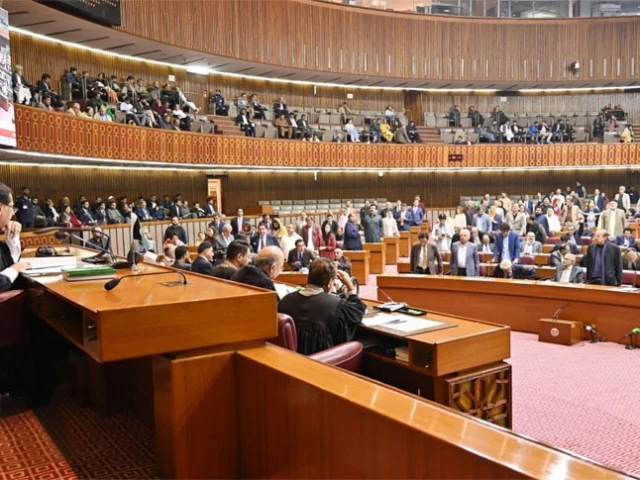
“Pakistan Tehreek-e-Insaf (PTI) Khyber-Pakhtunkhwa (K-P) President Junaid Akbar Khanwarned on Tuesday that the party would "quit" the national and provincial assemblies if governor's rule or an emergen…”
In an interview with a private news channel, Akbar said the party had decided it could no longer remain part of the existing system, even if the chief minister was disqualified. “Our people are being disqualified every day, and we will no longer play this game of assemblies.
""PTI will resign from the assemblies if governor’s rule or an emergency is imposed in Khyber Pakhtunkhwa," Akbar stated. Read:Centre lays ground for governor's rule in K-PAkbar stated that these threats of imposing governor's rule only amounted to “verbal firing”, further adding that the federal government did not have the “courage to impose it”.
"We want them to impose an emergency so that we can go to the people and such a decision will benefit us because it will make things easier”. The PTI leader noted that the party was not given the government of K-P as a charity but “we protected our vote” to secure the provincial government.
"Stay connected with Aman-e-Pakistan for ongoing live reporting and verified investigative updates."
Akbar stated that PTI had tried to find the political “middle ground”, but it was unfortunate that the government and state institutions “construed our desire for reconciliation as a sign of weakness”.
“We started our protests because we were denied political space, our people were disqualified, PTI speeches were removed from the assembly record and because the courts did not provide us justice”. "We have to live here, our children have to live here.
These people who make these decisions — they won't stay here, their children will be abroad, their properties will be abroad, and they'll end up abroad themselves," he remarked.ہم نے یہ لانگ مارچ وزیراعظم صاحب کے کہنے پر شروع نہیں کیا کہ وزیراعظم صاحب ہمیں کہیں گے اور ہم ملتوی کریں گے۔ ہم نے مذاکرات کے لیے جتنا بھی ہم سے ہو سکا، ہم نے وقت دیا۔ہم سڑکوں پر کیوں آ گئے؟ جب ہمیں اسپیس نہیں ملتا، ہمیں پنجاب میں پی ٹی آئی کا جھنڈا نہیں اٹھانے دیا جاتا، ہمیں…pic.twitter.com/b.
AvzBR2eD5— Junaid Akbar (@Junaid. AkbarMNA)October 6, 2026Akbar underlined that the PTI leadership had no option but to participate in the long march because there was pressure from party workers to secure relief for Imran.
"Imran Khan is our priority because we saw peace in Khyber Pakhtunkhwa during his leadership".ہماری اولین ترجیح ہی عمران خان ہے اور وہ اس لیے ہیں کہ عمران خان ہی کی وجہ سے ہم نے خیبرپختونخوا میں امن دیکھا تھا۔ اس لئے ہم سمجھتے ہے کہ عمران خان ہوگا تو ملک کا فائدہ ہوگا۔آپ کا والا وفد وزیراعظم سے نہیں پوچھتا تھا، سب کو پتا تھا کہ کس سے پوچھتا تھا۔pic.twitter.com/9KacnhMUt4— Junaid Akbar (@Junaid.
AkbarMNA)October 6, 2026"If we reach Swabi, we might not be able to control the long march," he added. Meanwhile, Parliamentary Affairs Minister Tariq Fazal Chaudhry said that PTI hadresignedin the past from the provincial and national assemblies only to regret the decision afterwards.
“The people of K-P did not vote for PTI, so that its chief minister is found loafing around in the streets”. Chaudhry claimed “on the record” that if PTI resigned from the National Assembly, he had information that 36 PTI MNAs would not submit their resignation.
In response to Fazal, Akbar stressed that “whether 36, 56 or 70 PTI MNAs decide not to resign, we want those party workers who cannot uphold Imran’s narrative and stance to leave the party.”“There is no shortage or dearth of leadership in the party. Three years ago, you might not have heard the name of Sohail Afridi,” Akbar emphasised.
Background of debate on imposition of governor's rule in K-PThe issue of Governor’s Rule has become a major point of contention between the federal and K-P government. On September 21, Interior Minister Mohsin Naqvi said the government was consulting the law ministry on legal options for the province, including.
Governor’s Rule, if the PTI proceeded with its long march. Two days later, however, Information Minister Atta Tarar ruled out any plan to impose Governor’s Rule, saying the federal government hadno intentionof removing the PTI administration.
Read More:Govt 'seriously' considering imposing emergency in Khyber-Pakhtunkhwa: Tariq Fazal. Some federal ministers publiclyraisedthe possibility of federal intervention in K-P. Federal Minister for Kashmir Affairs Amir Muqam said consultations were under way on the "constitutional and legal option" of imposing Governors' Rule.
Law Minister Azam Nazeer Tarar also said if constitutional conditions for such a step or an emergency were met, it could be implemented. K-P Governor Faisal Karim Kundi separately warned the provincial government against creating a situation that could force the Centre to impose Governors' Rule.
K-P Chief Minister Sohail Afridi warned that the PTI would "rebel" if necessary to force a change in the federal government policies that were "harming the province". Read More:Afridi threatens revolt to 'force change'Afridi, however, rejectedthe warnings and said he would not retreat from his position because of threats of Governors' Rule or an emergency.
He also said PTI supporters could take to the streets at short notice if an attempt was made to remove him. The developments come amid continuedtensionsfollowing PTI's announcement of an Islamabad march.
Reports have also emerged about the possibledisqualificationof the chief minister, his replacement, an in-house change, dissolution of the assembly and a no-confidence motion against him under Article 136 of the Constitution.
The no-confidence motion can be submitted to the assembly secretariat with signatures of 20% of the total membership, following which an assembly session is to be convened within three to seven days on a single-point agenda. The assembly rules lay down the procedure for a no-confidence motion.
After the motion is moved in the house, voting is held through a secret ballot, with members expressing their choice in two separate lobbies. If the motion succeeds, the speaker will issue a schedule for the election of a new chief minister.
The. Constitutionalso provides for the governor to require the chief minister to seek a vote of confidence under Article 130(7). If the governor believes the chief minister has lost the confidence of the majority in the house, the chief minister is required to demonstrate his numerical strength in the assembly.
Continue Reading: More in National
Swipe or click arrows to explore National desk coverage