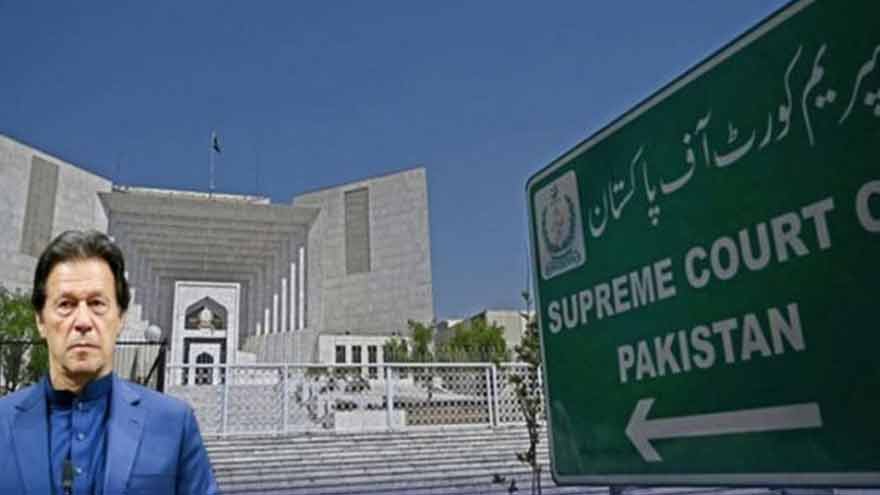
Ahsan Iqbal proposes 15 new provinces
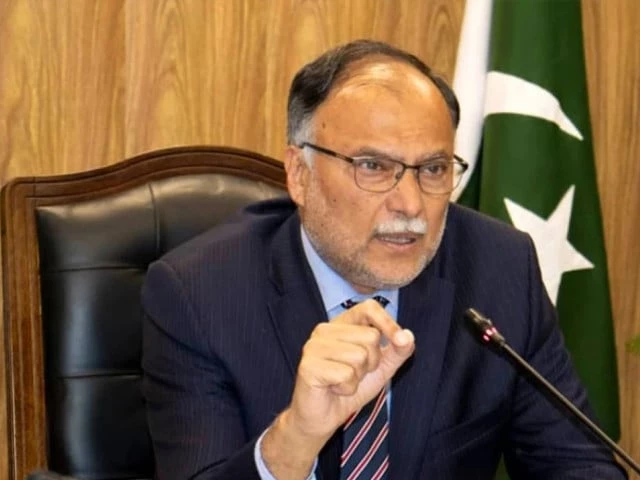
“Planning Minister Ahsan Iqbal on Tuesday called for a fundamental restructuring of Pakistan's governance system, saying the country must either create 15 more provinces or establish 160 fully empowere…”
Speaking at a consultative session with media representatives on proposed governance reforms for the Islamabad Capital Territory (ICT), the minister said the existing two-tier system of federal and provincial governments had failed to deliver effective governance and improve social outcomes.
The minister went on to say that Pakistan's democracy was "monopolised" as there were only 1,170 public offices to cater for the needs of a 260 million population, adding that people's problems could not be resolved unless 150,000 to 200,000 public offices were created through local governments. "If politicians will not do anything, the events will take over," Iqbal said.
Iqbal, who is also the secretary general of the ruling Pakistan Muslim League-Nawaz (PML-N), is the first senior cabinet member to back the need for changes to the existing governance structure following remarks by Interior Minister Mohsin Naqvi. However, Iqbal clarified that he had first raised the need for new provinces in a newspaper article in June 2025.
"Stay connected with Aman-e-Pakistan for ongoing live reporting and verified investigative updates."
Pakistan's democratic governance system cannot function smoothly without a fully functional third tier of government, said Iqbal. The federal government devolved 17 subjects to the provinces in 2010, but the provinces did not devolve even one subject to local governments, he added.
Article 140-A of the Constitution provides for the third tier of local government, but the provision is vague and requires further elaboration on how to ensure its administrative, financial and political empowerment. Iqbal said that India has 28 provinces and Afghanistan has 34.
"If we are not ready to make new provinces, then there is no option except having 160 district governments, as all social indicators have deteriorated despite the transfer of additional resources under the National Finance Commission.
"The minister also shared the proposed new administrative and governance structure for the ICT, but it is still at the draft stage and requires the approval of Prime Minister Shehbaz Sharif. Iqbal said the ICT's administrative structure was based on a presidential order, leaving 2.6 million citizens without a voice in the affairs of the capital city.
Currently, bureaucrats are the masters of the capital city. A Grade-20 officer serves as both chairman of the Capital Development Authority and Chief Commissioner of Islamabad.
He lamented the vacuum in the existing administrative structure regarding the approval of the budget and legislation for the ICT.He said it had been proposed to either make ICT a province or establish it as a fully empowered local government.
Pims' tragedy is a wake-up call for urgently bringing reforms to the administrative structure, as the existing system is fragmented among the CDA, the Municipal Corporation of Islamabad and the Ministry of Industries, he said. At least 14 newborn babies were burnt in a fire incident last week, which shook society and underscored the need for urgent reforms.
The prime minister subsequently constituted a committee to review the existing system and propose a new governance model for the capital city. The committee has proposed the establishment of an Islamabad Capital Territory Government (ICTG) and an elected ICT Assembly (ICTA) to serve as the legislature of the ICT.
However, it has proposed that the functions of maintaining law and order and master planning for the city should remain with the federal government., the ICT Assembly may comprise 27 members, including 21 directly elected members, five women on reserved seats and one minority member.
Iqbal chaired the committee, whose members included Minister for Inter-Provincial Coordination Rana Sanaullah, Minister for Interior Mohsin Naqvi and Minister for Petroleum Musadik Malik.
The committee's mandate was to study international models of capital city governance and suggest a viable governance model for the ICT with administrative and financial autonomy at par with provincial governments; undertake a capacity assessment of the local administration for efficient delivery of all devolved subjects, including health and education; prepare a transition plan for ICT management, organisational structure and financial resources with clear timelines; and review the legislative framework for local government in the ICT.Each National Assembly constituency will be divided into seven constituencies for the ICT, while Articles 62 and 63 of the Constitution concerning righteousness will also apply to members of the ICTA.The ICT Assembly may elect its leader, to be called either the chief minister or mayor, who would serve as the chief executive of the ICT government and remain accountable to the ICT Assembly,.
Iqbal said the decision on whether Islamabad would have a chief minister or a mayor would be made by Prime Minister Shehbaz Sharif. The ICT departments may be modelled on provincial departments, though fewer in number, and divided into groups under the Rules of Business.
The committee has proposed 27 departments and at least seven special authorities, which would make it a top-heavy administrative unit or province, depending on the government's final decision.
The departments of law and order and master planning would function under the federal government, which would exercise their powers and functions through the relevant federal minister or may appoint a governor of the ICT.Except for master planning, all functions of the CDA would be transferred to the ICT government, while the ICT local government would consist of Union Councils only.
The UCs would work with the local government department of the ICTG, while all functions of other institutions under the Local Government Act 2015 would be entrusted to the ICTG.There would be a single unified piece of legislation for these purposes - the Islamabad Capital Territory Government Act 2026 - which would incorporate all the required provisions of the ICT Local Government Act 2015 and the Capital Development Authority Ordinance 1960, following the required constitutional amendment.
The ICT government would formulate its own Rules of Business to conduct its affairs, while the federal government's Rules of Business 1973 would be amended accordingly. There would be a chief secretary and four secretaries, each in charge of a group of departments.
The law and order and master planning departments would report to the federal minister or the governor through the chief secretary of the ICT.Iqbal said no significant new financial arrangements would be required, as the proposal largely involved restructuring existing institutions, apart from the ICT Assembly.
Continue Reading: More in National
Swipe or click arrows to explore National desk coverage