Battery storage: avoid auto sector mistakes
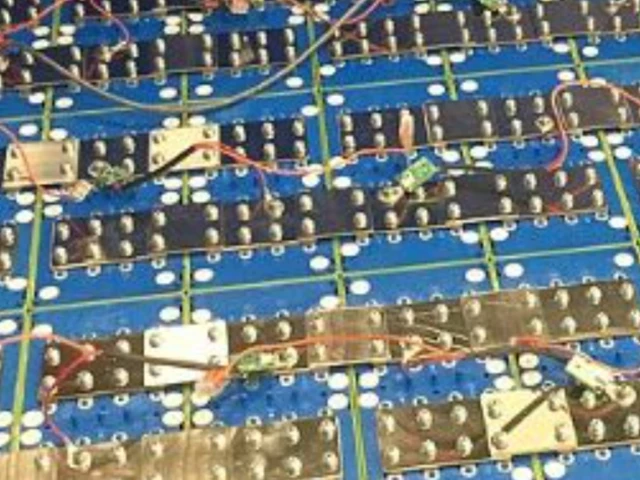
“After the solar panel rush, Pakistan is witnessing a similar surge in battery storage systems. The opportunity is enormous. Pakistan Solar Association, during the first eight months of 2026, Pakistan …”
Several industrial groups are now planning battery assembly facilities. Some are awaiting the government's proposed battery storage policy, while others are proceeding with investments. There is nothing wrong with investors responding to a growing market.
However, before committing substantial resources, both the government and potential investors need to consider whether local manufacturing can be commercially and technologically viable in a rapidly changing global industry. Manufacturing lithium iron phosphate (LFP) battery cells is a sophisticated and skill-intensive undertaking, requiring advanced technology, substantial capital, specialised machinery and stringent quality controls.
China dominates the industry, accounting for over 80% of global battery manufacturing capacity and cell production in 2025. Its technological lead, integrated supply chains and economies of scale give it an enormous competitive advantage. Even major European industrial groups have struggled to compete with China in battery manufacturing.
"Stay connected with Aman-e-Pakistan for ongoing live reporting and verified investigative updates."
Sweden's Northvolt, backed by Volkswagen, BMW and other major investors, raised around $15 billion but ultimately filed for bankruptcy in March 2025 after production problems, escalating costs and technological challenges. Some others like Tesla and Samsung are producing batteries and their cells but their prices are 30-50% higher than in China.
In 2021, India launched an ambitious battery manufacturing programme with an allocation of approximately $2.1 billion and a target of 50 GWh of domestic capacity. Its main objective was to reduce reliance on China and be self-sufficient in this important technology.
However, despite substantial incentives and investment commitments, only 1 GWh of manufacturing capacity had actually been installed by December 2025. The programme has faced serious technological, skills and supply-chain constraints, particularly the lack of locally available battery components and materials.
These difficulties demonstrate how challenging it is to manufacture battery cells competitively, even for much larger economies with substantial financial and industrial resources. Pakistan's more realistic starting point would therefore be to assemble battery electric storage systems using competitively priced imported cells and other critical components, while gradually developing domestic technological and manufacturing capabilities.
But here again, success will not be easy. Pakistan's previous attempts to develop high-tech manufacturing through the import and local assembly of components and gradual localisation, particularly in automobiles and mobile phones, have delivered limited results.
Despite years of protection, neither industry has developed significant export competitiveness or developed any high-tech parts. Instead, they continue to rely heavily on imported components (CKD kits), causing substantial foreign exchange outflows without commensurate export earnings.
The result is a persistent drain on foreign exchange, while consumers pay prices considerably higher than international levels, often for products with outdated models and technology. In effect, we have created protected assembly industries rather than internationally competitive manufacturing.
This model of manufacturing, sustained through tariff escalation, has been a cornerstone of Pakistan's industrial policy for decades. High duties on finished products, combined with lower duties on imported components, create an artificial incentive for local assembly.
The IMF and World Bank have repeatedly highlighted how such protection creates an anti-export bias, discourages productivity and diverts resources towards inefficient domestic production. Pakistan has recently embarked on a shift from import substitution towards export-led growth through the National Tariff Policy 2025-30.
Battery assemblers will need to take account of this changing policy environment. The policy envisages reducing the maximum customs duty to 15%, eliminating additional customs duties and regulatory duties, and gradually phasing out all specific exemptions.
Consequently, assemblers cannot assume that the large tariff differential between imported components and finished products, or the special concessions and exemptions historically enjoyed by automobile and mobile phone manufacturers, will continue indefinitely. In any event, even if an exception were made for the battery assemblers, it would be particularly counterproductive.
Pakistan's solar experience, as against that of India where solar panels are protected through customs and other import taxes of over 40%, demonstrates the benefits of allowing consumers access to cheaper imported technology rather than attempting to manufacture it behind tariff barriers. The battery industry is undergoing a similar transformation.
Average prices of stationary storage battery packs fell by 45% in 2025 alone, reaching approximately $70 per k. Wh, largely reflecting intense competition and manufacturing overcapacity, particularly in China. These developments have important implications for investment decisions.
A battery assembly facility established today may face a very different competitive environment within a few years. Further price reductions, technological improvements and cheaper imports could quickly erode profit margins. Investors must therefore carefully assess the risks of technological obsolescence and declining returns rather than rely on the expectation of permanent government protection.
The government should facilitate investment, but the objective should not be to create another over-protected assembly industry. The ultimate test of the new policy should be whether these investments generate genuine domestic value addition, transfer technology, improve productivity and eventually create exports.
Pakistan should not repeat the mistakes of its automobile and mobile phone industries. We need industries that compete through efficiency and innovation, not those that survive through tariff cascading at the expense of consumers and public revenue.
The writer is a senior fellow at PIDE. Previously, he has served as Pakistan's ambassador and permanent representative to the WTO
Written by Sheheryar Munawar
Aman-e-Pakistan Senior Journalist & Bureau Reporter
Continue Reading: More in National
Swipe or click arrows to explore National desk coverage