THE POT LUCK MAKES A COMEBACK
“Back to Tribune. HomeT-MagazineTHE POT-LUCK MAKES A COMEBACKT-MagazineTHE POT-LUCK MAKES A COMEBACKIt’s not nostalgia, but necessity -- why busy lives and unreliable utilities are bringing shared meals …”
Back to Tribune. HomeT-MagazineTHE POT-LUCK MAKES A COMEBACKT-MagazineTHE POT-LUCK MAKES A COMEBACKIt’s not nostalgia, but necessity -- why busy lives and unreliable utilities are bringing shared meals back. By. Fouzia Nasir Ahmad|Design by: Anusha NasirfacebooktwitterwhatsuplinkdedemailPUBLISHED
September 07, 2026There was a time when inviting a dozen people to dinner was less a social occasion than a military operation.
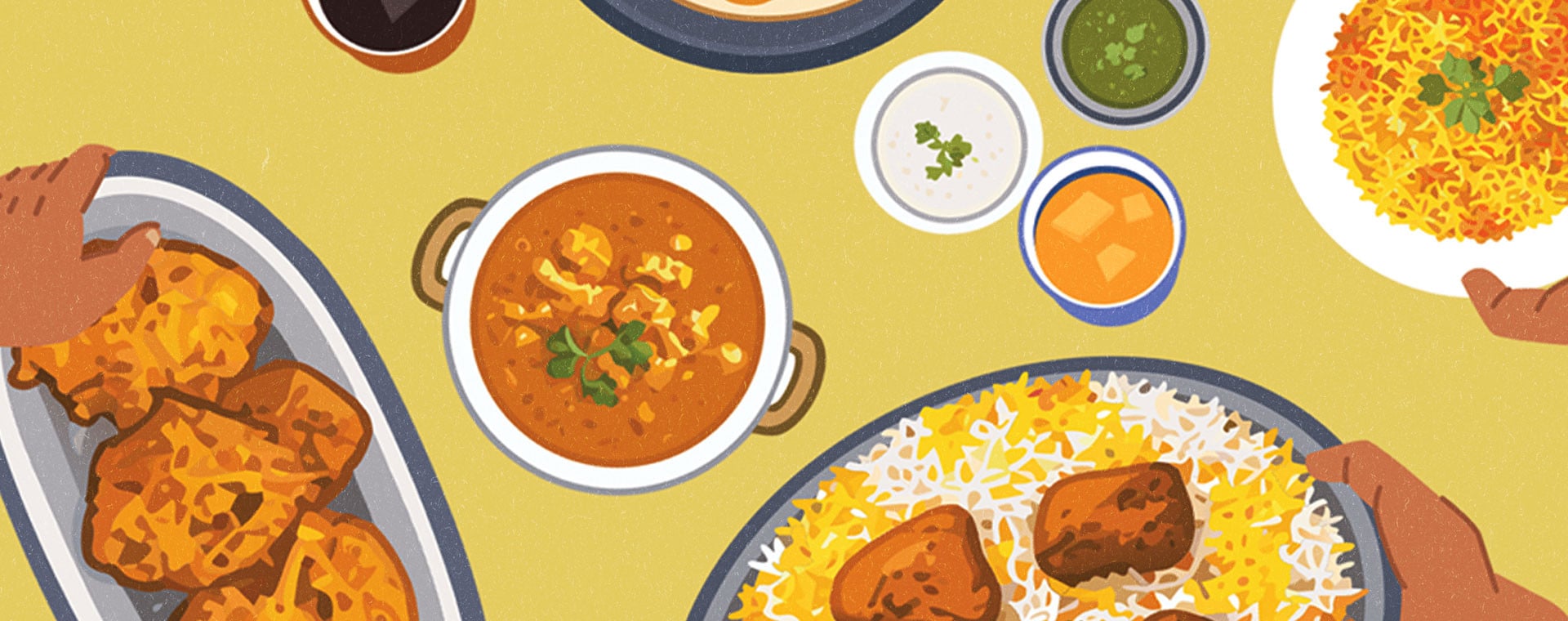
The truly accomplished hostess knew the art of dawat. Her biryani emerged from the kitchen with every grain separate, her keema-filled aloo cutlets were uniformly shaped and perfectly golden, the raita was chilled, the salad artistically arranged and the dessert made from scratch.
"Stay connected with Aman-e-Pakistan for ongoing live reporting and verified investigative updates."
Fresh flowers appeared in vases. The prized china was brought out. The dining table looked as if it had been waiting all week to get on Instagram and create a buzz in the circles.
She knew exactly how much rice 14 people would eat, how many kebabs could disappear before the main course and, presumably, the precise number of minutes required to make everything look effortless. The rest of us, awed, merely watched in admiration.
Today, however, the Pakistani dawat is confronting a less glamorous question: How exactly do you host 12 people when you don't know whether you will have water, gas or electricity? The answer, increasingly, seems to be: don't just show up.
Bring a dish. The potluck — once associated with casual gatherings, student parties and perhaps a slightly Western idea of communal eating — appears to be finding its way back into our social lives. But this time, it is not necessarily because we have suddenly become adventurous about sharing our culinary skills.
It is because life has become too unpredictable, too expensive and too exhausting to put an entire dawat on one person's shoulders. “I would like to make lasagna or a coconut chicken curry or karhai but I’m at work and commuting back at day end, while the gas supply starts at 6.30 pm,” says Shaheen.
“By the time I reach it is already 7.30pm and there is not enough energy or time to cook. Plus gas supply becomes almost nothing when people start using pressure pumps.
So it is easier for me to take ice cream or mithai.”“I have a cook who comes in for two hours and cooks food for a week for us, meeting our dietary requirements,” says Laila. “And in the time slot that we have with gas supply, we only get him to cook that.
So if there is a potluck, for instance, then I order something from outside to take with me.”In these circumstances, the host can prepare a lemon-mint cooler to welcome guests and perhaps serve an appetiser. The main course and dessert arrive with the guests.
It sounds simple. And perhaps that is exactly why it works. Consider the logistics of the old-fashioned dawat.
If there is water, there may be no gas. If there is gas, the electricity may disappear. A generator may be roaring in the background while guests sit around the dining table by candlelight instead of soft music.
And if you have no water stored, the prospect of washing a dozen plates, glasses, serving dishes and pieces of treasured china can be enough to cancel the dinner altogether. Paper plates and disposable containers are fast replacing dinnerware at get-togethers.
“How will we wash it all? Tankers supplying water are so expensive?” says Fareeha. “Having guests over also means water being used in the toilets and there is a chance of going over our week’s water supply.
For people like me, who love to entertain at home, these things are worrying and annoying. I’m quite embarrassed to have people over to my house in this way but what to do?”Her question captures something larger than a reluctance to dirty good crockery.
The infrastructure of hospitality has changed. So has the price. Taking a large group to a restaurant can cost a small fortune, while the experience is not necessarily worth the bill.
At home, meanwhile, the cost of meat, rice, cooking oil, vegetables and dessert has made the traditional dawat an increasingly expensive exercise. Add the cost of a water tanker, generator fuel or an emergency cylinder of gas and entertaining guests begins to look less like hospitality and more like project management.
Yet the desire to gather has not disappeared. And perhaps that is because we come from cultures where food has never simply been food. Across the subcontinent, feeding people is an expression of affection, generosity, family and belonging.
A guest is not merely offered food; a guest is urged to eat more. Thora sa aur lijiye is almost a cultural reflex. The first refusal is politely ignored, the second is negotiated and the third may be taken as a personal insult.
Our celebrations, family visits and social occasions have traditionally revolved around food. The table is expected to look abundant. There must be enough for everyone, and then some.
The traditional dawat grew out of this culture of generosity but, over time, hospitality also became a performance — particularly for women. The hostess was expected not simply to feed people but to demonstrate that she could feed them beautifully.
There was an entire choreography to it: the spotless house, the tablecloth, the flowers, the serving dishes, platters of hot food arriving at precisely the right moment. And then came the ritual denial: Aray, kuch bhi nahin banaya!
Nothing at all. Just biryani, two curries, kebabs, cutlets, salad, raita and three desserts. The truly accomplished hostess could make abundance look effortless.
But perhaps that is the part of our hospitality that is becoming difficult to sustain. There is also the small matter of time. Most people are clocked in, commuting through increasingly congested cities, rushing from work to home and from one obligation to another.
Children have school, tuition, workouts, walks, sports and endless activities. There are elderly parents, household errands, bills, emails and Whats. App messages.
Even when people are technically off work, they are not necessarily free. The leisurely afternoon spent chopping, marinating, cooking, laying the table and arranging flowers before guests arrive belongs increasingly to another era. Someone leaving work at six may not reach home until seven or later.
By then, the ambition of making that elaborate coconut chicken curry has disappeared somewhere between the office and the traffic jam. So she brings ice cream. Or mithai.
And why shouldn't she? The point of attending a dinner is not to prove that she can cook. This may be the most interesting thing about the return of the potluck.
It is not necessarily introducing a new culture of communal eating to South Asia. It may actually be returning us to something we already had — the idea that feeding people is a shared act.
What changed was that communal hospitality gradually became the responsibility of one household, and often one woman. The potluck distributes that responsibility again. One person brings biryani.
Another brings kebabs. Someone orders a curry. Another arrives with dessert.
Someone else brings salad, raita, mithai or drinks. The contribution does not even have to be homemade. The host provides the space and, perhaps, one or two things.
Most importantly, the host provides the gathering. This is not a competition in culinary experimentation. Nobody expects the guest assigned dessert to arrive with a deconstructed pistachio soufflé.
It is simply a practical way of saying: I want to be there, and this is what I can bring. That is rather different from the old model of hospitality, where the hostess had to make everything possible.
And perhaps there is something liberating about it. For generations, Pakistani women in particular have been expected to demonstrate love through food. Feeding people generously was proof of good upbringing, good housekeeping and sometimes even good marriage.
A successful hostess did not merely serve dinner; she demonstrated competence. Otherwise, what will people say, would be the over-riding thought! The potluck quietly removes some of that pressure.
Nobody has to spend the day in the kitchen. Nobody has to produce restaurant-quality food for 15 people. Nobody has to worry about whether the china matches the flowers.
Nobody has to apologise because the electricity went out halfway through cooking. And nobody has to pretend that it was all effortless. There is something democratic about everyone arriving with one dish.
The labour is shared. The expense is shared. The risk is shared.
Even the failures can be shared. Perhaps that is why the potluck feels less like a decline in hospitality than an adaptation of it. We still want to gather.
We still want to feed one another. We still want to sit around a table and talk long after the food has been cleared. We still want the laughter, the gossip, the family stories and the inevitable argument about who makes the best biryani.
What we no longer have, reliably, is the infrastructure — or perhaps the money, time and energy — to stage the grand dawat that once made such gatherings possible. The potluck may therefore be less a Western import than a modern solution to an old South Asian instinct.
We have not stopped wanting to feed one another. We have simply stopped pretending that one person can do it all. So bring the biryani.
Bring the cutlets. Bring the dessert. And please don't bring the china.
Nobody knows when the water is coming back. Pages. Pakistan.
Business. World. Opinion.
Life & Style. Sports. Blogs.
Videos. Our Sites. Express News.
Urdu E-Paper. English E-Paper. Sindhi E-Paper.
Cricket Pakistan. Express Live. Campus Guru.
Express Entertainment. Food Tribune. About Us.
Contact Us. Online Advertising. Privacy Policy.
Copyright. Fuel Prices Pakistan. Gold Prices Pakistan.
Prayer Timing Pakistan. Weather Forecast Pakistanfollow us
Continue Reading: More in National
Swipe or click arrows to explore National desk coverage