'PSP rules cannot be overridden': Talal warns new K-P police law may weaken command structure
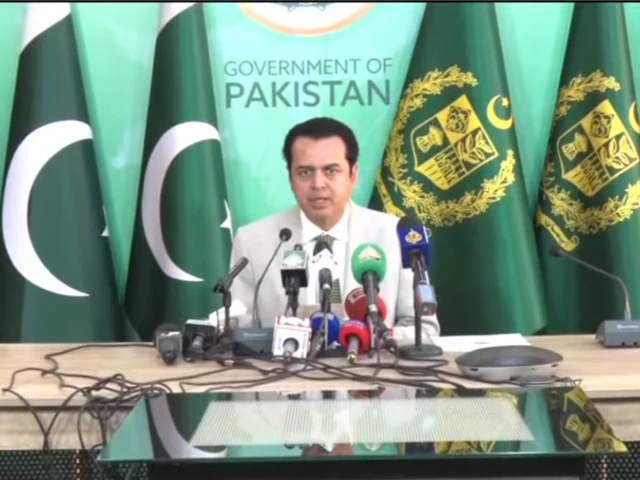
“Minister of State for Interior Talal Chaudhry on Thursday warned that a new Khyber-Pakhtunkhwa (K-P) police law could politicise the provincial force by weakening its professional command structure, s…”
The K-P Cabinet on Wednesday approved theK-P Police Act 2026. The new legislation empowered the provincial government to return the services of federal police officers, including the Inspector General, in cases of unsatisfactory performance. It also established a clear separation between police policy and operational matters, created new oversight boards, and overhauled the investigation and dispute-resolution systems.
Addressing a press conference in Islamabad, Chaudhry said the K-P cabinet had approved the legislation, which would now go before the provincial assembly, and questioned whether a province could use its legislative powers to alter a system governed by the Constitution and federal law.
“If Balochistan wants to make its own army, can it make an army through legislation?” he asked. Chaudhry said PSP rules had been challenged before high courts and the Supreme Court (SC) over different periods and that the resulting legal principles had become settled.
"Stay connected with Aman-e-Pakistan for ongoing live reporting and verified investigative updates."
“Police Service of Pakistan rules cannot be overridden by provincial legislation,” he said. He said the proposed K-P legislation went beyond the existing powers of chief ministers over police postings, which were broadly similar across all four provinces.
“The chief minister already has consultation powers, but those powers do not affect the command structure, morale, recruitment, training and promotions,” he said.
The proposed law, he said, would instead affect appointments and postings from grade 17 Deputy Superintendents of Police (DSP) upwards, including positions for which Regional Police Officers (RPO), Deputy Inspector Generals (DIG) and additional IGs currently exercised authority. “This is not only about the IG.
You have taken back the entire command structure,” Chaudhry said. Read:K-P Cabinet approves landmark Police Act 2026He said that powers over appointments, transfers and postings were being placed under political control, allowing decisions ranging from grade 17 DSP postings to appointments at IG level to become subject to the chief minister and ruling party.
That, he said, could change the way officers viewed their professional responsibilities. “An officer will start looking towards the politician instead of his senior,” Chaudhry said, questioning what would happen to discipline and morale if police personnel began considering the preferences of political leaders before those of their professional chain of command.
He said the issue was particularly serious in K-P, where police personnel had been fighting terrorism and suffering casualties for years. He recalled that the Pakistan Tehreek-e-Insaf (PTI) founder Imran Khan had previously spoken about keeping institutions free from political influence, including by citing examples from other countries.
A commission was subsequently formed, and a police law was enacted in 2017, he said. “Nine years later, you have brought a law that is 180 degrees against that,” Chaudhry said. He questioned why a disciplined force responsible for maintaining public order and fighting terrorism should be subjected to political control in the same way as ordinary civilian departments.
“Police is not agriculture or fisheries,” he said. Chaudhry also questioned the proposed recruitment of DSPs, asking how the province would develop senior officers if the existing PSP structure was weakened. “If there are no PSP officers, where will your grade 19, 20, 21 and 22 officers come from?” he asked.
“You can recruit your own people as DSPs and then promote them to grade 18 and 19,” he said. Read More:K-P police bill sparks autonomy concerns. Chaudhry said the debate over command could not be separated from the resources available to the K-P police, which he said had been neglected despite the province's prolonged battle against terrorism.
The provincial government already controlled the police budget and finances, he said, but salaries remained lower than those of police in other provinces and compensation packages for martyrs were also comparatively lower. He listed shortages of bulletproof jackets and vehicles, Safe City systems, forensic laboratories and accommodation.
“K-P has been fighting terrorism for 15 to 20 years. Should its CTD be operating from rented buildings?” he asked. Chaudhry said Counter Terrorism Department (CTD) facilities in Punjab and Islamabad had concrete walls and fortified compounds, while rented CTD buildings in K-P had previously been attacked by terrorists, resulting in deaths, injuries and destruction of buildings.
He said such premises were unsuitable for housing counterterrorism personnel and terrorist detainees. Chaudhry also questioned how funds allocated to K-P for counterterrorism under the National Finance Commission award had been spent. He said the province received one per cent under the NFC arrangement for terrorism-related expenditure, which he put at about Rs800 billion.
“Show me even Rs200 billion,” he said. He cited the Safe City Peshawar project as another example, saying the project was only now approaching completion after efforts by the provincial police leadership. He questioned what would happen to the project's funding and administrative structure under the proposed legislation.
“Without Safe City, forensic labs, equipment, drones and modern equipment, how will you control terrorism and public order today?” he asked. Chaudhry said the disparity between police resources and terrorist capabilities was particularly concerning.
He asked reporters to look at security arrangements at Punjab's border checkposts, where he said police personnel had bulletproof jackets and vehicles and were protected by concrete structures. Also Read:Police security taken back from K-P MPAs.
He said cameras provided round-the-clock surveillance and were difficult to disable with gunfire or explosives. Chaudhry claimed that no Punjab police personnel had been killed at those checkposts since the facilities were installed, while terrorists had been killed when they attacked them.
“The K-P police are very brave, but bravery alone cannot fight a terrorist equipped with advanced weapons,” he said. He said terrorists had access to night-vision equipment, drones and other modern technology, including weapons and equipment left in Afghanistan by NATO, the United States and other countries following the war.
Chaudhry further stated that dollars were being sent to Afghanistan through proxies and routes in the east to finance terrorism. He said a single terrorist could be carrying equipment worth $10,000 to $15,000 at international prices, including a weapon, bulletproof jacket, uniform, ammunition and other equipment.
He contrasted that with a K-P police officer on the frontline who, he said, could lack even a bulletproof jacket, proper training, Safe City coverage or forensic support. “These facilities are the responsibility of the K-P government,” he said, adding that the chief minister and provincial cabinet controlled the relevant budget and authority.
Chaudhry said police could not be treated as an ordinary provincial department because its command structure was directly linked to discipline and the ability to maintain public order. He also objected to the proposed police committees under the new law, questioning why such committees were being introduced when the existing police law had been in place since 2017.
He said the proposed committees would have six members, all from the provincial assembly, with no opposition member. He questioned whether political representatives should control police matters at tehsil and district levels and said other groups could provide independent guidance.
“There are judges, civil society and other people who can give good advice and guidance,” he said. “One province cannot have completely different salaries, training, command structures, investment and appointment and posting procedures for its police,” he said.
Read:Kundi rules out governor's rule in K-PHe said provinces could retain differences in less fundamental areas, such as uniforms and the organisation of traffic or specialised units.
“But basic things should remain the same.”He warned that if political leaders gained greater influence over transfers and promotions, officers could "start looking at whether a politician is pro-Taliban or anti-Taliban, whether he likes the TLP or not, and whether action should be taken.
"Chaudhry said such a situation would be particularly damaging while K-P remained on the frontline of terrorism. The minister also criticised the K-P government's support for police personnel killed in the line of duty.
He said the provincial government had the authority to allocate money for martyrs' families and had a moral responsibility to stand with them, but alleged that provincial ministers had not attended the funerals of personnel killed in the Kohat attack. “You do not even attend the funerals of the martyrs,” he said.
He linked the lack of financial and political support with an attempt to further weaken police morale through changes to recruitment, transfers, postings and promotions. “You cannot demoralise the force in Pakistan,” he said. He also warned that the proposed changes could set a precedent for other provincial police forces.
Chaudhry said disputes over the powers of police chiefs and transfer and posting authorities had previously reached the Sindh High Court and Peshawar High Court, while the SC had heard several related cases. “The law will certainly be challenged in the courts,” he said.
He said the federal government would examine the legislation against the Constitution and existing law and could consider further legislation through parliament if required. “Even after the 18th Amendment, there are areas where federal law remains in force,” he said, again citing PSP rules.
Asked about footage showing a K-P provincial minister allegedly being picked up or arrested by police, Chaudhry questioned the provincial government's claim that it was unable to protect its own minister. “If the provincial government is so helpless, why is it hiding behind this?” he asked.
Read More:Uproar in K-P Assembly over minister 'abduction'He said the same provincial police had registered the FIR and taken legal action in the case, while law and order remained a provincial responsibility. “If there are dozens of incidents every day, an incident involving a minister or anyone else can happen,” he said.
Chaudhry also questioned the provincial government's performance after 14 years in power. If the government remained helpless after 14 years, he said, “something else should be done”. Chaudhry rejected a reporter's reference to road closures in Islamabad, saying the Whats.
App status being cited was old. “No road was closed,” he said, adding that all 125 routes into Islamabad were open until noon. He said whenever security measures were required, both the federal and provincial governments would follow court orders and the law “in letter and spirit” to protect lives and property.
“Attackers cannot be allowed to attack here,” he said. Chaudhry said governments were responsible for taking security measures for their own officials and institutions, noting that he was a political worker serving his second term as minister of state for interior.
“Go and compare an Islamabad police station with a K-P police station,” he said. He referred to electric vehicles used by Islamabad police and to bulletproof vehicles provided to K-P by the federal government, while questioning the provincial government's approach to those resources.
Chaudhry also criticised K-P's performance in health and education and asked why the province's shortcomings were being attributed to the establishment or other institutions. During the exchange, reporters raised several unresolved cases in Islamabad, including a young man whose vehicle allegedly struck someone before leaving the scene, with CCTV footage allegedly not being checked even after a month.
They also raised the case of a woman's body found within the jurisdiction of Golra police station, with her face allegedly mutilated and organs removed, while the killer or killers remained unidentified.
A reporter further cited comments by PPP political allies that when PML-N was powerful it “grabbed the throat” and when it was weak it “grabbed the feet”, and alleged that Chaudhry's body language resembled the former.
Chaudhry did not answer those individual cases during the exchange and instead returned to the proposed K-P police law, saying its implications were particularly important because of the provincial force's role in fighting terrorism and its potential effect on the federal structure.
Asked whether Imran would be transferred from Adiala Jail to Islamabad Model Jail once the new facility opened next month, Chaudhry said, “Islamabad Model Jail is being built for criminals and prisoners, not for one person.
"He said Islamabad had previously not had a jail and that the new facility would be Pakistan's first model jail, with extensive facilities for prisoners. Chaudhry said the facilities would be so extensive that many people might prefer living there to living at home, and invited reporters to visit the site.
On the possibility of Governor's Rule in K-P, Chaudhry said possessing constitutional powers did not mean the government should automatically use them. “The government is political,” he said. He said the federal government avoided using many of its powers unless there was no alternative and urged the K-P government to consider its own position.
“Our desire is that the government that received the vote should govern,” he said. Chaudhry cited the political situation in 2013, when PTI did not have a simple majority, saying Nawaz Sharif had given the party an opportunity to form the government and PML-N had supported the process.
He said the federal government would continue to deal with the dispute through the Constitution, law and available state mechanisms rather than taking action outside that framework. He also returned to the wider national security situation, referring to developments in Balochistan and Kashmir and saying Pakistan needed internal unity as international challenges unfolded.
“Political disagreement is normal,” he said, adding that parties could have their own ideologies but should not weaken matters of national interest for political gain. Chaudhry cited the National Action Plan as an example of political consensus, saying the first plan had been formulated under a PML-N government on 20 points with the participation of all provincial governments.
He said a second National Action Plan had been agreed upon when Imran was prime minister, again with the agreement of political parties. “Agreed national documents should not be damaged for political advantage,” he said.
Written by Sheheryar Munawar
Aman-e-Pakistan Senior Journalist & Bureau Reporter
Continue Reading: More in National
Swipe or click arrows to explore National desk coverage