Basant a Festival Only for the Rich
“Back to Tribune. HomeT-Magazine. Basant–a Festival Only for the Rich? T-Magazine. Basant–a Festival Only for the Rich? Basant revives tradition and livelihoods, but commercial growth doesn't mean ordinary fam…”
Back to Tribune. HomeT-Magazine. Basant–a Festival Only for the Rich? T-Magazine. Basant–a Festival Only for the Rich? Basant revives tradition and livelihoods, but commercial growth doesn't mean ordinary families can afford to join in. By. Asif Mehmood|facebooktwitterwhatsuplinkdedemailPUBLISHED
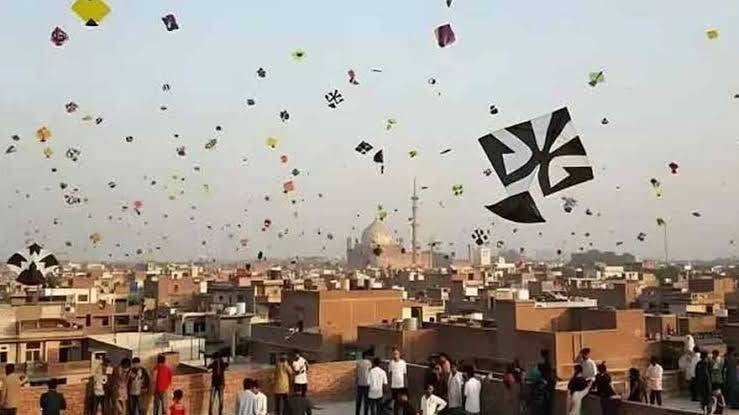
November 01, 2026In the hands of Ustad Rafiq, at the kite market in Mochi Gate, are colourful paper and thin strips of bamboo.
Approximately 70 years old, Ustad Rafiq has been associated with the work of making and selling kites for years. For him, Basant is not merely a festival but an occupation and a pastime connected to a past in which both the rich and the poor participated.
"Stay connected with Aman-e-Pakistan for ongoing live reporting and verified investigative updates."
However, after a ban lasting more than 18 years, the return of Basant this year has created new hope for his business. However, the rising prices of kites and string have also confronted him with a new concern.
Ustad Rafiq says, “Earlier, Basant belonged to everyone. The child of a rich person flew kites, and so did the child of a poor person. Kites were inexpensive, and string was also easily available.
Now it seems that this festival has been left only for those who have more money.”When Basant was celebrated in Lahore in February 2026 under official permission, after approximately 18 years, activities resumed in the city’s markets, on rooftops and in businesses associated with kite-making.
For young people, it was an opportunity for a new experience, while older enthusiasts saw the festival of their past return.
But along with this return, the prices of kites and string, the high rents charged for rooftops for kite-flying and the costs of safety arrangements raised a fundamental question: Is Basant still a festival for ordinary citizens, or is it gradually becoming restricted to the financially privileged?
For next year, Lahore’s district administration has set March 12 to 14, 2027, as the dates for the Basant festival., separate permission and arrangements will be required to celebrate Basant in other districts of Punjab. Thus, alongside preparations, attention must also be paid to how the festival’s economic benefits, public participation and citizens’ safety can be streamlined.
One festival, two generations. Following Basant’s return, the kite markets of Lahore revealed the experiences of two different generations. For young people such as 18-year-old Hassnain Khalid, buying and flying a kite while standing on a rooftop was a new experience.
Now, once again, they are eager to celebrate next year’s Basantl. In contrast, for older enthusiasts such as Abdul Aziz, kite-flying is a nostalgic pastime connected to his youth. His friends describe him as an addict of kite-flying.
Abdul Aziz says that when he was young, kites were very inexpensive. He would buy kite paper from the market and make kites himself. Kites could also be made from thin plastic sheets, while he and his friends would either prepare the string themselves or get inexpensive string from the market.
Now the costs of kite-flying could make the experience of Basant different for the new generation. In Basant’s traditional form, a family bought a few kites and the adults and children spent time together on the rooftop of their home.
More kites were flown from the rooftops of large houses, and special arrangements were also made for guests. But families living in smaller homes also participated in the festival. Farzana, who lives near Bhati Gate, wants to preserve this tradition.
A mother of two now, Farzana says her family has celebrated Basant since her childhood, but prices have now made this activity difficult. “We want to celebrate Basant with our children on the rooftop of our own home, but even buying one kite is becoming difficult.
Our neighbours have rented out their rooftops, but we will fly kites on our own roof, if we can get the supplies,” she says. Farzana’s problem is not limited to the price of kites. Rising rooftop rents and safety restrictions on old buildings have also created difficulties for some residents of the Walled City of Lahore.
Restrictions on kite-flying had been imposed on the rooftops of many old houses after they were declared unsafe. In such circumstances, the scope for celebrating the festival could become even more limited for families that do not have an alternative location or the resources to bear additional expenses.
Kite and string prices. When Basant came around in February 2026, a significant increase was observed in the prices of kites and string.
At the time, a tawa gadda (a kite made using approximately one and a half standard units of kite paper, ) was reportedly being sold for around Rs250 to Rs300, while a dedh-tawa gadda was said to cost Rs450 to Rs500. Similarly, the price of one panna (a reel or unit of kite string) reportedly started at approximately Rs4,000 and reached Rs7,000 or more in some places, while the prices of larger pannas were even higher., a shopkeeper at Mochi Gate, two pannas of string sold for Rs7,000 to Rs8,000, while four pannas sold for Rs12,000 to Rs15,000. The prices of large kites in the Mochi Gate market were also reported to have reached Rs1,200 to Rs1,400. But the question is whether the prices of string and kites will be higher for next March., kite-makers want to produce inexpensive supplies, but rising raw-material prices and business expenses have made this difficult.
He says that a person with a limited income is happy to buy a few kites and one panna of string, but rising prices make even this purchase difficult for him.
Mian Abdul Rehman, a kite-flying enthusiast from Lahore’s Baghbanpura area, says that during Basant, a family has to consider not only the prices of kites and string but also the expenses of food, entertaining guests and other necessities. If a rooftop is not available at home, rent becomes an additional expense.
In comparison, families with greater financial resources can afford to buy supplies in large quantities and make special arrangements for their guests. Rooftops renting. The tradition of Basant in Lahore has remained connected to the rooftops of homes.
In areas of the Walled City, such as Bhati Gate, the rooftops of houses situated close to one another used to serve as centres of communal activities. Neighbours would also join those flying kites from a particular house.
With Basant’s return, renting out rooftops has become a business., a resident of Bhati Gate, Basant can benefit culture, tourism and local businesses. He says that the rent for some rooftops for two to three days can start at Rs50,000 and reach millions of rupees, depending on the location, area and facilities.
He said that during Basant in February 2026, the three-day rent for some rooftops in the Walled City of Lahore was reported to have reached Rs2.5 million to Rs3 million. Reports also emerged that rents for ordinary rooftops had reached several hundred thousand rupees.
This business provides income to rooftop owners, but the arrangement could prove expensive for families that do not have a rooftop of their own. If the rent for a place to celebrate Basant itself falls outside an ordinary family’s budget, the traditional way of participating in the festival becomes restricted.
This is why, along with the expansion of commercial activities associated with Basant, the availability of public spaces is also important. If citizens are given opportunities to fly kites in safe places under legal permission, their need to rent expensive rooftops could be reduced.
Business has grown, but who benefitted? The revival of Basant created opportunities for businesses associated with kite-making, string production, retail, raw-material supplies, transport and food. However, the difference between increased sales and the purchasing power of ordinary citizens also became apparent.
Lahore, sales of kites and strings, etcetera, worth approximately Rs2 billion took place in Lahore during Basant celebrations in February. Meanwhile, Aqeel Malik, founder of the All Pakistan Kite Flying Association, claimed that economic activity worth more than Rs20 billion took place that week., large numbers of people came to Lahore from other cities.
Expressing concern over the rising prices of kites and string, he said that a list had been prepared of those charging excessive prices. The question of safety. The history of the ban on Basant is also connected to the festival’s return.
A ban on kite-flying was imposed in 2007. Before that, incidents of injuries and deaths involving motorcyclists and pedestrians caused by string coated with chemical and metallic manjha (abrasive kite string) had repeatedly been reported.
Incidents involving celebratory gunfire, accidents caused by electrical wires and falls from rooftops had also raised concerns about public safety. Following the approval of the relevant law in December 2025, the Punjab government paved the way for Basant’s return under safety conditions.
During the three-day Basant festival this year, arrangements were made for registered businesses, approved types of kites and string, and action against violations. the Punjab Home Department to the Lahore High Court, at least 17 people died during the three days.
The report attributed 12 deaths to falls from rooftops, while the other deaths were attributed to electrocution and falls from trees. Demands of kite sellers.
Representatives of the Kite Sellers Association have stressed the need to complete the licensing and registration process on time before next Basant, so that artisans can purchase raw materials and prepare the required quantities of kites.
Some representatives have also demanded permission for smaller charkhis (kite-string reels), while maintaining that strict action should be taken against dangerous strings, but that those conducting legal businesses should not face unnecessary difficulties. Will Basant reach other cities and villages?
So far, the Punjab government has announced permission to celebrate Basant only in Lahore. However, citizens and the Kite Flying Association are demanding that permission also be granted in other cities of Punjab. This would reduce the burden on Lahore, while also bringing down the prices of string and kites.
Rana Ahmed Hassan, a young man who comes from a rural area near Lahore, says open spaces are available in his village, and children make kites themselves. He says that if Basant is permitted there, local people will also want to participate in the festival, but currently the prices are beyond their means.
If permission to celebrate Basant is granted in rural areas, safe open spaces, the registration of local kite-makers and the provision of approved supplies will be important. This could provide work for local artisans and reduce the need for residents to buy supplies from markets in distant places.
However, safety arrangements would also be necessary, taking into account electrical wires, roads, populated areas and other possible risks. Basant for all. To keep Basant within the reach of ordinary citizens, the problems of prices and the availability of supplies will have to be resolved.
Kite sellers said that, since the government has announced the dates for Basant already, they have adequate time to plan production and purchase raw materials. Clearly displayed price lists at registered shops, the availability of approved kites and string, and action against unusually high prices could also make purchasing easier for buyers.
At the same time, small-scale artisans should receive fair compensation for their labour, so that efforts to keep prices low do not affect their livelihoods. Citizens say that expanding opportunities for safe kite-flying in public places could also help families that do not have a rooftop of their own or cannot afford to pay high rents.
Safety awareness for children and citizens, along with sustained action against dangerous strings, is also necessary. The government, kite-makers, shopkeepers and citizens have an opportunity to prepare for Basant in March 2027. During this period, it will be important to see how far the supply of materials, price monitoring and safety arrangements improve.
Preparations are underway to fly colourful kites once again in Lahore’s skies, but the success of Basant cannot be measured only by the number of kites sold, the value of business conducted or the celebrations held on expensive rooftops.
It will also be necessary to see to what extent families with limited incomes can participate in the festival., if inexpensive supplies become available and kite-flying is made possible for ordinary people, the festival can once again belong to everyone. Farzana, too, wants her children not to be deprived of the joy of Basant.
Pages. Pakistan. Business.
World. Opinion. Life & Style.
Sports. Blogs. Videos.
Our Sites. Express News. Urdu E-Paper.
English E-Paper. Sindhi E-Paper. Cricket Pakistan.
Express Live. Campus Guru. Express Entertainment.
Food Tribune. About Us. Contact Us.
Online Advertising. Privacy Policy. Copyright.
Fuel Prices Pakistan. Gold Prices Pakistan. Prayer Timing Pakistan.
Weather Forecast Pakistanfollow us
Continue Reading: More in National
Swipe or click arrows to explore National desk coverage