Children of displacement The Rababis
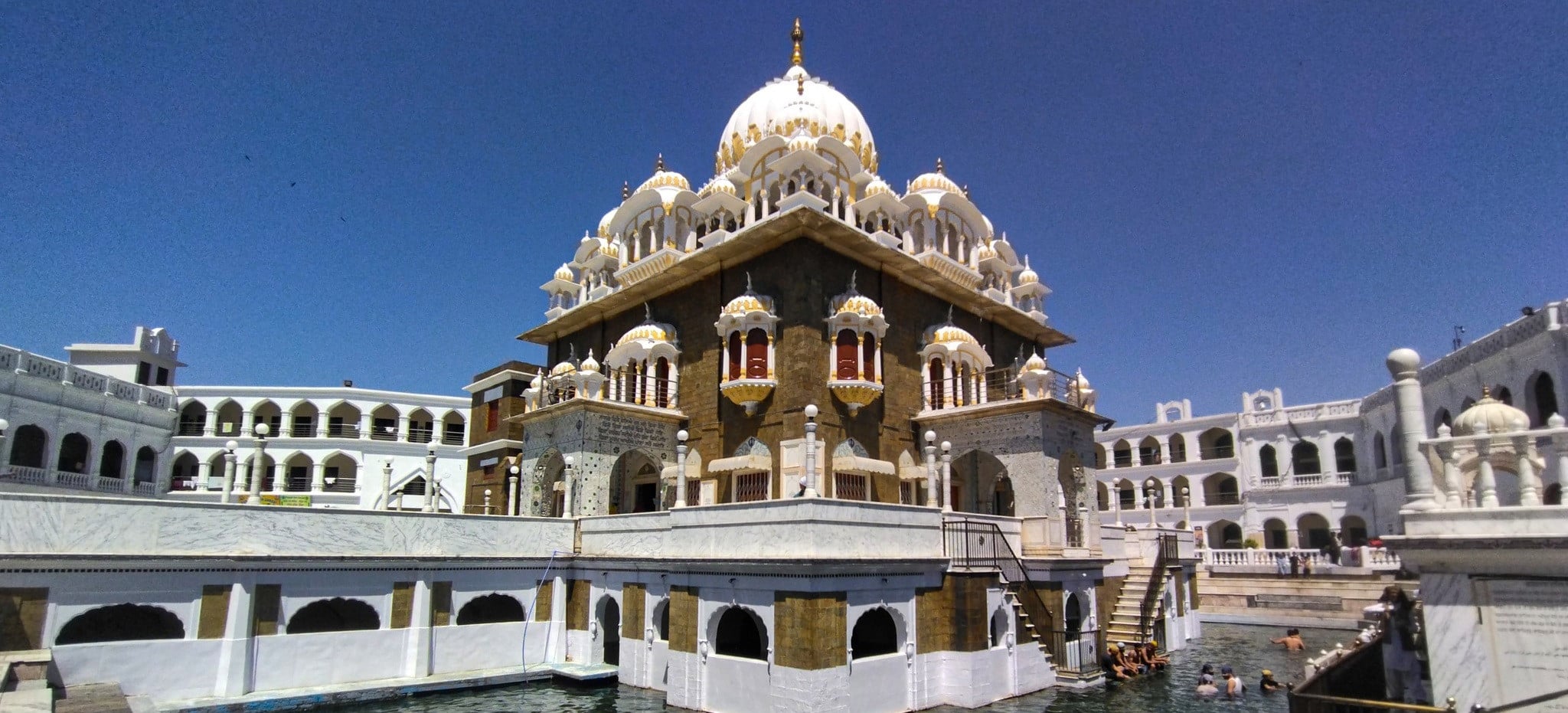
“Back to Tribune. HomeT-Magazine. Children of displacement: The RababisT-Magazine. Next Story. Children of displacement: The Rababis. The history of the Rababis of Pakistan is one of displacement and survival. ByB…”
Back to Tribune. HomeT-Magazine. Children of displacement: The RababisT-Magazine. Next Story. Children of displacement: The Rababis. The history of the Rababis of Pakistan is one of displacement and survival. By. Brian Bassanio Paul|facebooktwitterwhatsuplinkdedemailPUBLISHED
September 20, 2026Growing up in Lahore, I lived inside a culture without always knowing what it was made of.
Among my closest friends from St Anthony's High School were Ahsan Ali Sheikh and his cousin Ahmed Iqbal Sheikh, both from Katri Bawa, the old neighbourhood in the walled city of Lahore that was home to one of the most remarkable musical communities in the subcontinent– the Rababis.
"Stay connected with Aman-e-Pakistan for ongoing live reporting and verified investigative updates."
I did not know it then when Ahsan, Ahmed and I shared laughter, and the unspoken codes of growing up in a city layered with memory. There was no talk of kirtan, no mention of Bhai Mardana, no reference to a tradition stretching back five centuries to the very origins of the Sikh faith.
Yet the lineage was in their blood and their neighbourhood, waiting to be named. Years later, when I studied for my Master's in music under Ustad Badr-uz-Zaman, who had recently migrated from Amritsar to Lahore after Partition.
Ustad Badr-uz-Zaman had studied from the Rababis Bhai Nasira and Bhai Faiz Ali, so I encountered the tradition more closely under his tutelage. The rababi tradition has its roots in one of the most celebrated partnerships in the devotional history of South Asia.
In the late 15th century, Guru Nanak (1469–1539), the founder of the Sikh faith, undertook a lifetime of spiritual journeys across South and Central Asia. Accompanying him throughout was Bhai Mardana (1459–1534), a Muslim musician from the village of Merawat who played the rabab, a plucked string instrument of Persian and Afghan origin.
As Guru Nanak received divine inspiration, it was Mardana who gave it sound. The Guru's own words, as recalled in Sikh oral tradition, were: "Mardaneya! Rabab chhed, bani aayee hai" [Mardana, play the rabab, the sacred composition has come to me]".
What makes this original relationship theologically and culturally significant is that Bhai Mardana was a Muslim disciple of Guru Nanak — a bhai (brother) within the earliest Sikh community. He served the Guru as a Muslim, and in doing so inaugurated a tradition that was pluralist in its essence.
As the 17th-century Sikh chronicler Bhai Gurdas wrote: "Mardana, the hereditary musician, wonderfully plays the rabab, in the spiritual assembly [of the Guru]", a testimony that locates the rabab and its player at the liturgical heart of early Sikh devotion.
From this founding partnership, the rababi tradition developed through a network of five hereditary Muslim musician families who served successive Sikh Gurus across two centuries.
These founding lineages were: Bhai Mardana's own descendants; Bhai Satta and Balwand, who served Guru Amar Das, Guru Ram Das, and Guru Arjan; Bhai Babak, a warrior-musician of the court of Guru Hargobind; Bhai Natha and Abdullah, performers during the time of Guru Hargobind and Guru Har Rai; and Bhai Sadda and Madda, who served the last two Gurus, Guru Tegh Bahadur and Guru Gobind Singh.
Their compositions — a var by Bhai Satta and Balwand, and couplets (shloks) attributed to Bhai Mardana— are inscribed within the Guru Granth Sahib itself, giving the Rababis an unparalleled scriptural status within Sikh tradition.
With the rise of Sikh political power in the Punjab in the late 18th century, and particularly with the consolidation of Maharaja Ranjit Singh's empire in the early 19th century, Amritsar became the undisputed cultural and spiritual capital of the Sikh world.
The Golden Temple (Darbar Sahib) at its heart received patronage on an unprecedented scale, more than a crore of rupees invested in architectural development alone, and the Rababi community grew in tandem with it.
Families of hereditary musicians migrated from their ancestral villages across Punjab to serve in the inner sanctum, eventually settling together in a neighbourhood that came to be known as Rababi-wali Gali, the Alley of the Rababis, near Chowk Passian (Pasianwala Chowk) in Amritsar.
These 12 families were distinguished by the names of their ancestral places of origin:Khaḍūrīē (Khadur Sahib, Amritsar district); Raukē ( Thatha Bhai Rao, Ferozepur district); Ḍabbē (Dabbayan, Amritsar district); Manāvīē (Manavan, Amritsar district); Śikārpurīē (Shikarpur, Kapurthala district); Gailē (Amritsar); Diōkē (Patiala); Vangiāvālē; Rōrāṁvālīē (Roranwala, Amritsar district); Dilvālīē (Delhi); Ġafūrīē; and Mudrīē.
Following Partition in 1947, other families, including the Kartārpurīē, Kapūrthalīē, Bhaknīē, Sangrūrīē, and Lahōrīē khāndāns, migrated to Lahore and integrated into the community that gathered at Katri Bawa ki Haveli, the neighbourhood that became the post-Partition home of the Rababis in Pakistani Punjab.
Today, the names of these ancestral places, though the villages themselves are largely inaccessible or long since transformed, continue to orient the community's internal social organisation, functioning as symbolic markers of kinship and lineage identity. A persistent misreading of the Rababis, one that circulates even today, reduces them to mere Muslim musicians employed by Sikhs.
The historical record, as detailed in Singh's ethnographic and archival research (2023), and as powerfully articulated in Kirit Singh's lecture on the tradition, reveals a far richer identity. The Rababis were referred to as ‘singham de maulvi’-- ‘the priests of the Sikhs’.
As tabla maestro Ustad Tari Khan, the grandson of a Rababi of the Darbar Sahib, recalled: "They did not simply do kirtan, they systematically explained it. They performed katha [narrative-based exegesis]. They were so knowledgeable that they educated our Sikh brothers".
This practice of kirtan as katha, of musical exegesis, distinguished the Rababis from ordinary performers. Like the qawwals of Sufi shrines who weave multiple poetic traditions into a single devotional performance, the great Rababis would build expansive narratives around a single shabad, drawing on verses from Kabir, Baba Farid, Guru Nanak, and others.
Bhai Lal Muhammad of the Gailē khāndān, described as "the Moon of Amritsar" and said to have been as beloved in the city as Gandhi, reportedly knew the entire Guru Granth Sahib by heart and could sustain a single shabad performance for more than an hour.
Beyond their exegetical role, the Rababis occupied an indispensable ritual function in Sikh life, attending births, marriages, and deaths as auspicious presences, leading funeral processions singing compositions in raag Maru, and ritually "opening" the season of spring (raag Basant) at the Darbar Sahib.
This was the role of spiritual custodians, whose presence was understood to transmit the spiritual grace inherited directly from the Gurus. No Sikh raagi could perform these rites in their place. The unravelling of the Rababis' place within Sikh tradition was not a single rupture but a slow erosion across several decades.
Beginning with the British colonial project in Punjab from 1849 onwards, the census-driven demand that communities identify with a single religion, Hindu, Muslim, or Sikh, began to impose boundaries on a community whose identity had always occupied precisely the space in between.
The rise of the Singh Sabha movement and, crucially, the formation of the Shiromani Gurdwara Parbandhak Committee in 1925, which assumed control of the historic Sikh shrines, marked a decisive shift. Simultaneously, the democratisation of kirtan education through print culture and Western-style schools meant that Sikh raagis trained outside hereditary traditions could now be substituted for the Rababis.
By the 1920s and 1930s, many Rababi families were already being displaced from the Darbar Sahib. When the Sikh Rahit Maryada, the Sikh Code of Conduct, was finally codified in 1950, three years after Partition, it stipulated that only an initiated Sikh could perform kirtan.
In 1947, the partition of Punjab along religious lines completed what colonial reform had begun. The violence that swept Amritsar in the summer of that year, including murders near the Rababis' own neighbourhood of Pasianwala Chowk, compelled the community to flee westward to the newly created Pakistan.
They settled, many of them, in the cramped streets of Katri Bawa ki Haveli in old Lahore, a neighbourhood that became the post-Partition heart of the Rababi community. The transition was difficult for the Rababi community.
After Partition, those who had served the Sikh tradition for generations found themselves separated from the institutions and communities with which they had long been associated. Many Rababis who remained in Pakistan faced uncertainty about their livelihoods and place within the new social and political landscape, while those who moved to India encountered a transformed cultural environment.
Bhai Chand (Bhai Sundar Giani), one of the last prominent Rababis to perform at the Golden Temple before Partition, is recorded in Kirit Singh’s research as having approached the Government of Pakistan after 1947 seeking assistance.
His experience reflected the challenges faced by members of a community whose religious and cultural identity had historically crossed the boundaries that Partition sought to establish. In the years that followed, the Rababis struggled to find a clear place within the new religious and national frameworks of the subcontinent.
I have never heard a Rababi sing kirtan live. That admission, from a Lahori who studied music, who had Rababi friends from Katri Bawa, who writes on South Asian sacred music, is itself the most important thing this article can say.
The tradition has become so marginalised, so absent from public life, that even those of us living closest to it have not heard it. The contemporary situation of the Rababis in Pakistan is documented with uncommon clarity in Kirit Singh's 2025 short film Mardana's Children: The Rababis of Lahore.
Ustad Moeen Ahmed Chand, a thirteenth-generation Rababi, laments the absence of opportunities for his community: "Nobody calls us to play anymore. Once a year, tourists come from abroad on Sri Guru Nanak Dev's birth anniversary, then they call us now and then.
All we want is a consistent and reliable source of income.
"Facing the closure of the kirtan tradition as a viable public and professional identity, many Rababis have turned to qawwali and Sufi devotional music as a means of survival, genres that are accepted within Pakistan's Islamic cultural framework and that draw on many of the same musical techniques and compositional traditions.
Figures such as the late Hamid Ali Bela (1925–2001), Sain Akhtar, and the distinguished vocalist Ustad Ghulam Hassan Shaggan (1928–2015) achieved considerable recognition in Pakistan's Sufi and classical music scenes. The tabla maestro Ustad Abdul Sattar 'Tari' Khan, perhaps Pakistan's most celebrated classical percussionist, is himself of Rababi lineage.
Similarly, the legendary film music director Rashid Attre (1919–1967) and master composers Wazir Ali and Muhammad Afzal came from Rababi families. The question worth asking is: what might Pakistan's music have been had these musicians also had a platform for their kirtan tradition alongside their film and classical work?
The dwindling number of Rababis in Pakistan continues without institutional support, public platform, or financial patronage. Unlike the Sufi dhamal at Lahore's Data Darbar, or the qawwali tradition at the shrines of Punjab, the Rababi kirtan practice has no shrine economy to sustain it, no state festival to revive it, and no gurdwara door open to receive it.
The Rababi tradition occupies a distinctive place between Sikh and Muslim cultural histories, which made its preservation especially complex after Partition. As Kirit Singh observed, the community reflected elements of both traditions, while changing political and cultural circumstances gradually altered the place of kirtan and its practitioners in Pakistan.
Yet the tradition has not disappeared. Its survival, often through quiet and private practice, remains an important part of its contemporary history. In the homes of Katri Bawa, families continue to transmit the kirtan repertoire from parent to child.
Bhai Tahir Iqbal of the Gailē khāndān, who teaches music alongside his son Aqeel at their academy in Model Town, Lahore, articulates the spirit of this quiet persistence: "We have a link to Guru ji. Guru Nanak made Bhai Mardana his brother.
This will continue. It will go to our children, whether somebody invites us to perform or not. " Muslim Shaggan, grandson of the great vocalist Ustad Ghulam Hassan Shaggan, carries the kirtan tradition forward alongside his career in Hindustani classical music.
Young performers like Mohsin Ali Chand, a tabla player and kirtaniya in his early thirties, continue to learn and perform the tradition, even as they navigate the challenges of preserving a heritage that has become less widely recognised in contemporary Pakistan. Lahore is a city of layers.
It holds, simultaneously and without apology, the Mughal tombs and the colonial courts, the qawwali of Data Darbar and the gospel choirs of its old Christian schools, the Sufi kalam and the Hindustani classical raga. What it has not yet learned to hold, publicly, institutionally, proudly, is the kirtan of its own Rababis.
The urgency of this moment is documentary and moral. The last generation of Rababis who received direct transmission from masters formed before Partition are now elderly or gone. What they knew, the old compositions, the exegetical techniques, the seasonal rituals, the precise melodic inheritance of the raags, cannot be recovered from books.
It lives only in bodies. That Bhai Moeen Ahmad, sitting in his modest home near Lahore's Shalimar Gardens, still teaches his sons and disciples the kirtan of Guru Nanak is not simply a musical fact.
It is an act of extraordinary cultural fidelity, and of the deepest kind of Punjabi pluralism, the kind that does not wait for borders to be redrawn before it loves what it loves. Music, as the Rababis have demonstrated across five centuries, does not belong to one religion.
It belongs to those willing to carry it. The writer is a music enthusiast and cultural critic. He writes about the intersection of music, society, and the human condition.
He can be reached at brian.bassanio@gmail.com. All facts and info are the sole responsibility of the writer. Pages.
Pakistan. Business. World.
Opinion. Life & Style. Sports.
Blogs. Videos. Our Sites.
Express News. Urdu E-Paper. English E-Paper.
Sindhi E-Paper. Cricket Pakistan. Express Live.
Campus Guru. Express Entertainment. Food Tribune.
About Us. Contact Us. Online Advertising.
Privacy Policy. Copyright. Fuel Prices Pakistan.
Gold Prices Pakistan. Prayer Timing Pakistan. Weather Forecast Pakistanfollow us
Continue Reading: More in National
Swipe or click arrows to explore National desk coverage