Making space for women
“Back to Tribune. HomeT-Magazine. Making space for womenT-Magazine. Next Story. Making space for women. Women navigating Pakistan's public spaces face systemic gaps, viral street harassment, and reactive policin…”
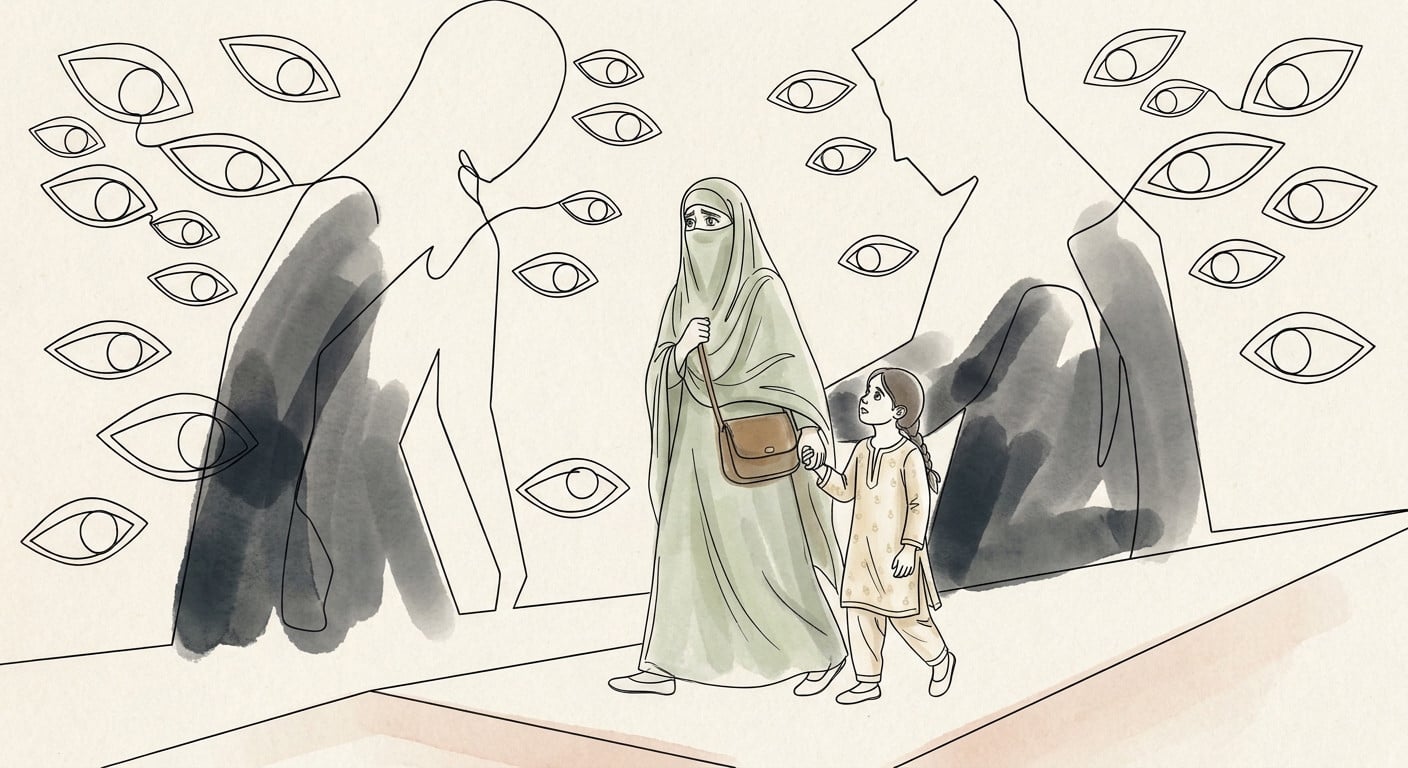
Back to Tribune. HomeT-Magazine. Making space for womenT-Magazine. Next Story. Making space for women. Women navigating Pakistan's public spaces face systemic gaps, viral street harassment, and reactive policing. By. Faiza Shah|Photo: AI GeneratedfacebooktwitterwhatsuplinkdedemailPUBLISHED
November 15, 2026On the evening of October 28, 2026, an ordinary traffic altercation near the busy Johar Morr intersection curdled into a viral spectacle.
Within minutes, dozens of men surrounded a car driven by a woman. Rather than clearing the road or offering help, the male bystanders crowded her windows with smartphones raised, recording her distress as her mobile phone and handbag disappeared into the mob.
"Stay connected with Aman-e-Pakistan for ongoing live reporting and verified investigative updates."
When local and traffic police finally intervened and escorted the woman to the Shahrah-e-Faisal Police Station, the incident followed a familiar script. No senior provincial official took formal notice of the mob behaviour. No First Information Report (FIR) was registered against those who surrounded her vehicle or stole her belongings.
Instead, the episode was quietly closed through apologies and financial compensation paid to a rickshaw driver for minor damages—leaving the broader question of street disorder entirely unaddressed. The Johar Morr episode captures a defining paradox for women in Pakistan.
On paper, Pakistani women possess robust constitutional and statutory rights to occupy public spaces. Article 26 of the Constitution guarantees non-discrimination in access to public places, while Section 509 of the Pakistan Penal Code criminalises street harassment.
In 2022, parliament even amended federal workplace harassment laws to explicitly extend protections to streets, parks, concerts, public transport, and digital spaces. Yet in practice, stepping out of the front door in Pakistan for us women often means navigating an invisible obstacle course.
Across cities, a vast gap separates progressive legislation from everyday street reality. Most women experience the yawning gap as an utter lack of personal safety when state protection leaves viral videos to spur law enforcement to take action in time.
Public vulnerability. To understand why women’s safety in public spaces remains so contested, researchers point first to how Pakistani women move through cities.
Unlike men, who dominate sidewalks, tea stalls, and public squares at all hours, women’s presence in public is often treated as conditional—it is tolerated when purposeful and brisk, but their visibility is scrutinised when prolonged or “out of place”.
In urban safety surveys conducted by organisations such as UN Women Pakistan, women consistently report that harassment is not an occasional occurrence, but a daily tax on their mobility. Catcalling, staring, stalking, groping on crowded buses, and aggressive tailing by motorcyclists force women to alter their routes, dress differently, travel in groups, or abandon educational and economic opportunities altogether.
When an incident escalates into public confrontation, the predominantly male bystanders often compound the danger to the female victim. As seen at Johar Morr, public crowds frequently treat a woman in distress as entertainment to be filmed and uploaded for social media engagement.
The woman’s character and attire is the first to be judged by online citizens and her demeanour is immediately scrutinised by internet commentators. This harsh, immediate and predictable judgement deters many female victims of harassment from ever approaching law enforcement.
Reactive policing. In Sindh, and particularly in the sprawling metropolis of Karachi, policing women’s public safety often operates without comprehensive, city-wide surveillance coverage or dedicated street patrols. Law enforcement frequently steps in only after an incident sparks public outrage online.
You may have observed this pattern in recent weeks. In early October 2026, CCTV footage from a residential Karachi neighbourhood circulated widely on television and social media, showing a motorcyclist slowing down to physically harass a woman walking in a burqa before speeding away.
Days later, in mid-October, another incident drew sharp condemnation after a husband posted online that his wife had been harassed at DHA’s Zamzama Park while out with their three young children. ’s account, the perpetrator attempted to intimidate the woman by claiming to be a police officer.
Only after the post gained traction and activists tagged senior officials did police announce they had taken notice and initiated action. “What happened at Zamzama Park, DHA, Karachi, is a reminder of how unsafe public spaces can feel for women.
My wife was with our three children, minding her own business, and someone still thought it was okay to harass her — and even use his position as a police officer to intimidate her,” the woman’s husband Mohsin Raheel posted on Facebook, “But the point I really want to make is this: a woman doesn't have to wear a hijab, a burqa, or anything else to deserve respect.
Her clothes, her appearance, or the fact that she's alone can never be an excuse to harass her. No woman owes anyone an explanation for simply existing in a public space.
And if a woman can't feel safe in a park, a place where she should be able to spend quality time with her children, then where is she supposed to feel safe?” he wrote, describing the claustrophobic shrinking of public space for women.
Behind that shrinking space lies an impenetrable patriarchal mindset that normalises street harassment and polices women’s presence in public. “Societal mindset is the biggest problem--harassment is all about that. It's all about how people think--especially men.
Their mindset is the biggest impediment to women being free and comfortable in a public place,” says Xari Jalil, co-founder and editor of. Voicepk.net, a non-profit media platform that highlights the plight of marginalised and vulnerable segments of society.
“Social mindset comes from education and exposure. Men not exposed to women working, or just being outside, wearing what they wish to wear, are underexposed and usually come with a very myopic mindset, drilled by even more myopic ideas from various sources– religious, right-wingers who wish to exert more control over women,” she says.
Until that deeply entrenched mindset shifts, progressive laws will remain largely disconnected from the lived realities of women navigating public streets. Earlier this year, similar camera-driven arrests occurred in Karachi’s Surjani Town and Jauharabad neighbourhoods, where police tracked down motorcyclists caught on CCTV harassing women on public roads.
In one instance, investigators had to piece together private shop cameras and rely on local informers because the suspect had covered his license plate and worn a mask. While these high-profile arrests demonstrate that Karachi police can track offenders when senior officers prioritise a case, rights advocates argue that viral policing is no substitute for systemic deterrence.
Sindh maintains specialised Women & Child Protection Cells across major districts, along with provincial helplines. Yet for the thousands of women who experience street harassment without a CCTV camera overhead, the local thana remains an intimidating barrier.
At police stations in Karachi and interior Sindh, female complainants rarely encounter female officers; women still account for roughly 1.5 per cent of Pakistan’s total police force. Without private intake rooms or gender-sensitised investigators, women reporting street harassment are routinely subjected to sceptical questioning about why they were out alone or what they were wearing.
More often than not, the police pressure families into signing an informal compromise (sulahnama) to avoid paperwork and prolonged court appearances. This is the exact outcome that played out after the Johar Morr incident.
After a minor collision with a rickshaw near Johar Mor in Gulistan-e-Jauhar, clinical psychologist Ayesha Zahid had stepped out of her car to check if anyone had been injured, only to be encircled by a hostile crowd of 20 to 30 men shouting that she be beaten and mocking women drivers. ’s subsequent video statement and her husband’s public account, men in the crowd manhandled, grabbed, and dragged her while snatching her car keys and mobile phone, leaving her trapped until she pleaded for a female office.
Allegations of intoxication circulated online were flatly rejected by both Zahid and her family, who noted that police found nothing in her vehicle to substantiate the claims. Police who arrived at the scene reported no visible damage to either the car or the rickshaw and allowed Zahid to leave once her family arrived.
The mob was not taken to task for harassing a female citizen. That pattern of street-level impunity mirrors a broader failure within the formal justice system, where statutory protections routinely falter in practice. “We know that Pakistan is an over-legislated country, but with very little implementation.
In this country when a woman does try and access a court of law for justice, she is turned away more than often, disappointed by the verdict,” says Jalil. “A rape and murder can be the result of a “live in relationship”, and workplace harassment could sometimes be seen as unproven, even though the woman has all the proof.
So where do we begin to see how laws/preceding rulings are being implemented? And where do we stop? If society is condoning harassment at various levels, what is the point of any legislation?
Isn't it ironic?” she adds. The Tech-First experiment. Roughly 1,200 km north in Punjab, provincial authorities have attempted to solve the thana problem through centralised technology.
Over the past few years, the Punjab Safe Cities Authority (PSCA) has built an ambitious digital safety net designed to bypass male-dominated police stations altogether. At the centre of this model is the Virtual Women Police Station (VWPS), accessible 24/7 via the emergency helpline 15 (extension 2) and the Punjab Police Women Safety App.
Through live video calls, audio chats, and GPS-linked panic buttons, women facing street stalking, public transport harassment, or domestic threats can connect directly with trained female officers in Lahore without stepping foot in a physical station. The scale of adoption underscores how desperately women wanted an alternative to traditional policing.
November 2026, the VWPS assisted women in 39,769 cases during October 2026 alone, pushing its total caseload for the year past 450,000.
In late October, Safe City officials pointed to rapid-response interventions where women triggered alerts on the Women Safety App during road harassment, allowing Dolphin Force and patrol units to trace their live coordinates and apprehend suspects on the spot.
Independent research by the University of Notre Dame has found that Punjab’s virtual station significantly boosts reporting by removing family gatekeeping and fear of police mistreatment. In addition, Punjab has expanded Safe City camera networks across more than 40 districts and introduced women-only Pink Buses to secure daily commutes.
Yet beneath Punjab’s impressive digital metrics lies a persistent gap in systemic enforcement. A closer look at the October 2026 PSCA data reveals a striking disparity: out of 39,769 cases assisted, only 1,869 resulted in formal FIRs.
Tens of thousands of complaints—particularly the 18,959 domestic disputes logged that month—were categorised as "resolved" through mediation and direct intervention rather than criminal prosecution. Legal analysts in Lahore note that technology can dispatch a patrol car, but it cannot reform the underlying criminal justice pipeline.
Once a street harassment case moves from the digital screen of a Safe City operator to the desk of an investigating officer at a local police station, familiar hurdles re-emerge.
Outside Lahore’s core camera grid, CCTV blind spots persist; investigating officers struggle with heavy workloads; and complainants still face intense social pressure to forgive offenders once an apology is tendered at the station. Cultural friction.
In Khyber Pakhtunkhwa (K-P), the battle over women’s public safety unfolds against a backdrop of conservative social norms, tribal mediation traditions, and ongoing security challenges. For many women across the province, the primary hurdle is not merely how police respond to street harassment, but whether women are permitted to occupy public space at all without male chaperones.
Provincial data compiled in national gender assessments highlights how deeply entrenched these attitudes remain: in surveys cited by UN Women Pakistan, 47 per cent of surveyed women in K-P stated that domestic violence was justified if a wife left the house without her husband’s permission—nearly triple the rate reported in Punjab.
Consequently, when women do claim public space, it often draws immediate scrutiny. When women in Kohat marched into the main bazaar in late October 2026 to protest prolonged water and gas outages, local observers noted how rare it was to see women visibly occupying commercial streets in the district.
Because cultural stigma makes entering a police station nearly unthinkable for many women in K-P, authorities have leaned heavily on non-police administrative forums to address harassment.
Following the passage of the KP Protection Against Harassment of Women at Workplace (Amendment) Act, 2026—which broadens legal protections across public and professional spheres—the Provincial Ombudsperson’s office moved to take redressal directly to local communities.
In early November 2026, K-P Provincial Ombudsperson Rubab Mehdi announced special khuli kachehris (open public courts) across the Peshawar and Mardan divisions so women could file complaints regarding harassment and property rights directly without navigating police bureaucracy.
Simultaneously, KP’s Law and Human Rights Directorate initiated plans in late October 2026 to link the Women Ombudsperson, provincial human rights bodies, and district administrations through a unified digital complaint portal. While these administrative channels offer vital relief for working women, students, and inheritance claimants, street-level policing remains weak.
In merged tribal districts and rural areas, parallel justice systems such as jirgas frequently intercept cases before they reach state courts, prioritising clan reconciliation over individual women’s rights. Even in urban Peshawar, limited female police deployment and heightened counterterrorism alerts often push everyday street harassment to the margins of law enforcement priorities.
From the street to the courtroom. Whether an assault or harassment incident begins on a road, a bus stop, or a market, the true power of the state is tested in the courts.
Across Pakistan, legal experts and parliamentary committees warn that the pipeline connecting street complaints to courtroom convictions is severely broken. on Human Rights report, roughly 70 per cent of gender-based violence (GBV) and harassment incidents go unreported. Fear of retaliation, victim-blaming, and the financial cost of litigation keep most women silent.
Even when severe public or domestic assaults are registered and sent to specialised Gender-Based Violence Courts—established under the Anti-Rape (Investigation and Trial) Act, 2021 to conclude trials within four months—chronic backlogs routinely stretch proceedings across two to four years. During these protracted delays, suspects secure bail, witnesses turn hostile, and families succumb to social pressure to settle out of court.
Weak crime-scene preservation, delayed police challans, and poorly documented medico-legal examinations cripple prosecutions. Parliamentary reviews indicate that roughly 64 per cent of prosecuted GBV cases end in acquittal, leaving national conviction rates for gender-based crimes hovering between 1 per cent and 5 per cent.
The Sustainable Social Development Organisation (SSDO) report for 2025-2026 revealed that out of 50 reported abuse cases tracked in Islamabad over a six-month period, zero resulted in conviction. Even progressive provincial statutes suffer from administrative inertia.
Legal reviews by a prestigious university in Lahore note that key deterrents under the Punjab Protection of Women Against Violence Act—such as GPS-tracked ankle or wrist monitors for repeat offenders—remain largely unimplemented years after passage due to missing procurement rules and underfunded district protection committees. Reclaiming the public square.
Pakistan’s experience over the past decade proves that passing laws and building emergency apps are necessary first steps, but they cannot single-handedly make a city street safe. From grassroots activism to women-led civil society initiatives, citizens are forcefully asserting that the public square belongs equally to all.
Initiatives like Punjab’s virtual station and Sindh’s video-driven investigations demonstrate that technology can serve as a vital catalyst for institutional accountability, while K-P’s open kachehris prove that dedicated community engagement can dismantle deeply entrenched societal barriers. Securing safe, inclusive public spaces demands far more than reactive policing; it requires sustained political will, deep-rooted legal reform, and unwavering collective resilience.
As Pakistani women continue to reclaim their fundamental right to move, work, and exist without fear, they are actively rewriting the national narrative—shaping public environments into permanent landscapes of dignity, equity, and shared strength. Pages.
Pakistan. Business. World.
Opinion. Life & Style. Sports.
Blogs. Videos. Our Sites.
Express News. Urdu E-Paper. English E-Paper.
Sindhi E-Paper. Cricket Pakistan. Express Live.
Campus Guru. Express Entertainment. Food Tribune.
About Us. Contact Us. Online Advertising.
Privacy Policy. Copyright. Fuel Prices Pakistan.
Gold Prices Pakistan. Prayer Timing Pakistan. Weather Forecast Pakistanfollow us
Continue Reading: More in National
Swipe or click arrows to explore National desk coverage