Can China help Pakistan? myth and reality
“Pakistan is struggling to revive its economy. Despite all efforts and claims, the economy continues to deteriorate. Economic growth is not returning to track. Debt is increasing, rising day by day. So…”
Debt is increasing, rising day by day. Social and development indicators are deteriorating. As a result, the country is searching who can help and how.
In this situation, it turns to international financial institutions and friendly countries, and is even considering cryptocurrency as a source of economic revival. However, cryptocurrency is a financial instrument that still has to establish its credibility and can never be a source of economic revival.
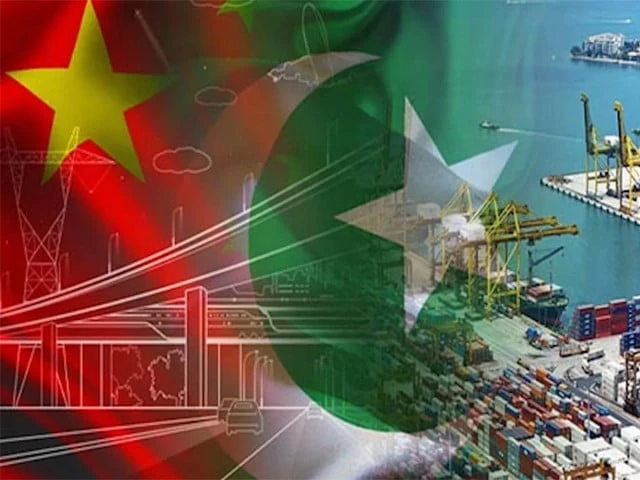
History shows that China can help Pakistan and is willing to do so. This is not an assumption as China has always shown the intent to provide critical support. It is reflected in the agreements both countries have signed for economic cooperation.
"Stay connected with Aman-e-Pakistan for ongoing live reporting and verified investigative updates."
The list of such pacts is long, but the most important was the 1989 agreement to protect and enhance bilateral investment. After that accord, many major Chinese companies invested in Pakistan, including Huawei, China Mobile and Haier.
These companies are now leaders in their respective fields. They brought billions of dollars and created thousands of jobs. The Beijing Declaration (2003), the FTA (2006) and the energy framework agreement (2006) further strengthened economic cooperation.
However, the China-Pakistan Economic Corridor (CPEC) reshaped the dynamics of economic cooperation. CPEC has all the ingredients to not only revive the economy but also put Pakistan on the path of sustainable development. The successful implementation of the first phase clearly indicates CPEC's potential.
The programme has now entered its second phase, which focuses on industrial, agricultural, technological and scientific cooperation. These are the critical areas that can transform Pakistan's economy. To fully benefit from this cooperation, Pakistan must take a few steps.
It needs to fast-track the establishment of Special Economic Zones, as agreed under CPEC, to accelerate industrialisation. It will generate financial resources to tackle the rising public debt. It will also create hundreds of thousands of jobs by addressing the challenges of youth unemployment and poverty.
In 2025, Pakistan and China also signed an action plan to foster a closer China-Pakistan community with a shared future in the new era. The plan equally focuses on Pakistan's economic and development needs, along with other areas.
Thus, its implementation will address economic challenges, revive economy and put it on a sustainable path. The real question should be: how can Pakistan benefit from CPEC or economic opportunities emerging from China? This is a tricky question and Mohsin Naqvi's statement holds the answer.
The most unfortunate reality isn't that the system has collapsed, but that the ruling elite intend to stick to it. They don't want to change it. Why?
Because the system protects them and their interests. This is posing a threat to the smooth implementation of economic initiatives. Let's look at an example.
In 2019, the government established the CPEC Authority to break the shackles of the existing system and facilitate CPEC-related projects and interventions. This was a major intervention because CPEC schemes were facing issues. However, the existing system turned it into a weak facilitation centre with no powers to make or implement decisions.
Thus, under the current governance system, it would be difficult to fully realise the potential of CPEC and other opportunities. Against this backdrop, what should the country do? An analysis of ground realities suggests that Pakistan needs to take innovative steps or learn from best practices to advance cooperation and exploit these opportunities.
In the present context, the best example to learn from is the Shenzhen case. Pakistan can learn from Shenzhen's transformation from a $40 million economy to a more than $500 billion economy. The transformation process began when Shenzhen was designated the provincial capital of Guangdong province, prompting the province to upgrade its infrastructure.
By 1988, the central government elevated Shenzhen to the provincial status, and in 1992, it got legislative authority, strengthening its decision-making and implementation powers. Additionally, the central government granted greater autonomy in financing, investment and trade decisions.
Building on the trust and authority, Shenzhen introduced many innovative practices. It brought the concept and model of government approval within 24 hours. The process was expedited by unveiling and strengthening the one-roof model, which means all services under one roof.
Shenzhen also pioneered contractual job experiments, marking a significant change. Despite China's socialist nature, which prioritises job security, these reforms enhanced Shenzhen's appeal to foreign investors. Zone authorities provided investors with utility services such as electricity and water as well as facilitated them in dealing with tax matters.
The zone established state-of-the-art trade (import and export) facilitation mechanism and infrastructure. Moreover, the local governments played a leading role by providing quality infrastructure, such as roads, water, electricity, gas, sewerage system and telephone lines.
In addition, the investors received basic services at their doorsteps. Local governments also ventured into new areas, providing services such as accounting, legal matters, business planning, marketing, import-export assistance, skills training and management consulting. This helped the investors better understand local laws and the business environment and refine their approaches.
Three inferences can be drawn from the above discussion. First, opportunities do exist and China is ready to help Pakistan. If Pakistan wants to benefit, it needs to restructure its system and introduce Shenzhen-style transformational reforms.
Second, failing to exploit CPEC's full potential and other economic opportunities will allow opponents to malign China-Pakistan relations. Third, to counter propaganda, a comprehensive policy and action plan is needed. It is good that Pakistan, in collaboration with the Chinese embassy, has launched the Information Corridor.
Islamabad needs to develop it professionally. It should be professionally sound and equipped to counter propaganda with facts and figures. THE WRITER IS A POLITICAL ECONOMIST AND A VISITING RESEARCH FELLOW AT HEBEI UNIVERSITY, CHINA
Written by Sheheryar Munawar
Aman-e-Pakistan Senior Journalist & Bureau Reporter
Continue Reading: More in National
Swipe or click arrows to explore National desk coverage