Doctors cannot run medical stores without drug-sale licence, FCC rules
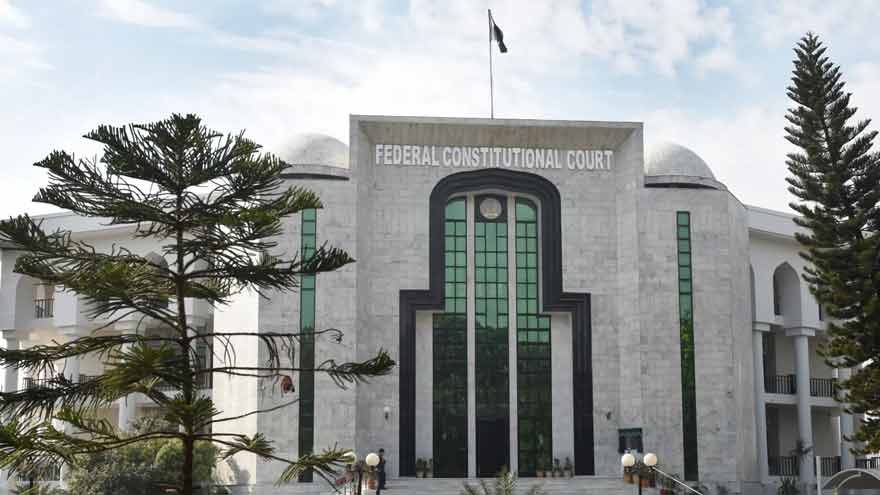
“The FCC ruled that registered doctors may dispense medicines to their own patients but cannot operate medical stores or retail drug outlets without a licence un…”
IISLAMABAD —The Federal Constitutional Court (FCC) has ruled that a registered medical practitioner may prescribe and dispense medicines to their own patients, but cannot operate a medical store or retail drug outlet without the licence required under the Drugs Act 1976.
The court issued the ruling while setting aside a June 5, 2023 order of the Peshawar High Court’s D.I. Khan bench, which had restrained regulatory proceedings against registered medical practitioners accused of running medical stores and dispensaries.
A two-member FCC bench headed by Chief Justice Aminuddin Khan and comprising Justice Ali Baqar Najafi announced the verdict on an appeal filed by the secretary of the Khyber Pakhtunkhwa Health Department. The case involved registered medical practitioners, including Dr Muhammad Rizwan Rajpoot, whose clinical establishments were found to have dispensaries and medical stores.
"Stay connected with Aman-e-Pakistan for ongoing live reporting and verified investigative updates."
They were accused of stocking and selling medicines without the required drug-sale licences. On January 21, 2020, the relevant authorities inspected the establishments and seized medicines through Form-6. Show-cause notices were subsequently issued to the doctors.
The affected practitioners then approached the Peshawar High Court, which ruled in their favour and restrained further regulatory action. In its nine-page judgment, the FCC clarified that registration with a medical regulatory body and registration under the Pharmacy Act serve different legal purposes.
The court held that registration as a doctor does not exempt a medical practitioner from the licensing requirements imposed by the Drugs Act. The court noted that Section 31(4)(a) of the Pharmacy Act 1967 allows a registered doctor to dispense medicines to their own patients or fulfil their own prescriptions.
However, the provision does not authorise a doctor to establish or operate a medical store or retail drug outlet. The FCC further held that Section 23(1)(c) of the Drugs Act 1976 requires a licence for the sale of medicines and contains no special exemption for registered doctors.
The court distinguished between dispensing medicine as part of treatment and commercially selling drugs through a retail outlet. The court also upheld the authority of drug inspectors to inspect premises, take samples, conduct searches and seize medicines under Sections 17 and 18 of the Drugs Act.
It observed that the prescribed legal procedure includes issuing a receipt through Form-6. Referring to Article 18 of the Constitution, the FCC observed that the right to practise a profession or conduct a business is subject to conditions prescribed by law.
It held that the licensing system governing medicines and public health is legally permissible. The court further ruled that the Peshawar High Court had intervened prematurely at the show-cause notice stage, when the relevant authorities had yet to complete the statutory proceedings.
The FCC therefore set aside the High Court’s order and directed that the matter be dealt with.
Continue Reading: More in National
Swipe or click arrows to explore National desk coverage