The great shrinking
“Back to Tribune. HomeT-Magazine. The great shrinkingT-Magazine. Next Story. The great shrinking. Changing the arithmetic of everyday shopping, shrinkflation leaves consumers to pay more for what used to be enou…”
Back to Tribune. HomeT-Magazine. The great shrinkingT-Magazine. Next Story. The great shrinking. Changing the arithmetic of everyday shopping, shrinkflation leaves consumers to pay more for what used to be enough. By. Fouzia Nasir Ahmad/Wisal Yousafzai/Razzak Abro/Muhammad Ilyas|Photo: AI GeneratedfacebooktwitterwhatsuplinkdedemailPUBLISHED
November 01, 2026I have been watching my favourite chocolate biscuit shrink before my very eyes. It used to be a decent-sized biscuit, the sort you could look forward to dunking in a glass of milk.
Now it is so small and thin that I sometimes wonder if I have picked up the wrong one. The biscuits in the packet seem to have lost weight, too, though my bill at the checkout shows no such signs of slimming down, and is consistently putting on weight.
"Stay connected with Aman-e-Pakistan for ongoing live reporting and verified investigative updates."
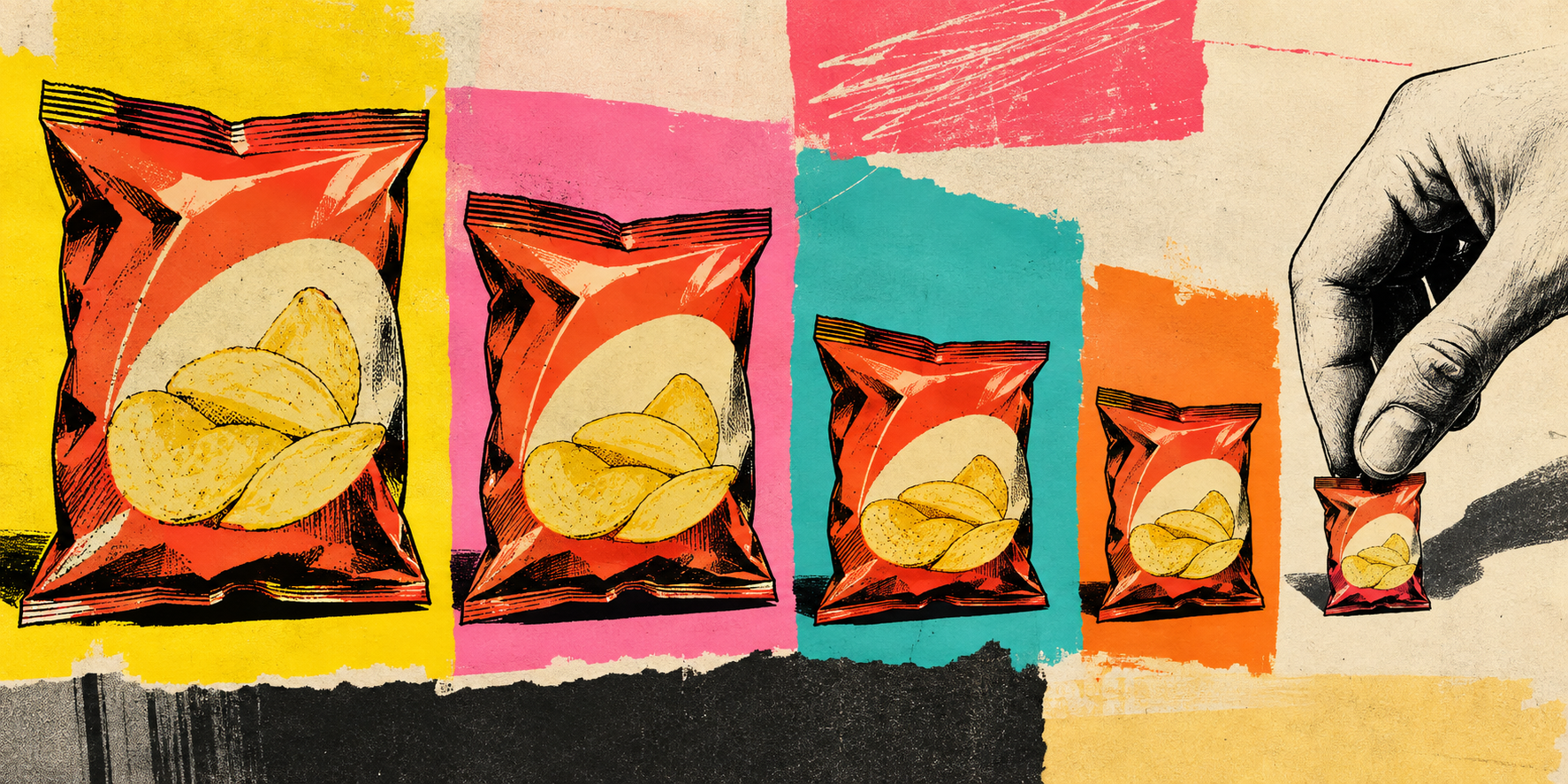
It is not just biscuits. Chocolate bars have become thinner, crisp packets seem to contain more air than crisps, and even burgers seems to have joined the general retreat. Everything, it appears, is shrinking except the price tag.
You settle down with a bag of crisps in front of the TV to binge your favourite show, but it lasts only for half an episode.
Your breakfast toast are burning more than toasting, because they have become Ozempic thin, your cereal box that lasted a month, now finishes in less than three weeks, the ketchup bottle is thinner, chicken breast fillets need less pounding because they are not as chunky as they used to be, almost everything you buy and use in the house is shrinking, either that, or you have become a giant!
Remember, the 1989 sci-fi comedy Honey, I Shrunk the Kids, in which a scientist accidentally shrinks his children with an experimental machine? There is no such machine at work in our supermarkets, but the results can sometimes seem just as startling.
Biscuits, chocolate bars, crisps, detergent bags, soap bars, bakery items, restaurant portions, and other everyday products appear to be getting smaller, thinner and lighter, while their prices stubbornly refuse to follow suit. This is no science fiction, but an economic sleight of hand with a name: shrinkflation.
Through this disappearing act where you keep thinking, is it me, or has this really shrunk, manufacturers reduce the size, weight or quantity of a product while keeping its price the same, or lowering it by so little that the consumer still ends up paying more for less.
It is a neat trick, particularly when the new, smaller version looks much like the old one on the supermarket shelf. You may not notice the difference immediately, but you will notice how quickly the packet empties.
The clever thing about shrinkflation is that it does not require a price hike to make consumers pay more. We have become accustomed to checking price tags, wincing at the increase and deciding whether a product is still worth buying.
But how many of us check the weight of a packet of biscuits against the one we bought last month? Or count the number of crisps in a bag? We are more likely to notice a price increase than a reduction of a few grams, a thinner slice or a slightly smaller bar of soap.
Manufacturers know this. When production costs rise, reducing the quantity in a package can seem a safer option than raising its price outright. Consumers who might switch brands after a conspicuous price hike may continue buying a familiar product without realising that its value for money has changed.
Brand loyalty, habit and the sheer inconvenience of comparing every item on a shopping list all work in the manufacturer's favour. The packaging does not necessarily help. A familiar box or wrapper can create the impression that nothing has changed, even when the contents have.
A packet may look much as it always has, while holding fewer pieces or a lower net weight. Unless shoppers examine the fine print, the change can pass unnoticed. For Hassan Khan, a motorcycle rider from Yakatoot, Peshawar, the struggle to feed his family has become a daily calculation of what he can afford and what he must do without.
Living in a rented house with his wife and two children, Khan says his earnings are barely enough to put two meals on the table. Yet the rising cost of living has brought another worry even when he pays more for essential household products.
He believes he is getting less in return. The price of a one-kilogramme formula milk his child drinks had risen from Rs1,000 to Rs1,500, while the quantity of milk inside appears to have decreased. “The carton is the same, but there is a world of difference in the quantity,” says Khan.
For Khan, the problem extends beyond milk to other everyday products, where prices have increased while their perceived quality or quantity has fallen. He said there is little visible relief for consumers despite the existence of price-control committees, leaving families like his to absorb the additional costs.
Khan’s experience illustrates a concern increasingly relevant to household spending when prices rise, consumers may pay more for the same product, reduce the quantity they buy, or switch to cheaper alternatives.
The scale of the financial strain in Peshawar is reflected in a recent survey by the Institute of Regional Studies (IRS), which found that 89 per cent of households rely on borrowing to meet routine expenses, while 95.1 per cent struggle to repay their loans.
Presenting the findings, IRS Chairman Dr Muhammad Iqbal Khalil said the study covered 462 households in Peshawar and was based on focus group discussions and consultations with relevant stakeholders.
The findings suggest that for many families, inflation is no longer simply a matter of higher market prices; it has become a debt problem., households reported an increase of 35 per cent to 40 per cent in the cost of living, with low-income communities bearing a particularly heavy burden.
In these neighbourhoods, 48.7 per cent of families said they had been severely affected by inflation. Although 67.3 per cent of surveyed households reported an increase in income, their expenses had risen even faster, leaving them with less money for essential needs, Dr Khalil said while explaining the results.
National inflation figures offer a broader picture of the pressure on consumers. Statistics (PBS), consumer prices rose by 10.26 per cent year-on-year in September 2026, while the monthly rate increased by 1.27 per cent compared with August.
The annual rate had eased from 11.1 per cent in August, but the September figures still showed that prices were rising rather than returning to earlier levels. The IRS survey found that 93 per cent of households had experienced an increase in electricity, gas and fuel expenses, while 84.6 per cent reported higher transport costs.
Dr Khalil said increases in petroleum prices had placed additional pressure on household budgets and restricted people's mobility. Because fuel is used in transporting goods and operating vehicles, changes in petroleum prices can also affect the cost of moving food and other necessities to markets, adding another layer of pressure for consumers.
Food remains one of the most difficult expenses to manage., 86.4 per cent of households reported an increase in food expenditure, while some said they had been forced to switch to cheaper food items to keep spending within their means.
For families with limited incomes, such adjustments can mean replacing preferred products with less expensive alternatives, buying smaller quantities or cutting back on certain items altogether. The survey findings show the extent of the reported financial pressure, although they do not establish how much each household has reduced its food intake.
A little less, for a little more. The practice is not new, but happening in other countries too. In the US, shrinkflation became a political issue in 2024, when President Joe Biden publicly criticised manufacturers for reducing quantities while maintaining prices.
His administration also backed proposed legislation aimed at addressing deceptive pricing practices. A 2025 report by the US Government Accountability Office, which examined household products between 2019 and 2024, found that downsizing contributed to inflation in several categories.
Household paper products saw a three per cent-point contribution, snacks 2.6 per cent points, and candy and chewing gum 2.3 per cent points over the period. The report also found that downsizing affected less than five per cent of the products examined across seven categories.
That is an important qualification: shrinkflation is not necessarily happening to everything on the shelf. But it can be particularly noticeable in popular, frequently purchased products, where consumers are accustomed to buying the same item repeatedly.
Every grocery list has bread, soap, detergent, butter, toilet rolls, tissue paper boxes, matches, biscuits, chicken and condiments, for instance and mostly that is where the shrinkage works for the manufacturer. Paper products such as toilet paper and paper towels were among the categories more likely to be affected.
Packaged foods, including cereals, coffee and snacks, have also featured in discussions about downsizing. The underlying calculation is simple enough. If a product costs the same but contains less, the price per unit of product rises, even though the price printed on the shelf does not.
Whose job is it to notice? Consumers can protect themselves to some extent by comparing net weights, checking the number of pieces in a pack and looking at the price per 100 grams or kilogram where unit pricing is available.
If a favourite product seems to run out faster than it used to, the label may offer an explanation. Keeping an old packet or taking a photograph of its weight can also help establish whether anything has changed.
But it is worth asking how much vigilance we can reasonably expect from people who are already trying to make a household budget stretch. Few shoppers have the time to inspect every label, memorise the previous weight of every product or calculate the unit price of each item in a trolley.
Nor should consumers have to become amateur investigators to establish whether they are receiving the quantity they believe they are buying. There are ways to make such changes more transparent. France, for instance, requires retailers to display information about product downsizing in stores, while Australia has considered measures to improve the consistency of unit-price labelling.
Due to the consistently increasing petroleum product prices and the continued pressure of inflation in our country, food items are becoming further out of reach of the common man, while complaints related to reductions in the quality, weight and quantity in packaging of goods are also increasing alongside price hikes.
Kainat Shahid, a housewife in Lahore, sees on a daily basis that prices are increasing. In addition, changes have also occurred in quality and weight., inflation has badly affected household budgets, and now more money has to be spent to buy the same quantity of goods as before.
Some consumers have complaints about reductions in the quantity of packaged products, possible differences in the weight of loose goods, and the quality of food. They say that if the quantity is reduced despite an increase in price, or if a product of the required quality is not available, the consumer has to bear a double loss.
An increase in petroleum product prices can raise the costs of freight, the transportation of agricultural produce and the delivery of goods to markets, with the possibility that these costs will be passed on to retail prices.
However, to understand the reasons for price increases in different goods, it is necessary to examine production costs, wholesale rates, transportation expenses and profit margins separately. Pakistan's consumers have little reason to expect that a scrutiny similar to that in the developed countries will arrive here automatically.
In a market where shoppers already contend with rising prices and household budgets under pressure, quietly reducing quantities adds another layer of uncertainty. The question is not whether manufacturers can ever justify changing a product's size when costs rise.
It is whether consumers should be left to discover those changes for themselves. A smaller biscuit may seem a trivial matter. But when the same calculation is repeated across the weekly shopping basket, the difference is no longer confined to the tea break.
And if the price remains unchanged, the shopper may never know quite how much less is being bought for the same money., a former adviser to the Economic Cooperation Organisation, when inflation increases, the cost for producers also increases, as a result of which they reduce the quantity of their products.
To prevent this, the better solution is to formulate economic policies through which the cost of products does not increase in the first place. For this, the federal government can offer exemptions in various taxes, reduce the interest rate, and provide subsidies to producers under various heads.
Speaking to The Express Tribune, Mehar said that because there are various regulatory bodies in the country, companies cannot increase the prices of goods. Therefore, when the cost of goods increases, they reduce the quality of their products.
For example, in such a situation, some pharmaceutical companies do not reduce the quantity of their products but reduce their quality. Meanwhile, when pressure from government health regulatory bodies increases, those companies stop manufacturing certain medicines altogether., the most dangerous aspect of shrinkflation is that some companies reduce their services.
For example, in the education sector, some schools close their cafeterias, while others reduce their use of air conditioning. Similarly, services are also reduced in the travel and hotel industries. Meanwhile, the Consumer Rights Commission of Pakistan, is an independent, non-profit, and non-governmental organisation established in 1998 under the Trust Act, 1882.
As the country's first national consumer organisation, it is dedicated to promoting consumer protection, market governance, and citizens' rights. The Sindh Consumer Protection Act was passed in Sindh in 2014, but it makes no direct mention of “shrinkflation”.
Section 21-A of the said law deals only with preventing “false or misleading” information. Under this provision, it is illegal to provide incorrect information regarding the quality, weight or quantity of any product. In 2023, the Sindh government amended the said law and established consumer courts in the province, but ordinary people do not approach them.
Ismail Memon Rajput, most people are not well informed about consumer rights. Even those who have some awareness are reluctant to approach consumer courts because of lengthy court proceedings.
He said that he had not yet seen anyone come to a consumer court with a complaint related to “shrinkflation.”, head of civil society, reducing the size of packaging is not, in itself, illegal in every case. However, the weight stated on the packet, the actual quantity and the price must be correct.
Similarly, providing accurate weight when selling loose goods and checking food quality are basic requirements for consumer protection. In Punjab, a legal system exists for monitoring the prices of essential commodities and preventing unjustified profiteering, while district administrations, relevant departments and food safety authorities are responsible for taking action within their respective jurisdictions.
Despite this, the real question is how effective the results have been in enforcing official price lists, inspecting shops, verifying weights and taking action against substandard food. Merely issuing official price lists is not enough.
It is also necessary to monitor their implementation and action against those who violate them. Citizens have demanded that official price lists be displayed at prominent places in markets, that loose goods be weighed in front of consumers, and that the quantities of packaged products be checked regularly.
Samples should be collected to assess the quality of milk, meat, ghee, cooking oil and other food products, and action should be taken on the basis of laboratory analysis. Alongside this, an easy system should also be provided for registering complaints about price violations, underweight goods and poor quality, and for resolving those complaints.
Punjab University’s Hailey College, Dr Hafiz Zafar Ahmed, monitoring weight and quality alongside prices also becomes important so that consumers can obtain goods of the required quantity and appropriate quality for the amount they pay. He said that a situation of uncertainty has increased because industries are facing daily increases in the cost of raw materials.
As a result, industries are now caught in a dilemma, as the prices of the raw materials they purchase keep increasing. There is a need for federal and provincial governments to regularly publish comparative data on the prices of essential commodities and for district administrations to transparently make public the results of price-control operations, fines, weight violations and food-quality checks.
Only through effective monitoring and the uniform enforcement of the law can efforts to prevent unjustified profiteering and provide relief to ordinary consumers be made effective. Dr Ahmed believes that the government should establish an organised system to control consumer prices, particularly grocery prices, so that the common man can be protected from inflation.
When asked about complaints concerning quantity, quality and measurements, officials from the K-P Food Safety and Halal Food Authority and the district administration shared that they conduct regular raids and take action against shopkeepers and other traders found violating standards or compromising on measurements, quality and quantity.
Yet enforcement against such violations does not necessarily address the less obvious problem of products that shrink while their prices remain unchanged. When the packet gets smaller but the bill does not, consumers are left paying more for less — one shopping trip at a time.
Pages. Pakistan. Business.
World. Opinion. Life & Style.
Sports. Blogs. Videos.
Our Sites. Express News. Urdu E-Paper.
English E-Paper. Sindhi E-Paper. Cricket Pakistan.
Express Live. Campus Guru. Express Entertainment.
Food Tribune. About Us. Contact Us.
Online Advertising. Privacy Policy. Copyright.
Fuel Prices Pakistan. Gold Prices Pakistan. Prayer Timing Pakistan.
Weather Forecast Pakistanfollow us
Continue Reading: More in National
Swipe or click arrows to explore National desk coverage